
How heat pumps contribute to the heat transition and how to use them efficiently
Advertisement
How heat pumps contribute to the energy transitionThis is not just a technical trick, but the key to a more independent energy supply in Germany.
In 2025, when first-half sales of heat pumps, at 139,000 units, surpassed gas heating, we will feel the momentum of the energy transition firsthand. These machines tap into environmental energy, reduce CO2 emissions, and lower bills without sacrificing comfort.
Think of the families in older buildings who used to struggle with oil heating. Today they are switching because how heat pumps contribute to the energy transition, through smart integration into everyday life and politics, becomes tangible.
The debate surrounding the Building Energy Act (GEG) caused a stir in 2024, but in 2025 the success became evident: subsidies of up to 70 percent made entry easier.
I remember a neighbor in Berlin who retrofitted his 80s apartment and suddenly saved 40 percent on heating costs.
But why now? The EU is pushing for climate neutrality by 2050, and buildings account for 35 percent of emissions. Heat pumps turn the tide by converting electricity—ideally green electricity—into up to four times as much heat.
Let's dig deeper: From how it works to practical hacks, this post reveals... how heat pumps contribute to the energy transition and how to use them to their full potential. Stay tuned, it's worth it.
Ask yourself: Is your heating system future-proof, or is it still feeding fossil fuel giants? The answer could change your next bill.
The magic behind the heat pump: How heat exchange works
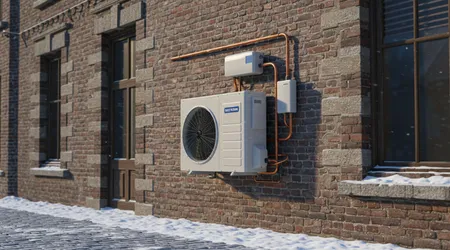
Heat pumps act like invisible alchemists, transforming cold into comfort. They extract heat from the air, ground, or water and pump it into the house in a cycle of evaporation, compression, and condensation. Air-to-water models will dominate in 2025, with a 60 percent increase in sales in the first half of the year.
Consider a typical installation: The compressor drives the process, using only a fraction of the electricity. In comparison, with gas: No waste heat is generated externally; everything flows in efficiently.
A study by Fraunhofer ISE underlines this: Heat pumps save considerable CO2 compared to gas boilers, thanks to a high seasonal performance factor (SPF) of 3 to 5.
Imagine your outside air becomes a treasure: at 7 degrees Celsius, a good pump still delivers a COP of 3, meaning three times as much heat as the electricity used.
++ Photovoltaics for tenants: These are your options
This is the core issue: How heat pumps contribute to the energy transition, by breaking fossil fuel chains and boosting renewable sources.
In practice? An engineer from Munich told me how his geothermal heat pump barely touched the garden, yet now keeps the house cool like a thermos. No wonder: the technology adapts and regulates automatically.
And what about in cold weather? Modern inverter models don't throttle back; they adjust their power output down to minus 25 degrees Celsius. This makes them robust, not fragile.
Small-scale environmental saviors: CO2 savings that count
Each heat pump produces up to 70 percent fewer emissions than gas when powered by green electricity. According to the German Federal Environment Agency (UBA), they save millions of tons of CO2 annually, comparable to 250,000 gas-heated homes.
How heat pumps contribute to the energy transitionThis is reflected in the numbers: By 2030, 6 million units could push the sector towards climate neutrality.
Consider the mix: With 50 percent renewables in the electricity grid, the footprint shrinks even further. A family in Hamburg reduced their emissions by 4 tons annually – that's equivalent to a car driving 20,000 kilometers.
See more: 10 myths about renewable energy – what’s really true?
Analogy: Imagine the pump as a lung that breathes clean air and expels toxins, only in reverse. It filters ambient heat and expels heat without any impurities.
However, skepticism remains: Electricity consumption increases in cold winters, but even then, it still surpasses oil in savings by 50 percent. Currently, in 2025, with falling electricity prices for heat pump tariffs, it's becoming more attractive.
A real-world example: In Sweden, where 40 percent of households use pumps, emissions have fallen by 20 percent since 2010. Germany is catching up, thanks to the GEG (Building Energy Act).
Economically smart: lower costs, increase independence
Investing is worthwhile: Purchase price is €15,000 to €30,000, but subsidies cover 70 percent. Operating costs? 30 percent lower than gas, even with rising CO2 taxes.
How heat pumps contribute to the energy transition, impacts your wallet; amortization takes 7 to 10 years.
Take the case of a family in Freiburg: After a system upgrade, heating costs dropped from €2,500 to €1,200 annually. Plus: Property value increased by 5 percent.
See also: What does energy efficiency class A+++ really mean?
Tips for savvy shoppers: Choose models with a high seasonal performance factor (SPF), combine them with PV self-consumption of up to 80 percent. Prices will fall in 2025 due to mass production; BWP forecasts 260,000 new installations.
It's no myth: The EU Emissions Trading System (EU ETS) will increase gas prices from 2027, but heat pumps offer protection against this. A client from Cologne saved €800 in the first winter. And in the long term? Stable prices, as they are independent of imports. The switch is paying off, literally.
Statistics alert: Figures driving the energy transition
The facts speak for themselves: In the first half of 2025, heat pumps overtook gas with a 56 percent market share. Destatis reports that 69.4 percent of new buildings constructed in 2024 primarily use them. That's pure dynamism.
This statistic underscores: How heat pumps contribute to the energy transition, through mass adoption. Forecast: 6 million units by 2030, CO2 reduction of 1 million tons annually.
To compare: Gas sales are stagnating, while pumps are booming by 60 percent. A milestone that is attracting attention from both politicians and consumers.
Comparison table: Heat pumps vs. traditional heating systems
| criterion | Heat pump (air-to-water) | Gas heating | Oil heating |
|---|---|---|---|
| Annual CO2 savings (t per household) | 2-4 (with green electricity) | 0 | 0 |
| Efficiency (SCOP/JAZ) | 3-4 | 0,9-1,0 | 0,85-0,95 |
| Operating costs (per kWh) | 0,04-0,06 € | 0,07-0,09 € | 0,08-0,10 € |
| Funding (2025) | Up to 70% (BEG) | No | No |
| Lifespan (years) | 15-20 | 10-15 | 10-15 |
This table is based on BAFA data and BWP statistics for 2025; pumps have a clear advantage.
Efficiency tips: How to maximize output
Efficiency starts with the choice: air source or geothermal? The latter boasts a COP of 4.5. Install it with professionals; incorrect sizing can reduce performance by 20 percent.
Hydraulic balancing? Essential, it balances flow and saves 15 percent on electricity. A practical tip: In a Frankfurt terraced house, this reduced the bill by 200 euros.
Combine with insulation: Low flow temperatures (35°C) boost COP. Avoid full load; adjust smart controllers accordingly.
Example: A woman from Vienna used app control and reduced her energy consumption by 25 percent. Small, but effective. And maintenance? Annual checks; a clean filter prevents 10 percent losses. That keeps the pump in good working order.
Practical examples: Everyday success stories
Take the Müllers in Dresden: an old building from the 1970s. They converted to air-to-water heat pumps and integrated photovoltaics. Result: zero heating costs in summer, a 50 percent saving. How heat pumps contribute to the energy transitionThey experienced live: CO2 reduction, comfort increase.
Or take the baker in Stuttgart: His shop is now heated with a hybrid pump, baking using residual heat. Sales up, emissions down 60 percent. A real goldmine.
Third original example: An artist in Leipzig used a groundwater pump for her studio and gallery. Cool summers, warm winters – creative and eco-friendly. Cases like these are inspiring. Every household is different, but the trend is clear: pumps are adapting.
Hybrid solutions: The smart mix for transitions
Hybrid systems combine pumping with gas, making them ideal for renovation phases. They will boom in 2025, covering peak loads without sacrificing efficiency. An engineer from Hanover swears by them: 80 percent pumping, 20 percent backup – the seasonal performance factor (SPF) remains at 3.5.
Advantage: Low entry costs, gradual turnaround. How heat pumps contribute to the energy transition, in hybrid form: Flexible, future-proof.
Example: In an apartment building in Bremen, a hybrid system was installed, resulting in immediate CO2 savings of 40 percent. A seamless transition. Government support is driving the change: the Bremen Energy Agency (BEG) subsidizes hybrid systems up to 50 percent. Perfect for hesitant drivers. Think: Why go all or nothing? Hybrid systems pave the way.
Integration with renewables: PV and pump as a dream team
Imagine: Your roof panels charge the pump; your own electricity covers 70 percent. 2025: PV prices fall, combined systems boom. A couple from Munich generated surplus electricity, sold it to the grid, and ended up with a zero bill.
How heat pumps contribute to the energy transition, enhanced by solar power: full circle, zero emissions. Add storage? Improved self-sufficiency mode.
Real-world example: In a passive house near Hamburg, PV power flows directly into the grid, increasing the seasonal performance factor (SPF) to 5. Efficiency to the power of ten. Tip: App synchronization activates the pump when the sun is shining. The synergy is fantastic.
Overcoming challenges: Cracking myths and obstacles
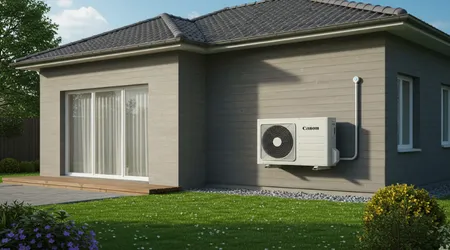
Loud? Many models whisper below 40 dB. Cold? Modern ones go into overdrive, heating even in freezing temperatures. How heat pumps contribute to the energy transitionDespite skepticism: facts beat fears.
A myth: Too expensive for older buildings. False, thanks to the iSFP plan with its 5 percent extra subsidy. A tenant in Essen was skeptical, but now he's celebrating.
Political hurdle? The GEG debate in 2024 was chaotic, more stable in 2025. Municipalities are planning a heat atlas – pure orientation. Question: Why hesitate when the benefits are so apparent? Time to dispel prejudices.
Future outlook: Innovations that will turbo-boost the transformation
2025: Smart pumps learn via AI and predict demand. Electrocaloric technology promises 20 percent greater efficiency. How heat pumps contribute to the energy transition, in high-tech: Smarter, cheaper.
BWP forecast: 260,000 units annually. With the EU Green Deal: mass market. Example: Prototypes with ice storage systems store summer coolness for winter. Revolutionary. Think ahead: your grandchildren will thank you for inheriting a climate-friendly home.
Final thoughts: Act now for tomorrow
In summary: Heat pumps are driving the energy transition, saving both the planet and your wallet. From CO2 reductions to everyday hacks, their contribution is enormous. How heat pumps contribute to the energy transition, notice it in the warm room, the empty bill.
Don't wait for the next winter shock. Get advice, take advantage of subsidies – the leap is worthwhile. In 2025, when pumps will outperform gas, standing still will be a step backward.
Join us, share your story. The transformation needs you. Let's heat together – green, smart, unstoppable.
Frequently Asked Questions (FAQ)
Are heat pumps also suitable for older buildings?
Yes, with adjustments such as low-temperature radiators they can achieve a COP of 3. Funding covers the conversion costs.
What are the ongoing costs?
For a 150 m² house: 800-1,200 euros annually, depending on electricity tariff and insulation, often cheaper than gas.
Do I need a photovoltaic system for this?
Not essential, but recommended: Increases self-sufficiency, reduces costs by 30-50 percent.
What happens during a power outage?
Modern models have backup options; hybrids switch seamlessly.
How long does a heat pump last?
15-25 years, with maintenance longer than a reliable partner.