
10 myths about renewable energy – what’s really true?
Advertisement
10 myths about renewable energies These ideas persist in debates and the media. Many people doubt their feasibility, but the facts paint a different picture.
Imagine constantly hearing that wind and sun are unreliable. As a journalist, I've experienced this often and researched it to clarify the situation.
In this article, I dismantle common prejudices. Based on current data from 2025, I expose lies and highlight truths.
The energy transition is gaining momentum. Nevertheless, misunderstandings are hindering progress. Let's delve deeper and confront myths with reality.
Myth 1: Renewable energies are too expensive
Many claim that solar and wind power plants cost too much compared to fossil fuels. But prices are falling rapidly.
According to IRENA, the cost of solar power fell by 89 percent in 2024 compared to 2010. This makes it cheaper than coal in many regions.
Germany benefits from this. New plants pay for themselves faster, and subsidies decrease. Investors flock in.
++ Solar system on the balcony: Is this mini power plant worth it?
Take Uruguay as an example. The country covers 98 percent of its electricity from renewables and saves billions on imports.
Myth 2: Renewables are unreliable due to weather dependency.
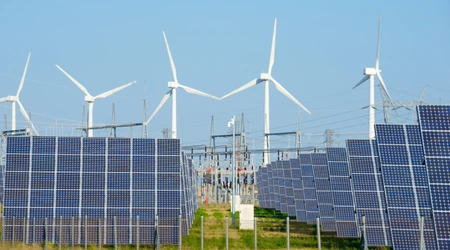
Critics say that wind and solar power only produce electricity in good weather. That sounds logical, but it's outdated.
Modern storage systems and grids balance out fluctuations. In Europe, hybrid systems stabilize the supply around the clock.
By 2025, AI forecasts will integrate weather patterns. This will minimize outages and make systems more robust than ever before.
See more: How to save electricity in everyday life – without changing your lifestyle
Think of Denmark. It exports surplus electricity when the wind blows strongly and imports a clever system when there's no wind.
Myth 3: They need too much land area
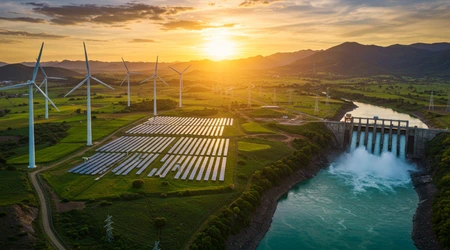
It's often said that wind farms and solar fields consume farmland. In reality, they use land more efficiently than previously thought.
Offshore wind farms save land entirely. Agrivoltaics combines solar panels with agriculture, even increasing yields.
Dual-use projects are growing in Germany. Fields under solar panels protect plants from extreme weather and generate electricity.
See also: What does energy efficiency class A+++ really mean?
An original example: In the Gobi Desert, the Chinese are building mega solar parks that regenerate ecosystems and promote desert greenery.
Myth 4: Renewables cannot meet the entire energy demand.
Skeptics doubt whether they can replace fossil fuel power plants. But global capacities are exploding.
IRENA reports: In 2024, renewables grew by 585 gigawatts, the largest increase ever. They account for 46 percent of global capacity.
They will scale further by 2030. Sector coupling seamlessly connects electricity, heat, and mobility.
Have you ever wondered why countries like Costa Rica live almost 100 percent on renewable energy? They manage it through diversification.
Myth 5: Batteries for storage are not yet fully developed
Many people think that storage technologies are still lacking. Wrong. Lithium-ion and flow batteries scale massively.
Prices halved in five years. Tesla's Megapacks are efficiently stabilizing power grids in Australia.
In Europe, factories are building gigafactories. By 2025, they will reach terawatt-hour capacity, covering peak demand.
Think of batteries as a buffer storage system that absorbs excess energy and releases it when needed – like a smart household energy reserve.
Myth 6: Wind turbines kill too many birds
This myth persists: turbines are bird killers. Studies show that cats and buildings cause more damage.
Modern designs with sensors stop the blades when approached. Bird deaths due to wind turbines are less than one percent.
In the US, operators are monitoring populations. Results: No significant decline; on the contrary, habitat protection helps.
A practical example: Offshore parks in the North Sea create reefs that attract fish and bird species and boost biodiversity.
Myth 7: Renewables cause job losses
Opponents warn of job losses in traditional industries. In reality, they create more jobs than they destroy.
In Germany, renewable energy employs 350,000 people, twice as many as coal. Growth drives innovation.
Global estimates: 25 million jobs will be created by 2030. Transitions involving retraining will mitigate losses.
Consider Spain. The wind industry is booming and revitalizing regions that were dependent on coal – a win-win situation.
Myth 8: Solar panels produce more CO2 during manufacturing than they save.
Criticism: Manufacturing is said to be emission-intensive. Life cycle analyses refute this. Panels amortize their emissions in 1-2 years. After that, they save CO2 for 20-30 years.
Advances in recycling reduce waste. EU rules require a circular economy from 2025.
An original scenario: In India, companies recycle old panels into new ones, closing the loop and reducing costs.
Myth 9: Renewables are dependent on rare earth elements.
It is believed that they need critical materials that are in short supply. Diversification solves this.
Many turbines avoid the use of rare earth elements. Recycling and alternatives such as sodium batteries relieve pressure on markets.
China dominates, but Europe is building supply chains. By 2025, new mines in Africa will meet demand. Analogy: Like a chef who varies ingredients to optimize dishes, renewables are adapting.
Myth 10: The nuclear phase-out hinders the transition to renewables
Many in Germany criticize the phase-out. Other countries show that it works without nuclear power.
Spain plans to phase out power plants by 2035 and is expanding renewable energy. No blackout, instead stability.
Costs for nuclear power are rising, while renewables are falling. A focus on flexibility is winning out. Uruguay is defying myths: without nuclear power, almost entirely renewable, economically strong – a role model.
Why do these myths arise?
Lobby groups spread disinformation to protect fossil fuel interests. The media often amplify this disinformation uncritically.
Social media promotes simplified narratives. A lack of education hinders our understanding of complexity. Nevertheless, science provides clarity. By 2025, experts will call for fact-based discourse to drive progress.
Conclusion: The way forward
10 myths about renewable energies We have exposed it. Reality shows potential for a clean future.
Investments are booming. Governments set targets, and companies follow. Everyone can contribute by staying informed.
Imagine a world where energy flows inexhaustibly. This is tangible if we take action.
Let's leave the myths behind. The energy transition by 2025 is an opportunity, not a burden – let's seize it. Here is a table with global capacities from IRENA Renewable Capacity Statistics 2025:
| Energy source | New construction 2024 (GW) | Total capacity 2024 (GW) | Share of total (%) |
|---|---|---|---|
| Solar | 452 | 1.838 | 25 |
| wind | 113 | 1.070 | 15 |
| Hydropower | 12 | 1.292 | 18 |
| Other | 8 | 292 | 4 |
| Total Renewables | 585 | 4.492 | 46 |
These data underscore the boom. One relevant statistic: Renewables accounted for 92.5 percent of all new power plant capacity in 2024 (IRENA).
Frequently Asked Questions
Question 1: Are renewables really cheaper than fossil fuels?
Yes, in many markets they undercut coal and gas. Costs have fallen dramatically, thanks to economies of scale.
Question 2: What if the weather is bad?
Networks and storage buffer this. Diversification across regions ensures reliability.
Question 3: How do renewables affect the environment?
On the positive side, they drastically reduce emissions. Their smart design also protects biodiversity.
Question 4: Can I transfer privately?
Absolutely. Balcony solar panels or heat pumps will be accessible and profitable from 2025 onwards.