
Photovoltaics for single-family homes: A practical guide
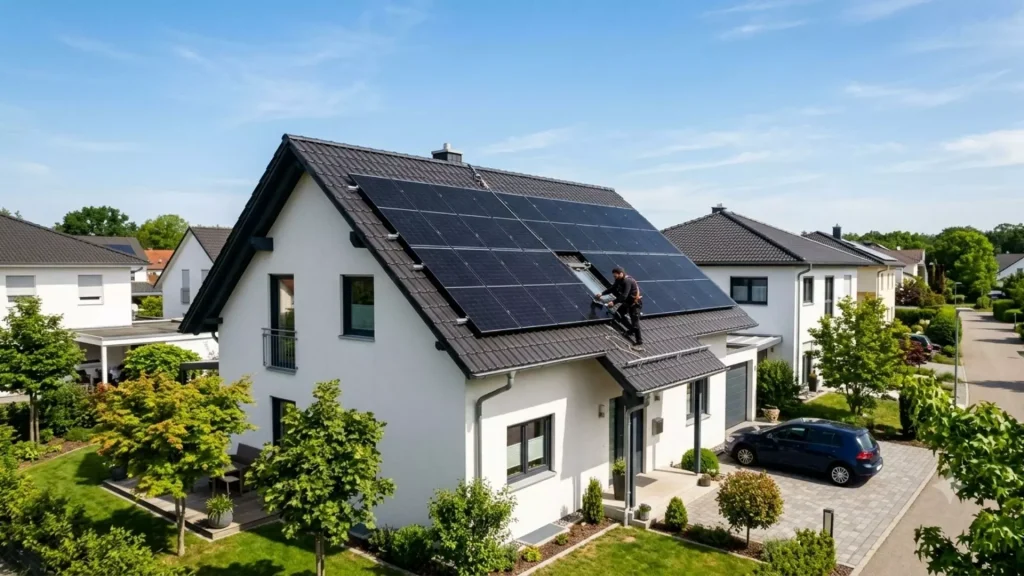
Photovoltaics for single-family homes In 2026, it will provide the most important technical basis for sustainably reducing rapidly rising electricity costs and ensuring private energy independence.
Advertisement
Anyone who owns a home today faces the urgent task of replacing fossil fuels with future-proof, decentralized solutions on their own roof.
The days of unaffordable solar components are finally over, as technological advances and changed supply chains have massively reduced the purchase costs for highly efficient PV modules.
Homeowners are now specifically investing in intelligent energy systems to effectively protect themselves against unpredictable price fluctuations in the global electricity market.
Key points
- Maximum return: Drastically reduces monthly electricity costs through optimized self-consumption directly from your own roof.
- Smart storageModern lithium iron phosphate batteries reliably ensure a power supply even in the evening hours.
- Value appreciationIncreases the market value of the property and ensures compliance with current legal energy efficiency standards.
Why is owning your own solar power system economically worthwhile?
How do current electricity prices affect the amortization period?
High network charges and fluctuating energy prices are forcing property owners to rethink their strategies in order to protect their monthly household budget from unpredictable burdens in the long term.
Advertisement
Every kilowatt-hour of electricity generated and consumed directly in the household replaces the expensive purchase from the traditional energy supplier.
As a result, modern solar power systems pay for themselves much faster today than just a few years ago, making the investment extremely attractive.
Those who cleverly utilize the generated solar power can transform their roof into a profitable power plant that yields tax-free returns year after year.
What financial advantages does the Renewable Energy Sources Act offer?
The current EEG guarantees homeowners a fixed feed-in tariff for every surplus electricity that flows unused into the public electricity grid.
This government-guaranteed compensation provides a solid financial foundation that absolutely secures the long-term economic calculation of the solar power plant.
At the same time, the elimination of VAT on PV components significantly lowers the barriers to entry for initial purchases.
Smart owners use this combination of tax breaks and feed-in tariffs to quickly refinance the total costs of the plant over its lifetime.
++Making good use of excess PV power: Strategies instead of feeding it into the grid
Why secure photovoltaics for single-family homes the property value?
A modern home with an integrated solar solution already meets the strict requirements of future energy efficiency classes on the European real estate market.
Buyers meticulously check the energy efficiency during viewings in order to completely avoid future renovation costs and expensive CO2 taxes.
An installed PV system functions like a built-in security certificate, noticeably increasing the market value of your building compared to neighboring houses powered by fossil fuels.
So you are not just investing in cheap electricity, but directly in the long-term value of your valuable real estate.
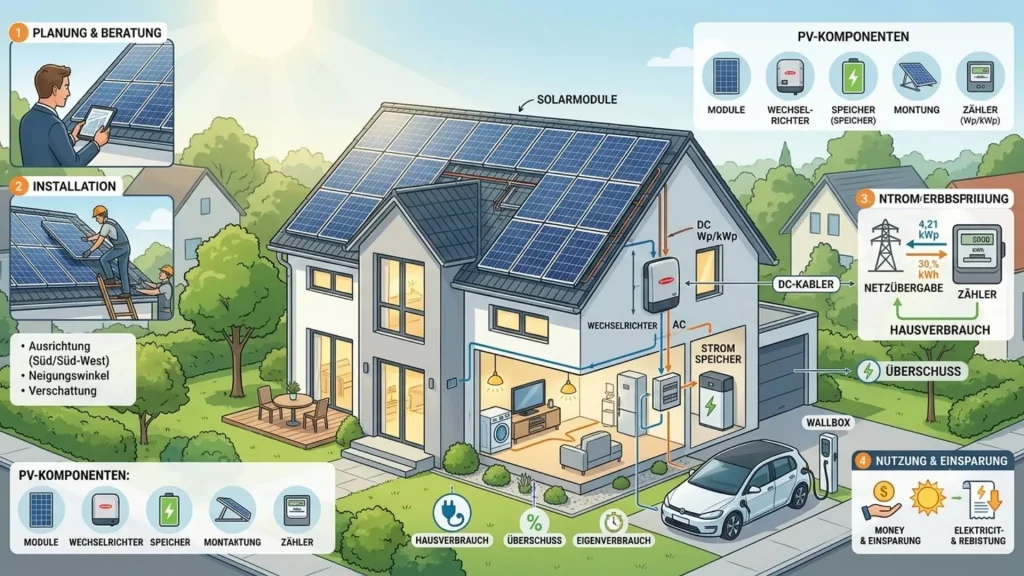
How does the technical planning of a solar power system work?
Which roof orientation delivers the highest energy yield?
The classic south-facing orientation was long considered the ultimate in solar technology, as it delivers the absolute peak power at midday.
However, east-west orientations are becoming increasingly important, as they perfectly shift electricity production to the early morning and late afternoon.
This distribution exactly matches the actual electricity needs of most families, who require a lot of energy in the household, especially in the mornings and evenings.
A precise analysis of the roof area by a specialist company prevents costly planning errors and optimizes the specific annual yield of your solar modules.
See more: Heat pump instead of gas heating: How to make the switch
Why is a battery storage system indispensable for self-consumption?
Without a modern electricity storage system, a large part of the valuable solar power is wasted, as maximum production usually falls during the sunny midday hours.
At this time, many working people are not at home, which is why the unused electricity would flow cheaply into the grid.
A battery storage system flexibly captures this energy and makes it available precisely when the family activates the heat pump or kitchen appliances in the evening.
A look at current market statistics from the German Solar Association (Bundesverband Solarwirtschaft) unequivocally confirms this trend.
Over 80 percent of all new PV systems on German homes will be installed directly with a suitable battery storage system in 2026 to maximize independence.
See also: Saving energy while cooking: Tips for kitchen & stove
How do you size the plant for the future?
When planning, you should definitely include future energy consumers such as a planned electric car or a modern heat pump from the very beginning.
Those who measure too tightly here will later pay unnecessarily high installation and scaffolding costs when subsequently expanding the roof area.
Plan the system like a tailor-made garment, deliberately leaving some room for future growth in the household.
A generously sized module area ensures a noticeable amount of valuable and clean household electricity even on cloudy winter days.
What advantages does the combination with sector coupling offer?
Why does the heat pump optimize solar energy?
The intelligent coupling of photovoltaics for single-family homes A modern heat pump reduces heating costs to an absolute minimum.
The heat pump uses inexpensive solar power from the roof to transform ambient heat from the air or ground into heating energy with high efficiency.
This makes you completely independent of expensive gas or oil imports and allows you to heat your building in a virtually climate-neutral way.
This technical symbiosis transforms your house into a holistic ecological system that optimally and fully automatically utilizes natural resources.
What's the cheapest way to charge an electric car with solar power?
Having your own wallbox in the carport allows you to direct the excess electricity from the solar system directly into your vehicle's battery.
The so-called surplus charging system controls the charging process fully automatically, so that no expensive grid electricity needs to be purchased for the car.
For example, if you charge a modern electric vehicle with solar power, you drive practically for free compared to fossil fuels.
This saves you the trip to the gas station permanently and allows you to use the power of the sun for your personal mobility revolution.
What role do intelligent energy management systems play?
A smart home energy manager controls the flow of electricity throughout the entire building completely independently and optimizes the distribution in real time.
The system switches on the washing machine or dishwasher precisely when the sun shines intensely on the solar panels.
Would you like to run your house like a modern company that perfectly manages its resources without you having to intervene manually?
This is precisely the task that the software performs in the background, in order to effectively reduce the expensive electricity purchases from the energy supplier to almost zero.
Technical performance data comparison
The following overview shows the typical key figures and performance values of modern solar systems for private homes.
| System component / metric | Small PV system (5 kWp) | Medium-sized PV system (10 kWp) | Large PV system (15+ kWp) |
| Typical number of modules | approximately 12-15 modules | approx. 24-30 modules | over 35 modules |
| Recommended storage size | 5 kWh storage | 10 kWh storage | 15+ kWh storage |
| Annual electricity yield | approx. 4,500 – 5,000 kWh | approx. 9,500 – 10,500 kWh | over 14,000 kWh |
| Ideally suited for | Small households / terraced houses | Families with heat pump | Houses with electric car & pool |
| Self-sufficiency rate | approx. 30% (without memory) | approx. 70% – 80% (with memory) | up to 90% during the summer months |
| Tax treatment | 0% VAT regulation | 0% VAT regulation | 0% VAT regulation |
Initiating your personal energy transition
The investment in photovoltaics for single-family homes marks the decisive step towards a clean, economically stable and absolutely crisis-proof future.
Anyone who tackles the transformation of their own roof area today is effectively protecting themselves against incalculable fossil fuel price risks of the coming decades.
Modern technology operates silently, requires little maintenance, and reliably delivers clean energy for heating, household use, and transportation for generations to come. Take advantage of current subsidies to transform your home into an independent, green power plant.
Are you already planning your own solar power system or are you already harnessing the power of the sun? Feel free to share your valuable experiences and questions with us in the comments below!
Frequently Asked Questions
Is a solar power system worthwhile even for an older, uninsulated roof?
The condition of the roof should be checked before installation, as later renovation will require the dismantling of the PV modules.
How long do modern solar panels and battery storage systems last on average?
High-quality solar modules operate smoothly for 25 to 30 years, while modern battery storage systems achieve a lifespan of around 15 years.
Will the PV system still function during a total power outage on the grid?
A solar power system requires a special emergency power or backup power function of the inverter to continue supplying the house independently.
How much maintenance does an installed photovoltaic system require per year?
The systems require extremely little maintenance; however, a professional inspection of the electronics and module surfaces is recommended every few years.