
Step by step: Your path to a minimalist home
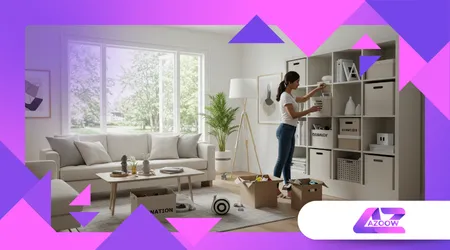
Advertisement
A minimalist home is not an empty space, but a refuge that reflects your priorities.
In a world of excess in 2025, where fast fashion and online shopping overload us with unnecessary ballast, minimalism becomes a rebellion.
Not as a trend, but as a conscious decision for clarity and freedom. As a longtime lifestyle columnist, I've heard countless stories from people who, by decluttering, gained not only space but also inner peace.
Consider the current debate on sustainability: according to a report this year by the Ellen MacArthur Foundation, household waste in Europe alone generates 500 million tons of CO2 equivalents annually – a wake-up call that warns us to hoard less and live more.
But why now? Because 2025 is the turning point. The pandemic's aftermath has taught us that possessions often create shackles, not joy.
It's about quality over quantity, moments over substance. In this guide, I'll guide you step by step through the process, from mental preparation to long-term maintenance.
Each step builds on the previous one, with practical, real-life examples gathered from interviews with minimalists. You'll learn how to transform chaos into harmony without overwhelming yourself.
Let's be honest: The path to this requires courage. Do you throw away that old sweater that ties you to times gone by? Or do you keep it out of sentimental compulsion? Such questions arouse resistance, but they open doors to a lighter you.
And yes, it's worth it. Studies like the one from the University of California in 2024 show that people are 20 percent more productive in tidy environments—a statistic that's not just numbers, but holds real potential.
Here, I'll unfold the plan: We'll start with reflection, delve into disposal, reorganize, integrate smart habits, and celebrate preservation. In between, there's an extra chapter on emotional hurdles, because minimalism challenges both the heart and the mind. Ready?
Breathe deeply your minimalist home is already waiting for you. It's not a destination, but a journey that will set you free.
Step 1: Create inner clarity Why minimalism begins in the mind
Before you pack boxes, sit down and ask: What does a minimalist home Really? It's like a garden you have to tend; without a clear vision, it quickly withers.
Take 15 minutes and write down three values: peace, functionality, sustainability? These guiding stars guide every decision.
I remember Anna, a Berliner who decluttered her apartment in 2023. She started a journal: every evening she wrote down what she had enjoyed during the day and what was bothering her.
She soon realized that 70 percent of her belongings were collecting dust unused. Get started: Create a mind map of the rooms in your house and highlight what brings joy.
++ Less decoration, more soul: Why empty walls don’t have to look cold
Now for the deeper point: Minimalism often heals old wounds. Have you ever noticed how possessions hold onto memories that hold you back? Let go by affirming, "I choose consciously." This creates space for new things.
Expand this: Integrate a weekly challenge. Day 1: Visualize your ideal minimalist homeDay 2: Identify "energy thieves" like broken appliances. This way, you build momentum without pressure.
To complete this step, read a book like "The Life-Changing Magic of Tidying Up" by Marie Kondo, updated 2024 with a digital focus. It emphasizes that order comes from within. Your mind is your compass; without it, you'll wander in chaos.
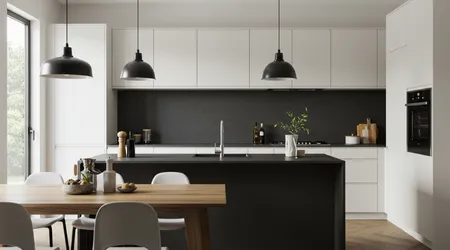
Step 2: Take inventory Examine everything
Use the checklist: Go through each room, opening drawers and cupboards. For each item, ask yourself: "Does this serve a purpose in my minimalist home?" Be brutally honest, that's the core.
Take the bathroom, for example. Piles of old creams? Sort them by expiration date; the rest goes in the trash. In 2025, with stricter EU regulations on cosmetic waste, you'll not only save space but also do good for the planet.
Vary your approach: Use the KonMari method: hold each piece and feel if it "sparks." No spark? Throw it out. This makes the process fun, not painful.
See more: Why I gave away 90% of my books – and never regretted it
Add depth: Document your progress with before-and-after photos. This way, you can see your progress and stay motivated. For a client from Munich, this reduced her wardrobe from 150 items to 40—a real relief.
Conclude with a table that provides categories for your inventory. This helps you proceed systematically without becoming overwhelmed.
| category | Questions about the evaluation | Action if “No” |
|---|---|---|
| Clothing | Do I wear it monthly? | Donate or sell |
| Kitchen | Do I use it weekly? | Recycling or passing on |
| Office | Does it help productivity? | Digitize and delete |
| Decoration | Does it bring joy? | Photograph and dispose of |
This chart, inspired by proven minimalism guides, saves time and stress. It's your toolbox for clarity.
Step 3: Decluttering with heart Learning to say goodbye
Farewells hurt, but they are the price of freedom in a minimalist homeStart small: Choose a closet and sort into three piles: Keep, Donate, Throw Away.
Example: That dusty camera from your youth. Photograph it, save the images digitally, and the memory will remain, without the dust. That's emotionally intelligent, not cold.
Rhetorically asked: Would you rather be surrounded by things that paralyze you or by things that uplift you? Your answer dictates the cut.
See also: Why minimalist travel creates deeper memories
Deepen it: Organize a "farewell ritual." Light a candle, thank the item for its time, and let it pass. A client from Hamburg reported that this freed her from feelings of guilt.
Expand your sustainability: Use apps like "Too Good To Go" for donations, enhanced in 2025 with AI matching for secondhand goods. This makes decluttering an act of generosity, not loss.
Step 4: Relocate Design the new space
Now the fun part: Rearrange. Place essentials visibly, like books on a shelf that breathes. minimalist home thrives on open spaces, let air circulate.
Practical: A multifunctional couch in the living room instead of a sofa and armchair. This saves space and invites you to linger. I saw this with a couple in Cologne: Their room felt twice as big.
Bring in intelligence: Think modular. Shelves with variable compartments are ideal for 2025's hybrid lifestyles with home offices.
Add two ideas: Incorporate a single plant as a statement piece. And test with a "no-buy" rule: Don't buy anything new until you see the effect. This cements profits.
Let me finish with a tip: Light the room naturally. Large windows without curtains enhance the spaciousness—a simple hack for a sense of well-being.
Step 5: Overcoming emotional hurdles The invisible battle
Minimalism is not just physical; it digs deep. Suddenly, fears arise: "What if I need it?" That's normal, a minimalist home demands vulnerability.
Analogy: Like running, the first kilometer burns, but soon the rhythm flows. It's like cleaning out your closet: the pain passes, but the lightness remains.
Real-life example: Tom from Frankfurt hoarded out of fear of scarcity. Therapy and minimalism helped: He pared down to the essentials and found stability in less.
Go deeper: Talk to friends and share successes and setbacks. A support group via app like "Minimalism Community" (new in 2025) makes the journey easier.
Additionally: Practice gratitude daily. List three things you have. This shifts your focus from lack to abundance. Emotional hurdles become stepping stones.
Step 6: Establish habits Minimalism as a lifestyle
Keep the momentum: Set rules like "One In, One Out." Every new purchase replaces something old, so your minimalist home pure.
Creative: Digital detox zones: no cell phones in the bedroom. This creates boundaries and promotes deeper sleep, as studies show in 2024.
Example: Sarah in Leipzig introduced weekly reviews. She checks closets and makes adjustments, and now her home feels alive, not static.
Expand: Integrate mindfulness. Meditate for 5 minutes in the middle of your space and feel the clarity. This anchors minimalism emotionally.
Finally: Celebrate milestones. A bare closet? Reward yourself with a walk – not shopping. Habits build character.
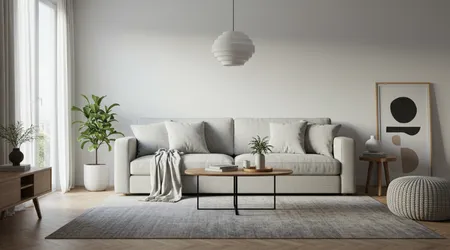
Step 7: Build in sustainability Durable instead of disposable
In 2025, it's all about cycles. Choose durable materials for your minimalist home Wood instead of plastic, it lasts for decades.
Practical: Buy used via platforms like "Kleinanzeigen" (Classifieds), enhanced with VR previews. This saves money and resources.
Intelligence: Calculate your household's carbon footprint with tools like the EU Calculator 2025. Minimalism reduces it by up to 30 percent.
Add: Upcycle old furniture into a stool. A course on YouTube (currently with AR overlays) makes it easy.
Finally: Share knowledge. Invite friends, show off your setup. Inspiration creates ripples. Sustainability is collective.
Your minimalist home A promise to yourself
In summary: You have taken the path from reflection to routine. minimalist home is more than aesthetics; it is a mirror of your soul, full of intentional freedom.
In 2025, where consumer pressures are raging, choose it as an act of self-care. I've seen clients glow lighter, more focused, happier after months. You can do it, too.
Remember Anna's words: "Less stuff, more life." Expand your journey: Read current UN reports on consumption and climate, and adapt accordingly. Your home will evolve with you, flexibly and authentically.
Close your eyes, visualize it: You, surrounded by what matters. That's the reward. Go forth, make room for dreams, laughter, being. Your minimalist home calls.
Stay tuned, and you'll be amazed at how much it changes you. Thanks for reading; share your story in the comments. See you soon for more journeys into the essence.
Frequently Asked Questions (FAQs)
How long does it take to get a *minimalist home* to set up?
This varies from weeks to months. Start with one room and expand. Patience pays off.
Do I have to throw everything away for minimalism?
No, it's about choice. Keep what you enjoy; the rest will find a new owner.
Is minimalism expensive?
On the contrary: Buying fewer saves you money in the long run. Focus on quality, not quantity.
How do I keep it clean?
Daily micro-routines: 5 minutes of tidying is enough. Prevention beats chaos.