
Photovoltaics for tenants: These are your options
Advertisement
At a time when energy prices are exploding and the climate crisis is pressing, Photovoltaics for tenants no longer just a luxury for homeowners.
It's becoming a clever rebellion against high costs and dependence on the grid. As a tenant in Germany in 2025, you often see yourself as a spectator of the energy transition, but that's changing rapidly.
New laws like the Solar Peak Act and regional subsidies are opening doors that were previously closed. Why should you wait until you become an owner? The opportunities are right on your doorstep, or better yet, on your balcony.
These options range from simple plug-and-play systems to collaborative projects that extend throughout your entire home.
I remember a friend in Berlin who started with a small solar panel last year and now saves €200 a year. Such stories are becoming more common because technology and law are finally converging.
In this article, we'll dive deep into the details: We'll compare options, examine costs and benefits, and show you how to convince your landlord.
Because Photovoltaics for tenants It's not a dream, but a reality. Let's get started. What's holding you back?
The solar energy boom in Germany underlines the potential: According to Fraunhofer ISE, 15,900 megawatt peak were newly installed in 2024 alone, a record that also attracts tenants.
But how do you tackle this without risking your tenancy? First, the basics: You don't need roof rights to get started.
Instead, you use portable systems or push for tenant-owned electricity. This flexibility makes all the difference.
And hey, imagine if your neighbors do it too—suddenly, an individual activity becomes a community effort. This not only saves money but also creates social bonds within the neighborhood.
But wait, it's about more than just savings. Photovoltaics for tenants strengthens your independence in uncertain times.
Consider the electricity price shocks of recent years: those who produce their own energy sleep more soundly. And ecologically? Every kilowatt-hour from the sun avoids CO₂ emissions that would otherwise come from fossil fuels.
I'm not just making an emotional point here: the numbers speak for themselves. With module prices falling to €1,200–1,600 per kilowatt peak, investments are paying off faster than ever.
For tenants, this means: Start small, scale up later. In the next sections, I'll break down the options in a practical way, with examples and a table for comparison. Ready to take the first step?
Balcony power plants: Your entry without a drill
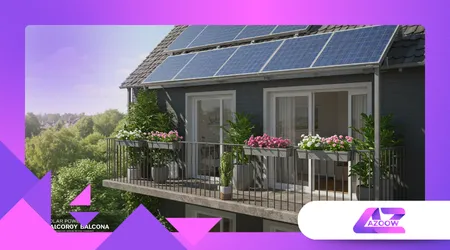
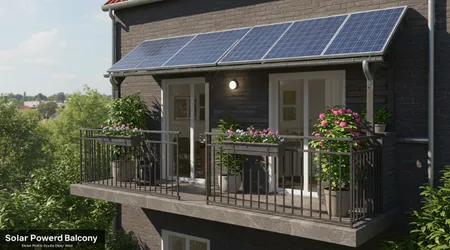
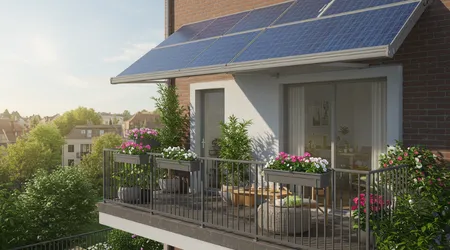
Balcony power plants are revolutionizing the everyday lives of tenants because they're so uncomplicated. No electrician, no permitting marathon—just plug in and go.
Since Solar Package I in May 2024, you can feed in up to 800 watts, twice as much as before. It sounds trivial, but it doubles your yield.
In Berlin, a friend mounted his set on the south-facing balcony railing; it now covers his refrigerator and router, saving him 150 euros annually.
Installation? You buy a complete set with modules, inverter, and cables for €300–€500. Attach the panels with clips, plug them into a Wieland outlet, and you're done.
But be careful: Landlords aren't allowed to prohibit this without good reason. The new tenancy law entitles you to such "privileged measures."
Imagine your balcony becoming a mini power station, like a garden hose that gets water from the tap instead of buying it.
Subsidies make it even sweeter. In Mecklenburg-Western Pomerania, you can get up to €500 in subsidies, and in Berlin, €250 per system.
For low-income households in Hamburg, even 90 percent of the costs are covered. Apply before you buy, and you'll save massively. A tip: Choose bifacial modules, which also utilize reflected light—ideal for light-colored floors.
++ Saving energy in old buildings: What is really feasible
But is that enough for a household? With an annual yield of 600–800 kWh, yes, for basics. Combine it with a storage unit for an extra €800, and you have storage for the evening.
If you're skeptical, argue: It doesn't damage the house; it actually increases its value. In times of rising prices, this isn't a cost, but rather insurance.
And if the balcony is shady? Rotate the panels for optimal lighting. Apps can help. A real-life example: In Munich, a 600-watt solar panel saved a family from a €200 bill in the summer.
Such successes are motivating. Give it a try; getting started will feel like a small victory.
Tenant electricity models: Strong together
Change your perspective: Instead of fighting alone, join in. Tenant electricity means the landlord installs a rooftop PV system and sells you the electricity at a lower price than the grid operator.
Win-win: You pay 10–20 cents per kWh instead of 40, and they collect surcharges from the Renewable Energy Sources Act (EEG). In 2025, fixed tenant electricity surcharges of up to 2.62 cents/kWh will apply to small systems. This makes projects profitable.
It started with a tenant survey in a Frankfurt log cabin: 80 percent answered yes, and now everyone saves 300 euros annually. The key? Transparency through apps like metergrid, which track consumption.
Legally secure thanks to the Renewable Energy Sources Act (EEG) 2023, which subsidizes systems up to 100 kWp. Landlords benefit from VAT exemption and depreciation over 20 years.
See more: 10 myths about renewable energy – what’s really true?
But how do you get started? Talk to your landlord and emphasize the 5–10 percent increase in property value. In Bavaria, there are examples of 45 kWp systems and storage units that supply 11 households. Billing? Automated, fair, and no hassle.
Don't forget scalability: Start with 10 kW and expand later. Ideal for tenants without a balcony, as you don't have to install anything.
The social component? It connects neighbors and sparks discussions about sustainability. Why not you as the initiator?
You'll split the costs at a rate typically 5–10 cents/kWh below market price. In the long run, your bill will be halved. One argument against concerns: Studies show that tenant electricity reduces exit barriers for landlords. It's worth sticking with it.
Overcoming legal hurdles: Your rights in 2025
Legally, you're stronger than ever. The 2025 Solar Peak Energy Act protects against feed-in losses during negative prices, but encourages self-consumption. For tenants?
Great news: Landlords must approve balcony power plants unless they endanger the building. The October 2024 amendment to tenancy law makes it clear: privileged installations like your solar panels have priority.
In practice: Write a formal application, citing climate protection and cost savings as reasons. Rejection? Take legal action, which has a high success rate.
For tenant electricity: The Renewable Energy Sources Act (EEG) guarantees subsidies as long as you consume electricity on-site. Don't worry about the smart meter requirement; it applies from 7 kW upwards, but subsidies cover costs.
See also: How an energy-efficient refrigerator can halve your electricity bill
An example from Hamburg: A tenant fought for her balcony furniture and, inspired, won the block. Rhetorically speaking: Do you really want to wait for permits you're entitled to? Use advice centers like consumer advice centers; they help free of charge.
Tax-wise? As a tenant, you save directly, while landlords deduct investments. Stay tuned: Rights grow with the energy transition. Ignore concerns and act informed.
And in case of dispute? Mediation doesn't hurt. Many landlords realize: Modern tenants stay longer. Your advantage? Stable rental income for them, green electricity for you.
Costs and benefits in comparison: A table for weighing up
Before you decide, look at the numbers. Here's an overview based on 2025 data: Balcony power plant vs. tenant electricity vs. community cooperative. Yield at an optimal location, costs including subsidies.
| option | Initial investment (after funding) | Annual yield (kWh) | Savings/year (€) | Advantages | Disadvantages |
|---|---|---|---|---|---|
| Balcony power plant | 200–400 € | 600–800 | 200–280 | Simple, mobile, tenant law | Limited scalability, weather dependent |
| Tenant electricity | 0 € (landlord pays) | 1,000–2,000/household | 300–500 | Cheap electricity, shared | Depends on landlord |
| Community cooperative | €500–€1,000 (starting portion) | 800–1,500 | 250–400 | Scalable, social | Coordination required |
This table shows: Each option is a different fit. Balcony power plant for solo savers, tenant power for those with a block of flats. Adapt to your needs with online tools.
The payback? At 35 cents/kWh, it's less than two years for balcony sets. Benefits like CO₂ savings (approximately 300 kg/year per set) add up. Choose wisely; it'll pay off.
In a cooperative, you share not only costs but also successes, as in Cologne, where 20 households are now self-sufficient. Comparisons help set priorities.
Community solar projects: From bottom to top
Community projects Photovoltaics for tenants At the community level. Form a cooperative with neighbors to jointly purchase panels for carports or gardens. In North Rhine-Westphalia, the state subsidizes up to €4,000 per project. This spreads risks and maximizes returns.
Take Leipzig: Ten tenants financed a 20 kWp system, and now electricity is billed via an app. Each saves €400, plus social events are organized around it. Legal? The Renewable Energy Sources Act (EEG) supports up to 1 MW, with surcharges.
Start with a meeting. Apps like "Sun Cooperative" make planning easier. The advantage: You build networks while saving money. The argument: It's better together than alone.
Financially: Entry from €500, return 5–8 percent. This stabilizes your budget in uncertain markets. For example: A shared apartment in Stuttgart covers 70 percent of your needs with ridiculous ease.
Scale: From balcony to block. The commitment is worth it; you're helping to shape the future. And the hurdle? Bureaucracy. Use templates from BSW-Solar and it'll run smoothly.
Funding and financing: Your turbo
Funding is the game changer for Photovoltaics for tenantsKfW loans with an interest rate of 3.25 percent starting in 2025 make entry easier. In Darmstadt, a subsidy of up to €6,000 for 30 kWp is available.
For a balcony: Berlin €250, Bonn €480 for tenants. Apply online before purchase. This halves the investment.
Financing? Installments through suppliers, or crowdfunding in cooperatives. Tax-free until 2025 for small systems. The argument is: the government is pushing it, so use it.
In Hamburg: Low-earners get 90 percent. One couple saved €450 immediately. Research locally; portals like Finanztip list everything.
Long-term: Subsidies are declining, but 2025 is the peak. Get in before the price gets higher. Combine with storage and you'll receive an extra €100/kWh in subsidies in Ludwigsburg. Your wallet will thank you.
Future of tenant solar: trends and tips
Look ahead: The market will explode in 2025, with 10 GW of new capacity added by fall. Intelligent control minimizes losses, and storage becomes cheaper. For tenants? More rights, better apps.
Trend: Hybrid systems that combine PV with heat pumps. Projects in Bavaria are testing this to save heating costs. Tip: Track yield with apps, optimize orientation. And get involved: Forums like Solarclub connect you.
The analogy? Your balcony as an urban allotment garden—nutrient-rich, productive, and without a lot of soil. Why not harvest? In summary: Photovoltaics for tenants Transforms living. Start now, reap long-term benefits.
Conclusion: Take the leap, your sun is waiting
In summary: From balconies to apartments, options for everyone. You save money, protect the climate, and gain freedom. Ignore excuses. 2025 is your year.
Contact advisors, apply for funding. The energy transition needs you. What if you don't act? You'll remain in the dark while others shine. Go out there and let the panels shine.
Frequently Asked Questions (FAQ)
As a tenant, am I allowed to install a balcony power plant?
Yes, since 2024, you've been entitled to it, as long as it doesn't damage the building. Landlords must agree, unless there are compelling reasons.
How much do I save with tenant electricity?
Typically €300–500 per year, depending on the system and consumption. Electricity costs 10–20 cents/kWh.
Are there any subsidies for cooperatives?
Absolutely up to €4,000 in North Rhine-Westphalia, plus EEG surcharges. Check with KfW.
Do I need an electrician for the balcony power plant?
Just for the socket, about 100 euros. The rest is plug and play.
What if my landlord refuses?
Write formally, referring to tenancy law. If rejected, contact the consumer protection agency.