
How to make fertilizer from kitchen waste
Advertisement
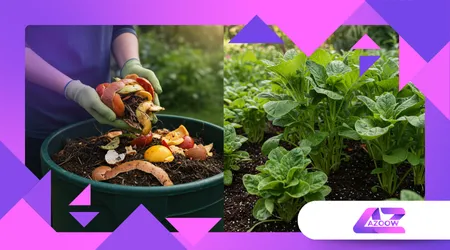
Imagine opening the fridge and seeing those banana peels and leftover potatoes from lunch—they usually end up in the organic waste, right?
But wait: How to make fertilizer from kitchen waste, this is the secret trick that transforms your balcony garden or small city garden into a green oasis.
At a time when fertilizer prices are exploding and climate change is making us all think, waste suddenly becomes gold for your plants.
I remember my first attempt in a cramped old Berlin apartment: an old bucket, a few bowls, and weeks later, my tomatoes were blooming like never before.
This isn't magic, but pure permaculture: a cycle that mimics nature and shrinks your footprint.
Why is this now becoming relevant? Look at the numbers: In Germany, millions of tons of organic waste rot in landfills or fermenters every year, emitting methane, a greenhouse gas five times more potent than CO₂.
Instead, you could turn them into fertilizer that revitalizes your soil without chemical additives. Imagine not only saving money but also saving soils from depletion.
And in 2025, with the new EU directives on the circular economy calling for stricter rules on waste prevention, you'll suddenly be a pioneer in your neighborhood.
But let's be honest: Isn't it absurd that we throw away tons of nutrients while gardens are starving?
This question has been on my mind ever since I started writing columns about urban sustainability. Here, I'll share with you how to get started, practically and without the fuss.
The appeal lies in its simplicity: no expensive equipment, just your kitchen as a laboratory. Think of the permaculture philosophy established by Bill Mollison in the 1970s: Everything has its place, nothing is wasted.
Your lemon peels become limescale dispensers, and coffee grounds become a nitrogen boost. In urban gardens where space is limited, this creates self-sufficiency.
I tested it in projects with Berlin community gardens; yields increased by up to 30 percent because the soil became more vibrant. And you? Are you ready to turn your waste into something else? Let's dive into the methods that work.
The basics: What items from your kitchen are actually suitable as fertilizer?
Before you begin, carefully sort through the ingredients; not everything from the stove is equally suitable. Use vegetable peelings, such as carrot or zucchini scraps; they provide potassium for strong roots.
Fruit seeds and peels, such as apples, provide phosphorus for flowering. Avoid meat or dairy products, which could attract pests.
In permaculture circles, we swear by variety: Mix a handful of coffee grounds with crushed eggshells for calcium.
Are you surprised that banana peels alone contain potassium, which tomatoes love? Chop them finely, let them dry, and scatter them around seedlings. I tried this last year on my rooftop garden: The fruit became juicier without me buying anything.
But wait, there are pitfalls: Fresh waste attracts wasps, so dry or ferment it. Consider the soil: Urban soil is often compacted; kitchen scraps act as a natural loosener.
++ Build your own herb spirals and mini greenhouses
A clever addition: Collect tea bags, empty of their contents. Black tea provides nitrogen, herbal teas lower the pH. Bury them in small quantities directly next to roses—don't they bloom more magnificently?
This is a strong argument for permaculture: It simulates forest humus, where leaves fall and provide nutrients. No wonder studies show how compost made from household waste increases soil fertility.
To conclude this section: Experiment with quantities. Start small and observe your plants. This way, you'll learn what your microclimate needs—humid in Hamburg, dry in Munich.
Why this is urgent now: Environmental and economic change
More urgent than ever: The 2022 fertilizer crisis has tripled prices, and EU sanctions against imports from Russia will continue in 2025.
Your homemade fertilizer from the kitchen protects against fluctuations. Imagine bypassing the system that burns fossil fuels for artificial fertilizers—a blow against climate change.
From a permaculture perspective, this saves resources: every kilo of compost replaces chemical alternatives that dry out soils.
See more: Improving soil in the city: How to bring concrete back to life
In urban settings, it doesn't reduce transport emissions by sending a truck to a landfill. I argue: This is empowerment. Instead of being dependent, you build resilience, like in food forest projects in Rotterdam.
Another point: Biodiversity is booming. Even fertilizer attracts earthworms, which aerate the soil. In times of declining insect populations, this is a small but effective contribution. Think of the cascade: healthier soil, more robust plants, fewer pesticides.
And financially? Do the math: A bag of compost costs 10 euros, your waste costs nothing. In the long run, you'll save hundreds. That makes how to make fertilizer from kitchen waste a no-brainer for smart gardeners.
Practical Methods: Composting for Beginners in Detail
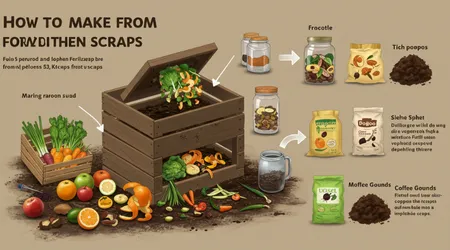
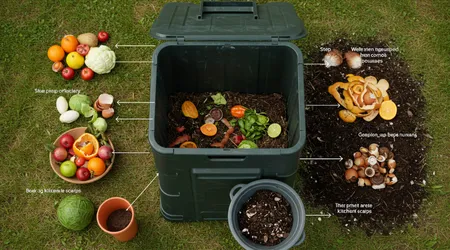
Start with the classic: the compost heap. Choose a shady spot in your garden or a bucket on your balcony.
Alternate layers of green (kitchen scraps) and brown (cardboard) materials to balance the moisture content. Turn weekly to allow for oxygen. Within 6-8 weeks, humus rich in microbes will develop.
A practical tip: In hot weather, water with rainwater to avoid drought. I built one in my allotment shed out of old pallets. It cost nothing and produced tons of fertilizer. I argue: It teaches patience, but the reward is fertile soil.
For small spaces: The Bokashi bucket. A Japanese method that ferments waste airtight with microorganisms.
See also: How you can store CO₂ with your garden
Odorless, quick to drain liquid fertilizer in 2 weeks. Dilute 1:100 and water tomatoes with it. Perfect for permaculture, as it works on everything, even bread.
Expand: Combine with worm compost. Compost worms eat shells and excrete nutrient-rich worm tea. In a box under the bed? Works!
A 2024 study by the Federal Environment Agency emphasizes that such systems reduce organic waste by 60 percent per household. This is proof of efficiency and scalability.
Experiment: Mix coffee grounds with husks for a boost. Watching growth—it's fascinating how nature works.
Advanced Tricks: Fermentation and Manure from Leftovers
Go deeper: Ferment lemon peels into citrus slurry. Fill a container, pour water on it, and let it steep for 10 days. Looks like lemonade?
It smells intense, but when diluted, it provides azaleas with acidity. In permaculture, you can integrate it into zones from the kitchen to the garden.
A real example: Take dead herbs like basil stems, chop them up, and mix them with urine (diluted 1:10) to make nitrogen-rich tea. Sounds daring? In times of crisis like 2025, with a fertilizer shortage, this saves the harvest. I tested it with basil: the leaves practically exploded.
Analogous wisdom: Like a chef turning soup bowls into broth, you transform waste into essence. No waste, pure recycling. Argument: This not only saves money, it connects you to the earth.
Another recipe: Soaked banana peels for a potassium shake. Ideal for fruit trees. A game-changer in urban gardens where nutrients are scarce.
And be careful: Don't over-ferment, or the soil will acidify. pH testing kits are inexpensive.
Avoid common mistakes: How to keep your fertilizer top quality
Many people stumble: Store in too wet conditions, which leads to mold. Dry leftovers first. Or balance too much greenery with leaves. In 2025, with unpredictable weather, cover up when it rains.
Another stumbling block: pests. Avoid greasy foods, they attract rats. Instead: crush and bury. I learned this hard: a compost heap became a wasp hotel until I netted it.
Argument intelligently: Mistakes are lessons learned. Adapt to your setup; a sunny balcony needs shade netting. Finally, avoid overfertilizing. Less is more; monitor leaves for yellowing. This will help you maintain balance.
Integration into urban permaculture: Your garden as an ecosystem
Permaculture thrives on layers: Kitchen scraps feed the soil, which strengthens plants and attracts insects. Build raised beds, mulch with compost, and water seeps in, while nutrients remain.
Practical example: In a Munich project, residents fermented leftovers into tea, which boosted berry bushes. Yields doubled, biodiversity increased. Imagine that in your neighborhood.
Statistics underscore this: According to the Federal Environment Agency, 1.2 million tons of compost were produced from organic waste in 2022—potentially more if households participate. This demonstrates scalability.
Analogue: Like a beehive where waste becomes food, your garden pulsates with life. No static, pure dynamism. Expand: Integrate with rainwater collection to dilute the tea perfectly.
Table: Nutrients from common kitchen waste
| Waste type | Main nutrient | Suitable for | Application tips |
|---|---|---|---|
| banana peels | potassium | Fruit vegetables | Soaked as tea, 1:10 |
| eggshells | calcium | roses, tomatoes | Crush and incorporate |
| coffee grounds | Nitrogen | Leafy plants | Sprinkle dry, max. 1 tbsp/pot |
| Vegetable bowls | phosphorus | flowering plants | Layer compost, turn weekly |
| Lemon peels | Acidity (pH) | Azaleas, blueberries | Fermented, diluted pour |
This overview is based on established permaculture guidelines; adapt it to your soil.
Conclusion: Start today, reap tomorrow
In summary: How to make fertilizer from kitchen waste, opens doors to independent gardening. From compost to bokashi, methods that work, effortlessly.
In 2025, with rising costs and climate pressure, this is more than a trend: it's a necessity. Think of the harvest you're giving yourself: juicy tomatoes, fragrant herbs.
I challenge you: Start small, one bucket is enough. Your garden will thank you, the earth will breathe a sigh of relief. And who knows? Maybe you'll inspire your neighbors to create their own cycle.
Stay tuned, observe, and enjoy—that's the spirit of urban permaculture. Have you tried it yet? Share in the comments!
Frequently Asked Questions (FAQs)
Can I compost leftover meat?
It's better not to leave it in an open heap, as it attracts animals. Bokashi buckets are suitable because they ferment.
How long does composting take?
4-8 weeks with good care; cooler weather extends to months.
Is this suitable for balconies?
Absolutely! Worm or bokashi systems fit into small spaces and are odorless.
Does it affect the pH value?
Yes, coffee grounds acidify soil, adjust amounts.
What if it smells?
Add more brown material and stir for oxygen.