
Saving energy in old buildings: What is really feasible
Advertisement
Energy saving in old buildings This is one of the most pressing issues in Germany's energy transition. Many homeowners are faced with the question of how to make their old buildings more efficient without breaking the bank.
In times of rising energy prices and stricter laws such as the GEG 2024, it becomes clear: taking action now is worthwhile.
Imagine your 1950s house is costing you thousands of euros a year in heating bills. Isn't that frustrating?
But this can be changed with clever steps. This article highlights practical approaches based on current developments up to 2025.
Reality shows that older buildings account for a large proportion of energy consumption. According to the dena Building Report 2025, final energy consumption for heating in residential buildings was 522 TWh in 2023. This underscores the need for targeted measures.
Why do so many people hesitate? Often, it's because they lack knowledge about viable options. This is where smart strategies come into play, weighing costs and benefits. Let's delve into the world of saving.
The challenge in old buildings
Old buildings have a charming, historic character, but they consume enormous amounts of energy. Unrenovated buildings often have up to ten times the heating requirements of new buildings. This is clearly demonstrated by the ifeu study 2025.
This study analyzes the need for building renovations. It emphasizes that poor energy efficiency ratings cause consumption to skyrocket. The German Environmental Aid (DUH) demands that political support be implemented here.
Compare it to an old car: it runs, but it guzzles gas. An old building without insulation heats the environment instead of the interior. This analogy makes the point clear.
In practical terms: In a late 19th-century house in Berlin, a family reduced their costs by 20 percent through minor modifications. This is a prime example of a quick win.
But beware: Every building is unique. Have an expert inspect the building structure first. This will help you avoid costly mistakes.
++ How an energy-efficient refrigerator can halve your electricity bill
The building sector contributes 35 percent to CO2 emissions. This statistic from the German Federal Environment Agency underscores the urgency. Act now, everyone benefits.
Another aspect: moisture and mold in uninsulated walls. This affects health. Saving energy goes hand in hand with well-being.
Additionally: Government regulations such as the 2024 Heat Planning Act necessitate changes. Don't ignore them; plan ahead.
Implement insulation measures
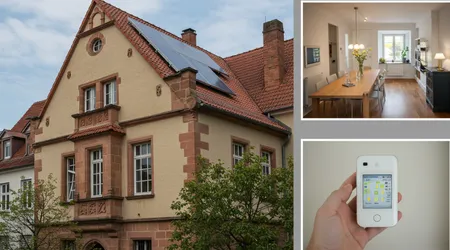
Insulation is one of the most effective ways to Saving energy in old buildingsFacade insulation can reduce heating consumption by up to 35 percent, as experts recommend.
Choose materials like mineral wool or EPS. These provide reliable insulation without altering the facade. Cost? Expect around €150 per square meter.
A prime example: A detached house in Hamburg, built in 1930, had its roof insulated. Result: 25 percent less gas consumption in the first winter.
But how do you get started? Have an energy consultant come and assess your needs. They will calculate your requirements precisely and avoid oversizing.
Interior insulation is suitable for listed buildings. It is cheaper, but carries risks such as condensation. Choose breathable systems.
See more: 10 myths about renewable energy – what’s really true?
Extend the insulation to the basement ceiling. A lot of heat escapes here. You can save quickly at €50 per square meter.
Don't forget to combine it with ventilation. Fresh air prevents moisture problems. Smart sensors help with this. Currently, as of 2025: subsidies cover up to 30 percent. Take advantage of this before budgets get tight.
Modernizing heating systems
Modern heating systems are revolutionizing Saving energy in old buildingsHeat pumps efficiently replace old oil burners. Feasible in older buildings if the insulation is adequate.
Cost of an air-to-water heat pump: From €9,000 with subsidies. Advantage: Up to 70 percent renewable energy integrated.
Take a house in Munich, for example: The owners switched to a hybrid system. Gas plus a heat pump saves 40 percent. Practical and flexible.
See also: Solar system on the balcony: Is this mini power plant worth it?
Why hybrid? Older buildings often need a buffer. This way you can bridge cold days without a complete system failure. Pellet heating systems as an alternative: CO2-neutral, but consider logistics. Storage space is key.
According to dena, sales of heat pumps will increase by 51 percent in 2025. This illustrates the trend. Combine it with solar thermal energy. Free hot water in summer. Easy to retrofit.
Think about maintenance: Regular checks maximize efficiency. Save thousands in the long run.
Optimize windows and doors
Replacing windows brings quick results. Saving energy in old buildingsTriple glazing halves heat loss. Cost: 300 euros per square meter.
In an old building in Cologne, residents replaced old window frames. Drafts disappeared, and heating costs dropped by 15 percent. The effect was immediately noticeable.
Choose wood-aluminum frames for durability. They complement historic facades. Seal doors: sealing strips for €20 each. Minimal effort, maximum impact.
For listed buildings: Retrofit interior glazing. Preserve the look, improve insulation. Extend to include roller shutters: Lower them at night, keep the heat in. Automation via app makes it convenient.
Currently: BAFA funding covers 20 percent. Check applications online. More comfort: Less condensation, better sound insulation. Double benefit.
Integrate intelligent technology
Smart Home supported Saving energy in old buildingsThermostats regulate room temperature automatically. Savings potential: Up to 10 percent.
A system like Homey integrates heating and lighting. Remote control via app. For example, a family in Frankfurt programmed scenarios: turn down the heat in the evening, turn it up in the morning. They saved 50 euros per month.
Sensors detect open windows. The heating then stops. A clever way to avoid energy waste. LED lamps plus motion detectors: light only when needed. Inexpensive to implement.
Expand to include PV systems: Generate your own electricity for heating. Store surplus energy in batteries. 2025: Smart home prices will fall. Start small, scale up. Observe data protection regulations: Choose EU-compliant devices.
Funding and financing 2025
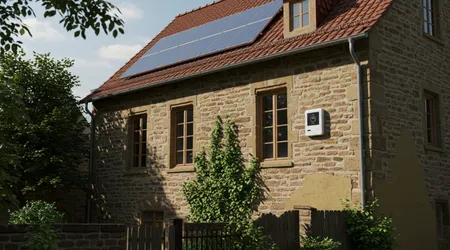
Funding programs make Saving energy in old buildings Affordable. BEG covers up to 70 percent of the costs for heat pumps. Applications will increase in 2025.
KfW loans with subsidies: For renovations starting at €5,000. Low interest rates are an attractive incentive. Regional subsidies: In Bavaria, specifically for older buildings. Check locally.
Financing tips: Equity plus loan. ROI often achieved within 10 years. New in 2025: Tax bonus for renovations. Up to 20 percent tax deductible.
Get advice: Free through dena. They'll guide you through the bureaucracy. Avoid pitfalls: Meet deadlines, secure invoices. More information: Online portals like co2online can help.
Additional opportunities through renewables
Renewable energies boost energy savings potential. Solar panels on the roof: generate your own electricity. An additional 10.6 GW of photovoltaic capacity is expected to be installed by 2025. Existing buildings will benefit enormously.
Combine with storage: Use surplus energy for heating. Become more independent. Wind energy? Small systems for gardens are feasible. Complements solar.
Biomass: Modernize your wood heating system. Locally available. Practical example: A village house in Lower Saxony installed photovoltaics. Bill halved.
Laws require 65 percent renewable energy. Adapt accordingly. Future-proof: Increased home value.
| measure | Potential savings | Cost example (per m²) | Funding 2025 |
|---|---|---|---|
| Facade insulation | Up to 35% heating costs | 150 € | Up to 30% BEG |
| heat pump | Up to 40% consumption | €9,000 (total) | Up to 70% |
| Window replacement | Up to 15% consumption | 300 € | 20% BAFA |
| Smart thermostats | Up to 10% heating costs | €200 (set) | Tax deductible |
This table is based on data from Thermondo and dena-Report. It shows real-world options.
Conclusion: It's worth starting now.
Who Saving energy in old buildings Those who take it seriously will win in the long run. Costs will decrease, comfort will increase, and the environment will benefit. 2025 offers ideal conditions thanks to subsidies.
Remember the ifeu study: ten times higher energy consumption in unrenovated buildings. Act before prices explode.
Practical steps: Seek advice, make a plan, implement it. Small wins are motivating. The energy transition needs everyone. Your old building can be a pioneer. Why wait?
In a world full of uncertainties: Secure energy savings create stability. Get involved. In summary: Transform your home with creativity and knowledge. Start today.
Frequently Asked Questions
What subsidies will be available for heat pumps in 2025?
Up to 70 percent above the basic income support level (BEG), depending on income. Check with KfW.
Is insulation possible in a listed building?
Yes, with interior insulation or special materials. Experts can advise you.
How do I calculate savings?
Use the online calculator from co2online. Enter your consumption.
Do I need an energy performance certificate?
Yes, it's mandatory for renovations. It costs approximately 100 euros.
Can I seal it myself?
Simple measures, like sealing tapes, are fine. For complex jobs, call in the professionals.