
Mini wind power for private households: reality or wishful thinking?
Advertisement
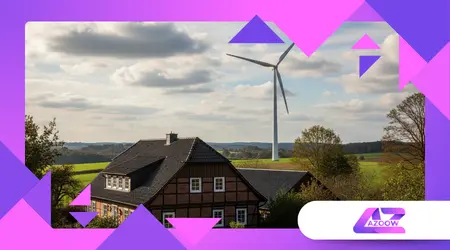
Mini wind turbines for private households In 2026, it will be at the center of the debate about self-sufficient energy supply beyond classic rooftop photovoltaics.
Many homeowners dream of harnessing the untamed power of the wind directly in their own garden in order to sustainably reduce their electricity bill.
Technological development has made enormous leaps in recent months, so that modern small wind turbines are now quieter and more efficient than their predecessors.
Nevertheless, the question remains whether the investment will pay off for every location or whether geographical obstacles will stifle profitability in its infancy.
Key points of the analysis
- Site assessment: Why wind speed determines success or failure.
- Technology comparison: Horizontal versus vertical axes for urban space.
- Legal framework: Approval procedures and building law hurdles in Germany.
- Economy: Amortization periods and government funding programs in the current calendar year.
What is small wind power and how efficiently does it work?
The Mini wind turbines for private households It uses the kinetic energy of moving air masses to generate electricity for personal use in the house via a generator.
Unlike large wind farms, these installations are designed for low mast heights, which makes them theoretically attractive and technically manageable for populated areas.
A key factor is the physical law that the power of the wind increases eightfold when the speed is doubled, which massively weights even the smallest differences in location.
Those who build in a depression will hardly see any returns, while a hillside location can make the plant a true goldmine for clean electricity.
How do the different rotor types work?
Horizontal wind turbines resemble large wind turbines visually and offer the highest efficiency, but require a very steady and laminar flow of wind.
They are sensitive to turbulence, which is often caused by trees or neighboring buildings in residential areas and puts unnecessary strain on the mechanics.
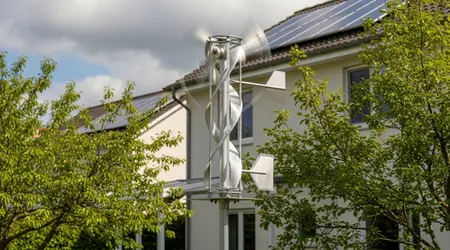
Vertical rotors, on the other hand, capture the wind from any direction and operate stably and with low vibration even in gusty, turbulent winds.
Although less efficient than horizontal models, they are ideally suited for densely populated areas where the wind often changes direction.
++ Why your electricity meter is running faster than before – despite energy-saving measures
What role does the mast height play in the garden?
Taller masts capture stronger winds, but building regulations and neighborhood restrictions often impose strict limits that must be carefully examined before purchasing.
In most German states, installations up to ten meters in height do not require a permit, but local regulations may restrict this freedom through specific distance rules.
While a short mast saves on installation costs, it significantly reduces the catch, as air layers near the ground are greatly slowed down by friction against obstacles.
Those who plan wisely use topographical features to effectively position the turbine in the wind stream without exceeding the legal height limits.
What advantages does wind power offer compared to solar cells?
The Mini wind turbines for private households is the perfect complement to photovoltaics, as it unfolds its full potential particularly in the dark winter months and at night.
While solar panels often take a break in December, autumn storms and cool breezes provide the necessary energy for heat pumps and household appliances.
This counter-cyclical generation ensures a more even load profile and reduces dependence on expensive battery storage, as the power flow is distributed throughout the day.
A wind turbine is like a diligent night watchman who provides energy long after the sun has disappeared behind the horizon.
See more: 10 myths about renewable energy – what’s really true?
Why is combining the energy systems beneficial?
Hybrid systems combining wind and solar power drastically maximize a household's self-sufficiency rate and effectively safeguard the electricity supply against seasonal fluctuations in nature.
By using both sources, grid consumption is minimized, which is a smart financial decision given the volatile electricity prices in 2026.
A well-dimensioned wind turbine can cover the base load in winter, while the solar system takes over the peak loads of air conditioners and electric cars in summer.
This synergy turns the home into a small power plant that operates almost entirely independently of external suppliers throughout the year.
See also: What does energy efficiency class A+++ really mean?
What are the ecological advantages of small wind power?
The CO2 balance of a small wind turbine is excellent, as the energy required for its manufacture is usually fully recouped after just a few months of operation.
Unlike fossil fuels, wind power generation produces no emissions during operation and sustainably conserves local environmental resources.
Modern systems are also manufactured from recyclable materials, which minimizes the ecological footprint from production to the later disposal of the turbine.
Those who invest in wind power are directly investing in climate protection and promoting the decentralized energy transition right on their own doorstep in their residential area.
Is the installation economically and legally feasible?
For the Mini wind turbines for private households A recent study by the German Small Wind Energy Association shows that installations at coastal locations already generate a profit after ten years.
Inland, however, amortization depends heavily on the individual wind map, which should be professionally analyzed before any investment.
In Germany, operators must also comply with noise protection regulations so that the quiet hum of the rotors does not become a point of contention with the neighbors in the settlement.
A wind turbine is a long-term investment that only truly pays off with proper planning and consideration of all local wind data.
What does the typical approval process look like?
First, you should check with the local building authority to see if a small wind turbine is generally permitted in the specific residential area or if there might be any restrictions due to historic preservation regulations.
A thorough wind assessment supports the application and shows that the operation will not cause any unreasonable noise pollution for the surrounding area.
Often, the consent of the neighbors is the decisive factor, which is why early communication about the project can effectively prevent later legal disputes.
Transparency regarding the technical quality and noise level of the system creates acceptance and paves the way for successful approval of your project.
How much does a high-quality system cost, including installation?
The prices for a reliable system, including inverter and mast, range between 5,000 and 15,000 euros, depending on the desired performance class and technical equipment.
Cheap imports from overseas often fail to deliver on their promises and can even pose a significant safety risk to passers-by in strong winds.
It is better to invest in certified technology with a long warranty, as repairs to the mechanics at high altitudes can be complicated and expensive.
Quality pays off here, as a durable turbine delivers consistent yields for over two decades, thus stabilizing electricity costs.
Comparison table: Wind power vs. photovoltaics (as of 2026)
| feature | Mini wind turbine | Photovoltaic system |
| Main usage time | Night & Winter (wind dependent) | Day & Summer (depending on the sun) |
| Space requirements | Small footprint, high mast height | Large roof or open area |
| Maintenance costs | Means (moving parts) | Very low (static) |
| permit | Often demanding (building law) | Usually uncomplicated |
| life | 20-25 years | 25-30 years |
| Yield per square meter | Very high (with good wind) | Medium to high |
Mini wind turbines for private households is no longer mere wishful thinking, provided the location meets the minimum physical requirements for efficient use of air currents.
Those who invest in high-quality equipment and clarify the legal framework in advance will find wind power to be a powerful pillar for their own energy transition.
The combination with solar energy remains the gold standard of self-sufficiency, as it optimally balances the natural fluctuations of both energy sources and guarantees maximum independence.
Nevertheless, one should not view the economic viability through rose-tinted glasses; without wind there is no energy, the reality of physics remains that simple.
Carefully assess your location, consult with experts, and prepare your home for a windy and green future.
Have you already taken wind measurements in your garden, or are you planning to purchase a system? Feel free to share your experiences and questions with us in the comments!
Frequently Asked Questions
How loud is a mini wind turbine for neighbors?
Modern systems usually fall below the limit values of 35 to 45 decibels, which is roughly equivalent to the noise level of a quiet refrigerator or light rain.
Do I need insurance for my wind turbine?
Yes, liability insurance is highly recommended to protect against damage caused by falling parts during extreme storms or technical defects to third parties.
Is wind power worthwhile in the city?
In cities, the wind is often too turbulent due to the narrow streets; vertical rotors work best here, but rarely achieve the efficiency of open-field locations.
Can I store the electricity myself?
Absolutely, wind power can easily be stored in standard lithium-ion batteries, which are often compatible with the existing solar system in the house.
What is the lifespan of a turbine?
With regular maintenance of the mechanical components, high-quality wind turbines last approximately 20 to 25 years before larger components or bearings need to be replaced.