
Zero waste in rented apartments: Small solutions for limited space

Advertisement
Zero waste in the rented apartment This may seem like an insurmountable challenge at first glance, especially in limited spaces.
Many people think you need a large kitchen or a garden for composting. But transitioning to a zero-waste lifestyle is primarily a matter of organization and intelligent use of space.
In fact, rental apartments offer the perfect opportunity to combine minimalism and waste reduction.
It's about making conscious decisions regarding consumption and storage.
Why is lack of space the biggest zero-waste challenge?
The biggest hurdle for tenants is often the placement of the various waste containers and storage of supplies.
Traditional waste separation systems quickly take up the entire floor space in small kitchens.
Furthermore, bulk packaging and reusable containers, which are essential for zero waste, require sufficient storage space. Intelligent, vertical storage solutions are therefore indispensable.
++ The right choice for beverage cups: Refillable & reusable instead of disposable
How can waste separation be organized efficiently on a small scale?
The solution lies in vertical and modular organization. Use stackable containers that disappear into cabinets or under the sink.
Slim, tall waste separation systems save floor space. This allows for clean separation of residual waste, paper, glass, and recyclables without blocking the kitchen.
See more: Waste-free menstruation: Sustainable alternatives to tampons and pads
What are the most important things to know when storing unpackaged goods?
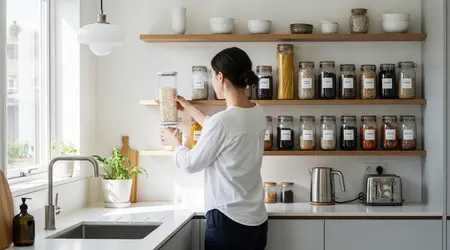
Shopping in zero-waste stores requires many containers for pasta, rice, spices, and muesli. Wall shelves that utilize vertical space are helpful here.
Make sure all containers are transparent and labeled. This not only creates order but also encourages refilling and shows how much waste is avoided.
See also: How to find sustainable clothing and avoid fast fashion
The zero-waste kitchen as a Swiss Army knife
An efficiently organized zero-waste kitchen in a rented apartment is like a Swiss Army Knife.
Each function (separating, storing, composting) has its assigned, compact space, and nothing is superfluous. The organization maximizes functionality in a minimal space.
How can you compost kitchen waste without a garden?
Many renters quickly abandon the zero-waste idea because they believe they can't compost kitchen waste. The solution lies in using special indoor composting systems that don't produce any odor.
These methods allow organic waste to be transformed directly into valuable soil in the apartment, without disturbing the landlord or neighbors. This is crucial for Zero waste in the rented apartment.
What is Bokashi and how does it work without smelling?
The Bokashi method uses fermenting microorganisms to decompose organic waste. The process is anaerobic (without oxygen) and produces no unpleasant odors, but rather a slightly acidic smell.
The Bokashi bucket fits under the sink and transforms waste into nutrient-rich pre-compost. This compost can later be used in flower pots or given to local gardeners.
What alternatives are there to Bokashi composting?
Another popular method for tenants is the Worm composter (worm farm)Although it takes some getting used to at first, with proper care it is odorless and highly efficient.
Worms consume organic waste and produce high-quality humus and liquid worm tea. These systems require very little space and make a real statement for a zero-waste home.
Bathroom makeover with solid products
A tenant in Berlin-Kreuzberg replaced all liquid products in her bathroom. She now uses solid shampoos, bars of soap, and shaving soap. The advantage: she only needs a small soap dish.
This switch eliminated ten plastic bottles per month and saved valuable space on the shower shelf. This shows that Zero waste in the rented apartment often leads to more order.
What clever shopping tips save space and packaging?
Smart shopping is key to reducing waste and minimizing storage space in a small apartment. It's about avoiding excess and choosing products thoughtfully.
The principle is: Buy unpackaged, buy less, buy durable goods. This not only reduces waste, but also clutter in the home.
How can you avoid food waste when the refrigerator is small?
Food waste is often a problem in small apartments due to a lack of overview. The solution lies in the "First In, First Out" (FIFO) strategy.
Organize your refrigerator so that older products are always at the front. Plan meals strictly according to what needs to be used up.
Why are concentrates and powders ideal for renters?
Many cleaning products can be replaced by concentrated powders or tablets that are dissolved in your own reusable bottle. This saves on transport and, above all, storage space.
Instead of storing five large bottles of cleaning products, you only need one small container of tablets. Less volume means less space required – a big advantage in small households.
How the zero-waste trend is growing
According to a 2024 study by the German Retail Association, the number of zero-waste shops in Germany has increased by [number missing] in the last five years. 35%.
This shows that the infrastructure for zero-waste shopping is constantly improving, even for city dwellers.
Where can textiles and electronics be disposed of responsibly?
Zero waste doesn't end in the kitchen; it also includes clothing, furniture, and electronics. Tenants need to find creative solutions, as they often can't simply store bulky waste in the hallway.
In this context, sustainability means: Repair and Pass along to prioritize before even considering the garbage container.
Why is repairing the most sustainable option?
Electronic devices, clothing, or small pieces of furniture can often be easily repaired. Use local repair cafés. This drastically extends the lifespan of products.
Repairing is always more ecologically and economically sensible than buying new and disposing of the waste. Zero waste in the rented apartment means active care.
How can clothing and other items be passed on efficiently?
Organize small swap parties with friends or use local sharing platforms. This ensures that items you no longer need are put to good use.
This avoids unnecessary transport routes and reduces the need for second-hand warehouses. The items quickly find a new owner in your area.
| Zero Waste area | Solution for small spaces | Required storage space (comparison) | Space-saving tip |
| Waste separation | Stackable modular containers | High (single container) vs. Low (forklift) | Vertical organization in the cabinet under the sink. |
| Groceries | Transparent, square storage containers | High (original packaging) vs. Low (stacking) | Use wall shelves and apply the FIFO principle. |
| Composting | Bokashi bucket or worm composter | Medium (garden compost) vs. Very Low (under-cabinet) | Odorless system for use under the sink or in the storage room. |
| Cleaning agent | Concentrated tablets/powder | High (pre-filled bottles) vs. Very Low (small can) | Refillable bottles and space-saving concentrates. |
Conclusion: More life, less waste in a small space
The switch to Zero waste in the rented apartment It is not only feasible, but enriches life through better organization and conscious consumption.
The need to be creative with limited space forces us to live more efficiently and minimally.
By introducing modular systems, using bokashi or worm compost, and employing concentrates, you prove that environmental protection is not a matter of square footage.
The challenge is the organization, but the reward is a tidier and more mindful home.
What small but effective zero-waste tricks have you discovered in your home? Share your experiences in the comments!
Frequently Asked Questions
Can I do worm composting in a small kitchen?
Yes, worm composters are compact, odorless with proper care, and often fit in cupboards or on balconies. The worms stay in the container.
What do I do with the Bokashi pre-compost if I don't have my own garden?
You can donate the finished Bokashi pre-compost to local community gardens, give it to neighbors with balcony boxes, or use it as fertilizer in your own potted plants.
How can I avoid plastic waste when shopping online?
Whenever possible, choose retailers that offer an environmentally friendly, plastic-free shipping option. Many zero-waste shops ship their products exclusively in paper or cardboard.
Are zero-waste shops really cheaper?
Often, the prices per weight are comparable to or slightly higher than in the supermarket. However, you avoid buying the wrong thing and don't pay for expensive branded packaging, which can save you money in the long run.
How can I ensure that my food stays fresh in storage containers?
Use airtight, square glass containers. Store sensitive products in a cool, dark place. Label everything with the fill date to ensure FIFO (first-in, first-out) storage.