
Consumption-free habits in everyday life for less waste at home
Advertisement
Consumption-free habits in everyday life We can drastically reduce waste in our own homes without sacrificing quality of life.
In a world that is constantly geared towards consumption and rapid disposal, genuine rethinking requires a conscious departure from commercial solutions.
Those who want to reduce their packaging waste and plastic waste often look for the answer in expensive zero-waste shops or trendy eco-products, which ultimately fuel new consumption.
But the most sustainable waste is the waste that never enters our cycle by refraining from making purchases, thus conserving resources.
This article highlights the radical, yet surprisingly simple transformation of our daily lives towards a zero-waste routine through conscious behavioral changes.
We examine scientific data on waste prevention, consider practical alternatives in the household, and analyze how refraining from buying becomes the ultimate environmental protection measure.
A look at the upcoming sections
- The philosophy of buying nothingWhy true waste prevention always starts directly in the mind and blocks purchasing impulses.
- Practical implementation in the kitchen and bathroom: Concrete routines for a zero-waste zone without expensive specialty products.
- Reuse instead of disposalHow creative circular systems in the household can permanently eliminate the need to take out the trash.
- Statistical orientationA detailed overview of the effects of various avoidance strategies in the household.
What does waste prevention through conscious abstinence from consumption mean?
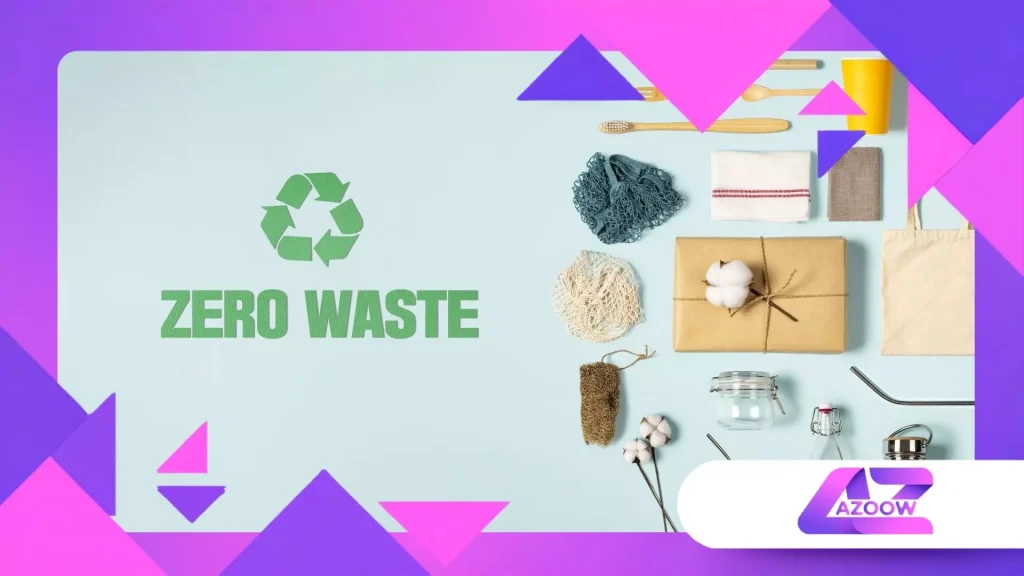
If we want to tackle the problem of waste at its root, we must stop the continuous flow of new items into our homes.
A large part of household waste is generated by spontaneous purchases, packaged convenience products, and the constant urge to fill perceived gaps in the household through new purchases.
If you systematically avoid the supermarket and instead rely on the principle of "using what's available", this chain of waste production will break immediately.
The Federal Ministry for the Environment regularly reports that German households generate over 450 kilograms of municipal waste per capita annually, a huge portion of which is avoidable packaging.
Therefore, abstaining from consumption does not mean deprivation, but rather liberation from the burden of disposal and a return to the essentials.
By learning to restore the inherent value to things, we transform our homes from dumping grounds for waste into real living spaces.
How does the view of possessions change?
Turning away from constant buying sharpens our perception of the material value of objects we already own.
Instead of acquiring a new tool for every little problem, doing without stimulates creativity and leads to unexpected solutions.
An old T-shirt is not thrown away, but mutates into a durable cleaning rag, thus eliminating the need to buy microfiber cloths in plastic packaging.
This mental shift stops the constant influx of plastics and cardboard that would otherwise end up in the trash after just a few minutes of use.
Those who recognize the value of what already exists effectively protect themselves from the cleverly placed temptations of the modern advertising industry.
++ The ultimate zero waste guide: Step by step to waste prevention
Why do classic zero-waste approaches often fail in everyday life?
Many people are motivated to embrace the zero-waste lifestyle by buying special glasses, fabric bags and designer tins, which paradoxically creates new waste.
This commercialized environmental protection merely shifts the problem instead of fundamentally challenging the underlying habit of constantly acquiring things.
True sustainability doesn't cost money, it simply requires an adjustment of our everyday routines and the rejection of unnecessary baggage.
Consumption-free habits in everyday life They establish themselves precisely where we replace the convenience of buying new with the intelligence of improvisation.
Only when we stop viewing sustainability as a lifestyle product will we achieve real relief for our strained municipal waste management systems.
How does zero-waste household management work in practice?
The kitchen and bathroom have proven to be hotspots for the generation of microplastics and unnecessary packaging waste.
One effective approach is to make your own cleaning products from the simplest household ingredients such as vinegar, baking soda and water, which have an almost unlimited shelf life.
This simple step eliminates dozens of plastic bottles that normally end up in the yellow recycling bin every month and are often not recycled at all.
Is there a more logical way to reduce waste than not bringing the packaging across your doorstep in the first place? Every time you refuse or repair a product, you send a clear message against the throwaway society.
The kitchen thus becomes a place where food is fully utilized instead of rotting in plastic wrap.
See more:The best unpackaged stores in Germany – and why they are important
What routines can revolutionize the kitchen without cost?
Systematically using leftover food and fermenting vegetable parts reduces organic waste and saves on the purchase of pre-packaged food.
Vegetable scraps are collected and placed in the freezer until they can be used to make a nutrient-rich, homemade vegetable broth, entirely without bouillon cube packaging.
Baking your own bread from basic ingredients also prevents you from buying plastic-wrapped baked goods from the supermarket shelf.
These practices require some planning at first, but quickly develop into an automatic routine that slows down everyday life.
The reward is a kitchen that manages almost without trash cans and in which food is once again valued as a precious resource.
See also: How to implement the zero-emission lifestyle in German cities
How can you create a plastic-free zone in your bathroom?
In the bathroom, waste can be reduced to almost zero by radically switching to solid soaps and using reusable safety razors.
Instead of buying expensive scrubs in plastic tubes, mix coffee grounds with some virgin oil for a perfect, free skincare product.
Even toothpaste can theoretically be made from baking soda and coconut oil, eliminating the need to constantly buy composite tubes.
If you consistently implement these changes, you will find that the bathroom trash can remains completely empty for months.
This not only saves on waste disposal fees, but also frees the room from chemical cocktails and confusing accumulations of plastic.
Why does repairing and sharing save our environment?
In our society, a defective electrical appliance or a torn piece of clothing almost reflexively leads to a new purchase and thus to electronic waste.
However, by reclaiming the art of repair, we extend the lifespan of products and massively reduce the flow of waste.
Neighborhood networks where tools, ladders, or baking tins are shared free of charge reduce the need for individual ownership and its packaging.
A wonderful analogy for this lifestyle is the forest: here there is no waste, as every fallen leaf serves as food for the soil.
Our home should function like this forest, by keeping every item in circulation for as long as possible.
If we internalize this circular way of thinking, the word "waste" loses its justification for existing in our everyday language.
What is the significance of local exchange and repair networks?
Visiting a repair café not only saves your beloved mixer, but also provides the necessary knowledge to fix future defects independently.
By sharing rarely used items in the home, we avoid the production, packaging and transport of things that mostly sit around unused.
This collective use of resources strengthens social cohesion and noticeably reduces the ecological footprint of an entire neighborhood.
Consumption-free habits in everyday life This becomes particularly evident when borrowing a drill becomes more important than owning one.
This creates a culture of trust that replaces material consumption as the primary source of satisfaction.
How do we stop the flood of text in our wardrobes?
Buying fast fashion clothing consumes vast amounts of water and, when washing synthetic fabrics, leaves tons of dangerous microplastics in our wastewater.
Clothing swap parties in private circles or the visible darning of socks and trousers make a creative statement against this destructive trend.
A well-maintained garment can be worn for decades if small tears are repaired immediately with needle and thread.
This form of appreciation protects the planet from the mountains of textile waste that are often illegally dumped in countries of the Global South.
Fashion thus becomes an expression of craftsmanship and personal history instead of a fleeting, disposable item.
Data on waste prevention in the household
The following overview illustrates the immense potential that lies in our daily decisions regarding waste prevention.
The figures are based on real-world experience from households that have actively changed their consumption habits.
| Household area | Typical source of waste | Consumption-free alternative | Annual miller savings (approx.) |
| Kitchen | Plastic bottles / cans | Tap water / glass bottles | 30 kg of plastic & metal |
| bathroom | Shower gel & shampoo tubes | Solid bar soaps / hair soaps | 4-6 kg of composite plastics |
| cleaning | Special cleaner for plastic | Vinegar, baking soda & castile soap | 12 plastic bottles |
| Clothing | Bad purchases / cheap textiles | Repair & Clothing Swap | 15 kg of textile waste |
| Shopping | Plastic and paper bags | Own fabric bags / backpacks | 80–100 disposable bags |
A new awareness of the future
The permanent reduction of household waste cannot be achieved by buying new eco-products, but by establishing smart behaviors.
By stopping the urge for constant acquisition, we not only relieve the burden on our environment, but also regain valuable time and financial independence.
Every purchase avoided is a direct victory for climate protection and an active step towards a circular society.
Ultimately, it turns out that Consumption-free habits in everyday life are the only reliable compass to a sustainable and livable future for coming generations.
Which zero-consumption routines have most significantly reduced your household waste and made a big difference? Share your valuable experiences and creative tips with the community in the comments below!
Frequently Asked Questions
What's the best way to start reducing consumption without overwhelming yourself?
Start by taking a simple inventory of your kitchen and try not to buy any pre-packaged snacks for a week.
Instead, use the supplies that are in the back corners of your cupboards to create imaginative meals.
This gentle introduction immediately shows you how many resources are already available in your home, without the need for any new purchases.
Is it really possible to make your own cleaning products effectively and safely?
Yes, a mixture of ordinary household vinegar and warm water is excellent as an all-purpose cleaner and limescale remover for faucets.
For stubborn dirt in the sink, baking soda combined with a little water forms a highly effective cleaning paste that replaces conventional scouring cream.
These alternatives are completely non-toxic, extremely cost-effective, and produce no environmentally harmful plastic waste.
How do you deal with social pressure when your friends constantly want to consume?
Communicate your values openly and suggest joint activities that don't cost money, such as hikes or picnics, instead of the classic shopping trip.
You often inspire those around you through your minimalist behavior, as many people secretly seek liberation from the pressure to consume.
Sustainability connects people on a deeper level when shared experiences are prioritized over material possessions.