
The best unpackaged stores in Germany – and why they are important
Advertisement
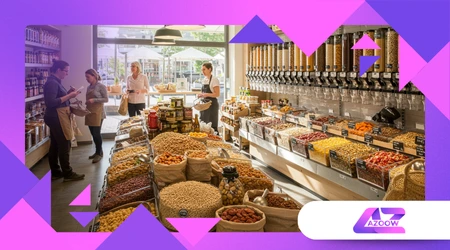
In search of the best zero-waste shops in Germany We discover more than just shops. We find pioneers of a movement.
These shops are the answer to one of the most pressing questions of our time: How can we drastically reduce our plastic consumption? They offer a solution.
Our supermarkets are full of single-use plastics. Fruit, vegetables, meat, and cereal—almost everything is packaged in plastic. This creates a gigantic mountain of waste and is causing lasting damage to our environment. Awareness of this is growing.
But zero-waste shops are changing the game. They offer a simple, direct alternative. You bring your own containers. You fill them with exactly the amount you need. This way, no packaging waste is created.
This not only saves plastic, but also prevents food waste. You only buy what you actually consume. This makes economic and ecological sense.
Zero-waste shops are often small, independent businesses. They are firmly rooted in their communities. They create local meeting places where people can exchange ideas and find inspiration.
They are more than just shops. They are educational centers. They provide information about sustainable consumption. They demonstrate that a zero-waste lifestyle is achievable. That is their mission.
Quality, regionality and conscious decisions
A key advantage of the best zero-waste shops in Germany The quality is key. The products are often regional and seasonal. They come from small farms. They are mostly organic.
This not only supports the environment, but also strengthens the local economy. You know the origin of your food. This creates trust and a new way of consuming.
Take, for example, "Die Speisekammer" in Freiburg. A small, charming shop. It offers rolled oats from a local farm. You can talk to the producers there. You feel a connection.
Another example is the zero-waste shop in Kiel, which specializes in spices. They offer rare, organic spices that can be bought in small quantities. That would hardly be possible in a supermarket.
++ How to implement the zero-emission lifestyle in German cities
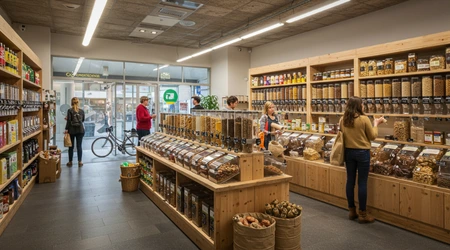
These stores don't just sell groceries. They also offer cleaning supplies, cosmetics, and household goods. Everything is available in bulk. You fill your own containers with it.
The product range is carefully selected. Every product has a story. It has been tested for sustainability. You can shop there with a clear conscience.
Every purchase becomes a conscious act. You think about the products. You ask about their origin. That's a big difference from shopping without thinking.
Unpackaged stores as part of a global movement
Unpackaged stores are not just a German phenomenon. They are part of a global movement. Cities all over the world are opening such stores. Zero waste is becoming mainstream.
According to a 2024 report by the Association of Zero Waste Shops in Germany (VdUL), the number of zero waste shops in Germany rose to over 500. This demonstrates the massive growth. This growth sends a clear signal to policymakers and businesses.
We have the power to change the world, one purchase at a time. Every purchase in one of these stores is a vote. It's a vote for a more sustainable future.
Will the major supermarket chains follow suit? It remains to be seen. So far, their efforts have often been hesitant. They are experimenting with small, unpackaged sections. That's a start, but not enough.
See more: Composting made easy: How to make good use of organic waste
Stepping into a zero-waste shop is like entering another world. It's like a calm oasis in a crowded city. You feel more relaxed. You feel more mindful.
The concept is simple, yet ingenious. It's a return to our roots. Buying unpackaged goods used to be perfectly normal. It's a return to basics.
What distinguishes the best zero-waste shops
What makes a zero-waste shop truly good? It's the combination of product range, atmosphere, and commitment. The selection must be diverse. You should be able to find all the essentials for daily life.
The owners must be passionate. They should be willing to answer questions. They give tips for a zero-waste lifestyle. They live the concept themselves.
Let's take shopping at the supermarket. You go home with a fully loaded shopping cart. You have a bag full of junk before you've even tried a single product. That's absurd, isn't it?
See also: How to find sustainable clothing and avoid fast fashion
It's different in a zero-waste shop. You take your own containers home. You only buy food. No unnecessary waste. It's a much purer experience.
The table below shows a comparison. It compares buying rice in a supermarket and in a zero-waste shop. The data is representative of the German market in 2025.
| feature | Supermarket (conventional) | zero-waste shop |
| product | Cooked rice in a plastic bag | Dry rice from the dispenser |
| Packaging | 100% Single-use plastic | No plastic, use your own containers |
| Weight | 250 g (fixed quantity) | Variable quantity (weighed) |
| Price per 100g | 0,80 € | 0,65 € |
| waste | Possible residues in packaging | Exactly the amount needed |
The table shows that shopping at a zero-waste store is not only more sustainable, it can also be cheaper. You buy only what you need, saving you money.
These shops are no longer niche markets. They are a genuine alternative. They prove that sustainability is possible in everyday life. They are an important part of the change.
The future belongs to conscious consumption.
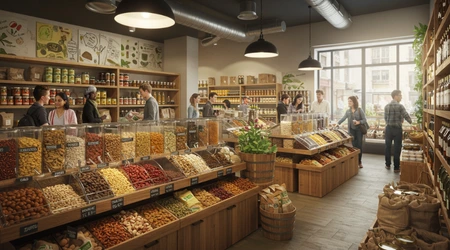
The best zero-waste shops in Germany They are role models. They show how business and environmental protection can be combined. They are a beacon of hope in a throwaway society. Their philosophy is simple.
They say: Buy less. Buy better. Make conscious choices. Think about the consequences of your consumption. That's the message.
This movement has the potential to fundamentally change our lifestyles. We can no longer turn a blind eye. The flood of plastic is threatening our ecosystems. We must act.
Zero-waste shops are part of the solution. They are an anchor in the sea of plastic. They are proof that a better future is possible.
The path to get there isn't always easy. It requires discipline and planning. But every little step counts. Every time we bring our own containers, we make a difference.
The future of retail will have to be sustainable. And zero-waste shops are part of that. They're paving the way. They're showing us what a clean, green future can look like. That's a very exciting development.
Frequently Asked Questions
1. How does shopping in a zero-waste shop work?
Participants bring their own clean containers (jars, cans, bags). These will be weighed at the entrance to determine their tare weight.
You fill the desired quantity and have the containers weighed at the checkout. The tare weight is deducted. You only pay for the product.
2. What can you buy in a zero-waste shop?
The selection is diverse. Typical products include rice, pasta, oatmeal, muesli, legumes, spices, nuts, and dried fruit. Many stores also carry oils, vinegar, sweets, cosmetics, and cleaning products.
3. Are the products in zero-waste shops always organic?
Not always, but very often. Most zero-waste shops place great emphasis on quality and sustainability and therefore carry many organic products. It's advisable to find out beforehand or ask directly in the shop.
4. Are zero-waste shops more expensive than supermarkets?
It depends on the product. Individual items might be a bit more expensive, but overall, zero-waste shops can be cheaper. You only buy the amount you need, which reduces waste and therefore saves money.
5. What if I don't have my own containers?
No problem. Most zero-waste shops offer containers for purchase or rental. You can also use paper bags or cloth bags, which are often available in the shop.