
Composting made easy: How to make good use of organic waste
Advertisement
Composting made easy These words sound like an invitation to embrace nature and transform waste into treasures.
In a world that wants to live more sustainably, composting is more than a trend: it is a statement for responsibility and circular economy.
According to the German Federal Environment Agency (2023), organic waste makes up about 40% of household waste in Germany. So why not make good use of this share?
This article shows you how to compost in simple steps, avoid mistakes and enrich your garden or balcony.
With practical tips, a dash of creativity and sound knowledge, we delve into the world of compost – ready to nourish the earth?
Composting isn't rocket science, but an art that anyone can learn. It connects you with natural processes and reduces waste.
Imagine: your coffee grounds become fertilizer for flowering tomatoes. Sounds tempting, doesn't it? Whether you have a garden, balcony, or kitchen, this guide will make you a composting pro.
We'll cover the basics, give practical examples, and show you how to... Composting made easy integrate it into your everyday life.
Why compost? The benefits for the environment and household
Throwing organic waste into the regular trash is like throwing away gold. Composting closes the nutrient cycle and saves resources.
It reduces methane emissions that occur in landfills. Your compost turns into fertile humus that revitalizes the soil.
Compost improves soil structure and retains water ideally during droughts. Chemical fertilizers? Unnecessary if you compost yourself. Your garden will thank you with healthy plants.
++ Zero Waste in the Office: Sustainable Solutions for the Workplace
Plus, you'll save money: Less waste means lower garbage fees. Composting is a win-win for nature and your wallet. Give it a try!
Composting promotes biodiversity in the soil. Microorganisms and worms love humus. Your garden will become a small ecosystem.
It's also a statement against throwaway culture. Every apple peel compost heap is a step towards zero waste. Join in!
The basics: What belongs in the compost?
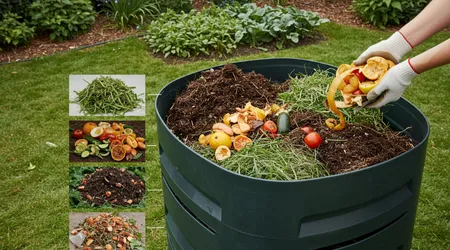
Not everything that's organic is suitable for composting. Fruit and vegetable scraps, coffee grounds, and eggshells are perfect. Meat and dairy products? Leave them out!
Grass clippings and fallen leaves are welcome, but in moderation. Too much greenery leads to rot. Variety is key.
Kitchen scraps should be chopped into small pieces. This speeds up decomposition. A good compost heap thrives on diversity.
See more: Zero Waste for Children: Teaching Sustainability in a Playful Way
Avoid treated wood or diseased plants. They could introduce pollutants or pathogens. Be selective!
Tip: Small amounts of unprinted newspaper or cardboard add structure to the compost, keeping it airy.
| material | Suitable | Not suitable |
|---|---|---|
| Fruit/vegetable scraps | Yes | meat, fish |
| Coffee grounds, tea residue | Yes | Oils, fats |
| Garden waste (leaves) | Yes | Sick plants |
| eggshells | Yes | Plastic, metal |
| Newspaper (small) | Yes | Treated wood |
Composting made easyStep-by-step instructions
Start with a suitable compost container. A compost heap is suitable for gardens, a worm bin for apartments. Choose wisely!
Location is crucial: partial shade, sheltered from wind, easily accessible. Direct sun will dry out the compost.
Layer alternating green (moist) and brown (dry) materials. Green provides nitrogen, brown carbon. Balance is everything.
Aerate regularly with a compost fork. Oxygen promotes decomposition and prevents odors. Once a week is sufficient.
See also: 10 sustainable gift ideas for environmentally conscious people
Check the moisture level: The compost should be like a wrung-out sponge. Too wet? Add dry material.
Patience is required. After 6–12 months you will have finished compost. It smells earthy and is crumbly.
Example: Anna from Berlin composts on her balcony. She efficiently recycles kitchen waste using a worm bin.
Tip: Start small, for example with a box for coffee grounds. This way you can learn the process without feeling overwhelmed.
Avoid common mistakes: Here's how to make successful composting
Too much wet material leads to unpleasant odors. Always mix in dry leaves or cardboard to prevent rot.
No ventilation? The compost will rot. Regular turning ensures oxygen and accelerates decomposition.
Incorrect materials like plastic or meat will ruin your compost. Check carefully what you put in it. Be consistent!
Too little moisture inhibits microorganisms. Water lightly during dry periods, but not too much.
Don't ignore the compost. A quick check once a week is enough to spot problems early. Keep at it!
Example: Tom from Munich initially threw banana peels with stickers into the compost. Now he removes them – problem solved!
Composting in the city: solutions for balconies and kitchens
No garden? No problem! Composting made easy It also works in the city. Worm bins are ideal for apartments.
A worm bin fits in the kitchen and produces odorless compost. Worms transform waste into fertilizer.
Bokashi buckets are an alternative. They ferment waste quickly and save space. Perfect for minimalists!
Balcony composters with good ventilation are suitable for larger quantities. Be mindful of your neighbors and hygiene.
Cities like Hamburg often offer community composting facilities. Check with your local council – it's a real insider tip!
Advantage: Urban composting saves on waste disposal fees and provides fertilizer for herbs or flowers. Sustainability for everyone!
Using compost: From waste to garden gold
Finished compost is versatile. It fertilizes vegetable beds, flower boxes, or houseplants. Use it pure or mixed with other compost.
Mix compost with garden soil (1:3) to improve soil. This promotes root growth and saves water.
Use compost as mulch. It protects against drying out and weeds. Your garden will stay healthy.
Give away excess compost or donate it to community gardens. Sharing brings joy and inspiration!
Analogy: Compost is like a good wine; with time it matures into something valuable. Take care of it!
Compost tea (compost soaked in water) is a natural liquid fertilizer. Simple, effective, sustainable.
Composting as a lifestyle: More than just waste disposal
Composting made easy It's a step towards zero waste. It changes your perspective on consumption and waste.
Every compost heap tells a story of mindfulness. You become more aware of what you buy and throw away.
Composting connects you with nature. It reminds us that everything is part of a cycle. Philosophical, isn't it?
Children learn responsibility through composting. They see how waste becomes new life. Pure education!
Composting strengthens community cohesion. Shared projects like neighborhood composters promote exchange.
Why not start today? A small compost heap can make a big difference – for you and the planet.
Conclusion: Composting made easy – your contribution to the future
Composting made easy It's not a complicated process, but an enriching journey. You reduce waste, nourish the earth, and live more sustainably.
With simple means such as a worm bin or a garden composter, you can make good use of organic waste.
The advantages are enormous: less waste, healthy soil, and a clear conscience. According to the German Federal Environment Agency, composting could reduce methane emissions from household waste by up to 20 Tg. So why hesitate?
Start small, learn from mistakes, and enjoy your first batch of homemade compost. Composting is an act of love for nature and for yourself.
Get to it and turn your waste into garden gold. Which peel will you throw into the compost next?
Frequently Asked Questions (FAQ)
1. Can I compost in a rented apartment?
Yes, with a worm bin or a Bokashi bucket it is Composting made easy They are also suitable for small apartments. They are odorless and space-saving.
2. What do I do if the compost smells bad?
Odor is caused by excessive moisture or unsuitable materials. Add dry leaves, ventilate regularly, and avoid meat or fats.
3. How long does it take for compost to be ready?
Depending on the method and care, it takes 6–12 months. Worm bins are often faster, garden composters require patience.
4. Can I throw plastic with a "compostable" label into the compost?
No, many "compostable" plastics require industrial facilities. Home-compostable materials are labeled. When in doubt: leave it out!
5. How do I use compost for houseplants?
Mix finished compost (1:4) with potting soil. It provides nutrients and improves soil structure. Less is more!
Sources: