
Refill systems for everyday use: permanently reducing packaging
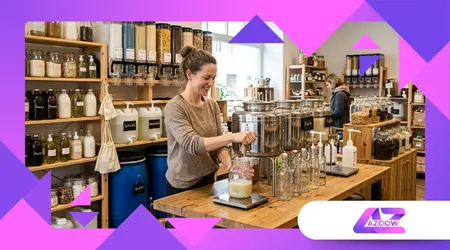
Advertisement
Refill systems for everyday use In 2026, they will revolutionize the way we consume and manage our households.
The era of thoughtless single-use packaging is drawing to a close, as consumers increasingly want to take responsibility.
Every discarded plastic container leaves deep traces in our global ecosystem that can last for centuries.
When we systematically refill cosmetics, cleaning products and food, the age of a true circular economy will dawn.
Modern supermarkets and drugstores are rapidly adapting to this dynamic transformation and offering innovative dispensing stations for daily needs.
Previously, packaging-free shopping was a niche for idealists in remote zero-waste shops. Today, global retail chains are integrating these smart solutions directly into their sales areas to drastically reduce waste.
This is a profound cultural shift that elegantly combines comfort and ecological awareness.
At a glance: Less waste through reuse
- The core: Avoiding single-use plastics through the consistent use of stable reusable containers.
- The practice: Filling bottles for dish soap, shampoo and dry goods at dispensing stations.
- The goal: Drastic reduction of personal CO2 footprint and conservation of valuable resources.
Why do conventional packaging products damage our livelihoods?
A look inside our yellow recycling bins reveals the shocking extent of the modern throwaway society in the area of everyday consumption.
Vast quantities of thin-walled plastic, composite materials and superfluous cardboard fill landfills and place an immense burden on municipal waste disposal companies.
The production of these short-lived packaging materials consumes gigantic amounts of crude oil, energy and precious water.
At the end of this inefficient linear process, there is often a product that is thrown away after only a few minutes of use.
According to current data from the Federal Statistical Office, private households in Germany recently generated over 18 million tons of packaging waste per year.
This alarming figure highlights the urgent need for action at all levels of society and in every single household.
A large proportion of these plastics cannot be recycled to a high standard due to impurities and inferior material mixtures.
The supposed solution of recycling often turns out, upon closer inspection, to be nothing more than downcycling or thermal recycling.
Microplastics are now penetrating our daily food chain via the water cycle and agricultural soils.
Those who established Refill systems for everyday use Ignoring this invisible but extremely dangerous contamination of our planet and our own bodies fuels it.
We behave like someone who ignores the dripping tap and instead constantly mops up the overflowing floor.
Consumers are therefore rightly demanding more transparent solutions from industry in order to finally break this ecological vicious cycle.
In addition, the energy-intensive production of new containers is driving global greenhouse gas emissions to alarming levels.
Transporting heavy, water-containing products in single-use bottles creates unnecessary logistics routes and clogs the roads with heavy trucks.
A shift towards concentrates and local bottling saves transport weight and significantly reduces fossil fuel consumption. It's time to radically rethink the entire goods distribution system.
++ Avoid hidden waste: Reduce invisible waste
How do microplastic particles harm human health?
The tiny plastic particles accumulate in our organs and can trigger inflammatory processes in the tissue.
We unconsciously ingest these synthetic residues daily through seafood, drinking water, and even the air we breathe.
According to medical professionals, the long-term consequences for the human immune system are worrying.
What logistical problems does this packaging craze cause?
Trucks transport tons of water, bottled in plastic, across the entire country every day.
This inefficient distribution leads to congested highways and an enormous emission of harmful greenhouse gases.
Dry concentrates for self-mixing offer an environmentally friendly and resource-saving alternative.
See also: Zero waste in rented apartments: Small solutions for limited space
Why does traditional plastic recycling fail so often?
Many packages consist of complex multilayers that cannot be cleanly separated by modern sorting systems.
This leads to valuable raw materials being burned instead of remaining in the production cycle. Only genuine avoidance effectively protects our environment from the flood of plastic.

How can the transition to green reusable systems be implemented smoothly?
The first step towards a less wasteful lifestyle simply requires a small inventory of one's own consumption habits.
Instead of putting the usual plastic bottle in the shopping cart on the next trip to the store, people opt for sturdy glass or stainless steel containers.
Many drugstores now offer standardized vending machines where detergents or shower gels can be dispensed precisely and cleanly.
This simple process takes only a few seconds and quickly becomes a solid, satisfying habit.
An excellent practical example are modern oat milk concentrates or cleaning tablets that you simply fill up with tap water at home.
Compared to traditional liquid products, they save up to 90 percent of the transport weight and drastically reduce waste volume.
This clever method keeps the heavy logistics from the supermarket shelf directly in the production facility.
The consumer simply takes over the final step of mixing themselves at their home kitchen sink.
So that consumers can Refill systems for everyday use To make optimal use of the system, retailers must further reduce the barriers to the weighing process.
The customer brings their desired clean bottle, determines the empty weight on the scale and fills the container themselves.
The tare weight is automatically deducted at the checkout, so you only pay for the actual contents.
This transparent principle consistently excludes hidden costs for expensive marketing and elaborate packaging design.
Even traditional food retailers are following suit, distributing bulk goods such as pasta, rice, nuts and spices via practical dispenser systems.
These so-called "bulk bins" also allow the exact amount needed to be filled, which at the same time counteracts food waste.
If you only need half a cup of single-serve rice, you no longer need to buy a kilo pack. Having complete control over the quantity you buy saves resources and your monthly budget alike.
See more: Community instead of lone wolves: Zero Waste neighborhoods and swap meets
Which containers are best suited for refilling?
Robust glass jars with screw caps, lightweight stainless steel boxes and thick, reusable plastic bottles are ideal means of transport.
Thorough cleaning before each new bottling process is essential to guarantee the product's shelf life. Durable materials pay for themselves many times over the years.
Where can consumers find the nearest refill stations?
Special apps and digital maps provide a clear list of zero-waste shops, participating drugstores and regional farm shops in the immediate vicinity.
Even traditional grocery retailers now clearly mark their new refill areas for customers. A quick glance at a smartphone makes shopping planning much easier.
How can you avoid sticky accidents during transport?
The use of absolutely leak-proof buckle closures and silicone seals prevents the unwanted leakage of liquids into the shopping bag.
Using a sturdy fabric bag for transport minimizes the risk of damage during transit. Preparation is half the battle on the road to a zero-waste household.
What measurable benefits does a packaging-free lifestyle bring for the household and nature?
The most obvious benefit for our biosphere is the immediate reduction of plastic waste, which doesn't even need to be produced in the first place.
When a broad mass of consumers consistently Refill systems for everyday use If this happens, the global demand for new crude oil will drop noticeably.
Fewer plastics automatically mean cleaner rivers, undamaged seas, and the protection of endangered animal species from suffocation.
Our changing consumption patterns finally give nature the necessary space to recover from the stresses it has been under.
On the financial side, consumers benefit from noticeable price advantages, as the manufacturing companies often pass on the saved packaging costs directly.
You no longer pay for the expensive, colorful plastic and the elaborate advertising message, but solely for the pure quality of the content.
For a multi-person household, these savings add up to a considerable sum of money over the course of a year.
Sustainability thus proves to be a real benefit for the household budget and not an expensive luxury.
Scientific life cycle analyses by the Öko-Institut show that durable reusable systems have a significantly better climate footprint than disposable alternatives after just a few cycles.
This well-founded finding refutes the prejudice that cleaning the containers would consume too much energy and water.
The savings in raw material extraction and processing far outweigh the minimal cleaning effort. The facts clearly trump the vague gut feelings of the skeptics.
Furthermore, conscious shopping leads to a noticeable slowing down of the often hectic everyday life and sharpens the focus on what is essential.
People no longer consume impulsively, but plan their purchases systematically and with enjoyment of sustainable practices.
This new mindfulness in dealing with the resources of our planet brings a deep sense of satisfaction.
One transforms from a passive consumer into an active creator of a better, cleaner future.
Why do refill products save you real money?
The production of elaborate pump containers and printed labels often accounts for a significant portion of the final retail price.
Eliminating this step reduces factory production costs, making the products more attractive to consumers. Economic efficiency and environmental protection go hand in hand here.
How is the industry reacting to the new trend?
Major brand manufacturers are increasingly developing their own large containers and modular filling concepts in order to keep pace with modern customers.
This healthy competition for the most sustainable packaging solution invigorates the market and constantly generates new innovations. Consumer pressure is having an effect.
Ecological and economic comparison of packaging types
| criterion in comparison | Single-use plastic packaging | Certified refill systems for everyday use |
| CO2 emissions per use | Very high (one-off production) | Minimal (spread over many years) |
| share of the sales price | Up to 30% for the design | Fast 0% (Only content counts) |
| Container lifespan | A few weeks to days | Several years with good care |
| Resource consumption | Continuous demand for petroleum | One-time use of materials |
| Household waste generation | Continuously increasing | Almost completely eliminated |
What mental benefits does minimalist shopping offer?
A tidy pantry without colorful packaging waste radiates a pleasant visual calm and makes it easier to keep the house tidy.
Those who rid themselves of unnecessary baggage often experience an increase in their quality of life in their personal lives. In this case, less really is more.
Have you already had experience with refill stations in your area or do you use smart tabs for your cleaning products?
Share your valuable tips and experiences with our community in the comments below!
Frequently Asked Questions
How hygienic are open refill systems in everyday supermarket use?
Modern dispensing systems are designed according to the strictest food standards and prevent direct contact between product and customer.
Regular automatic disinfection and closed-loop systems ensure that the germ-free condition of the goods offered is absolutely guaranteed at all times.
What happens if I forget my own containers at home?
Many stores offer a fair deposit system or inexpensive, recyclable paper emergency containers for this purpose.
Over time, however, one develops a routine, similar to taking your house key with you before leaving your apartment.
Is the effort worthwhile for singles living in a small apartment?
Especially in small households, these systems help to avoid excess waste and conserve the limited space in the waste bin.
Since you can fill out exactly the right portions, the risk of food spoiling unused is also reduced.