
Food Forest City: Edible ecosystems in a small space
Advertisement
One Food Forest City transforms grey concrete deserts into green oases and revolutionizes urban agriculture right on our doorstep in 2026.
This concept uses the principles of natural forests to establish edible ecosystems in the smallest possible space.
Urban areas worldwide suffer from heat islands and monotonous lawns that offer neither food nor real ecological benefit.
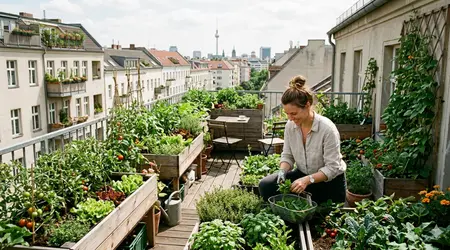
The solution lies in intelligently designed, multi-layered forest gardens that can be perfectly integrated into backyards, parks or roof terraces.
At a glance: Edible ecosystems in urban areas
- The concept: Replication of natural forest structures for sustainable and low-maintenance food production.
- The layers: Vertical cultivation of everything from deep root vegetables to tall fruit trees on a minimal footprint.
- The advantages: Local self-sufficiency, cooling of the microclimate, promotion of biodiversity and strengthening of the urban community.
What is a Food Forest City and how does the principle work?
Have you ever wondered why a natural forest thrives so well without any human ever fertilizing, watering, or weeding it?
The secret lies in the biological diversity and the synergistic cooperation of all plant and animal species within this living system.
The model of Food Forest City transfers this evolutionary perfection to the urban context to create highly productive food systems in limited space.
Instead of maintenance-intensive monocultures, permaculture specialists rely on a self-regulating network of perennial crops.
Such a system functions like a well-oiled shared apartment, in which each roommate takes on a specific, useful task for the collective.
Deep roots bring nutrients to the surface, while broad leaves protect the soil from drying out.
This interplay drastically minimizes the human workload once the system has reached its biological balance after a few years.
Urban spaces are thus transformed from mere consumption zones into active, vibrant producers of healthy food.
How do the seven shifts work together?
An edible forest ecosystem not only uses space two-dimensionally, but extends over seven vertical layers of intelligent planting.
At the very top, robust crown trees form the protective canopy, followed by smaller berry bushes and persistent layers of herbs.
Ground cover plants and root vegetables work hand in hand on the ground, while climbing plants grow up the trunks.
Each plant occupies an ecological niche, which multiplies the yield density per square meter compared to traditional beds.
++ Permaculture water cycle for dry urban areas
Why is location analysis crucial in urban areas?
In urban environments, concrete walls, asphalt surfaces and artificial lighting conditions significantly determine the local microclimate.
Before the first sod is turned, designers must precisely analyze the sun's path, wind tunnels, and the nature of the urban soil.
Soil contamination often necessitates the use of raised beds or the targeted creation of new, uncontaminated humus layers.
Precise planning prevents disappointment and guarantees that the selected plants harmonize perfectly with each other.
See also: The best books on urban permaculture
What role do animals play in this system?
Birds, beneficial insects and microorganisms in the soil form the invisible backbone of any functioning forest garden.
They take over pest control, pollinate the flowers and decompose organic material into valuable plant fertilizer.
By specifically planting nectar sources and providing deadwood, urban gardeners can attract these helpers.
A true biological balance makes the use of chemical pesticides in urban areas completely unnecessary.
Why are edible ecosystems the future of our metropolises?
The escalating climate crisis and global supply chain problems are forcing cities to urgently make their food supply more resilient and local.
A modern Food Forest City This offers a promising, scientifically sound approach to solving the urban challenges of our time.
According to current data from the Federal Environment Agency, densely planted urban green spaces can lower the local ambient temperature in summer by up to 4 degrees Celsius.
This cooling effect not only reduces the energy consumption of air conditioning systems, but also noticeably improves the quality of life for residents.
A densely overgrown woodland garden absorbs heavy rain like a giant sponge, thus relieving the city's sewage system during severe weather.
The dense root system stabilizes the soil, while the biomass actively filters CO2 from the urban air.
In addition to the ecological benefits, these edible oases strengthen the social fabric within the often anonymous neighborhoods of modern cities.
Gardening, harvesting and exchanging knowledge together transform unused open spaces into vibrant centers for encounters and education.
See more: Make your own sustainable garden furniture and decorations
How does this concept improve urban biodiversity?
Traditional urban green spaces mostly consist of species-poor lawns, which represent biological deserts for wildlife.
Forest gardens, on the other hand, offer habitat for hundreds of endangered insect and bird species due to their structural diversity.
A pilot project in Berlin showed in 2025 that the wild bee population in the vicinity of a forest garden measurably increased within two years.
This diversity stabilizes the entire urban ecosystem and protects surrounding green spaces from pest infestations.
What economic benefits will citizens gain?
Growing high-quality berries, rare herbs and fresh fruit right on the doorstep saves city dwellers money.
Short transport routes eliminate any packaging costs, intermediary fees and climate-damaging CO2 emissions when transporting food.
Fresh harvests spoil less often because the products are picked at the exact moment they reach their optimal ripeness for consumption.
This reduces food waste at the household level and promotes a healthy awareness of seasonal eating.
How does the forest garden affect human well-being?
Regularly spending time in green, vibrant environments has been proven to lower stress levels and promote the mental health of city dwellers.
The rustling of leaves and the scent of ripe fruit offer a refuge from the hectic everyday life of the big city.
In these gardens, children playfully learn where their food comes from and how biological cycles actually work.
This experience of nature in an urban setting is an invaluable building block for a future generation that thinks sustainably.
Which plants are suitable for an urban forest garden?
The careful selection of plants is crucial for the long-term success of a Food Forest City in a small space.
The focus is on robust, perennial species that require little maintenance and harmonize perfectly with urban conditions.
Shade-tolerant crops
Many urban backyards suffer from a lack of light due to high building walls, which is why shade-tolerant species are particularly valuable there.
The biologically adaptable jostaberry or the hardy pawpaw banana thrive even in places with only a few hours of direct sunlight.
In shady areas, particularly tasty wild garlic, woodruff or perennial spinach are excellent ground cover plants.
These plants make optimal use of the limited light and deliver reliable harvests without requiring much maintenance.
Vertical climbing aids for fences and walls
Lack of space is the biggest challenge in urban areas, which is why the vertical dimension must be consistently utilized.
Robust kiwiberries, grapevines or climbing strawberry varieties transform dreary concrete walls and ugly fences into productive edible hedges.
These climbing plants require hardly any ground space, but offer an enormous harvesting area in height.
At the same time, they insulate the building walls behind them from excessive heat radiation from the sun in summer.
Perennial herbs and dynamic accumulators
A long-lasting carpet of herbs such as oregano, thyme and mint effectively protects the soil from erosion and unwanted weed growth.
Deep-rooted plants like comfrey also act as dynamic accumulators, pumping valuable minerals from deep layers of soil.
When the leaves of the comfrey die back in autumn, they form a nutrient-rich mulch layer for the surrounding shallow-rooted plants.
This natural cycle makes the purchase of external fertilizers permanently unnecessary in the urban forest garden.
Yield and layer model
The following overview shows a field-tested planting example for an urban forest garden system on a minimal area of only twenty square meters.
| Layer of the forest garden | Example plant | Function in the ecosystem |
| crown layer | dwarf apple tree | Provides main harvest, provides partial shade |
| shrub layer | Honeyberry | Provides early vitamins, protects the stem |
| herbaceous layer | Perennial kale | Year-round vegetable harvest, protects the soil |
| Ground cover | Wild strawberries | Prevents weeds, retains moisture |
| Root layer | Jerusalem artichoke | Loosens hard urban soil, winter harvest |
How do you start a successful Food Forest project in your own neighborhood?
The transformation of a sterile backyard into a productive Food Forest City It always starts with a committed community.
Look for like-minded people in your neighborhood to share the work, costs, and gardening knowledge.
Secure the project legally in good time by entering into clear usage agreements with owners or the relevant municipal authorities.
A clear concept regarding the later distribution of the harvest prevents misunderstandings and strengthens the long-term cohesion of the group.
Start on a small test area and let the edible ecosystem grow organically with the experience gained.
Every successfully planted square meter is an active contribution to a livable, green and edible city of the future.
Have you already gained experience with edible plants in your city, or are you planning your own project? Feel free to share your ideas, questions, and success stories with us in the comments!
Frequently Asked Questions
How much time does it take to maintain a forest garden compared to a normal garden bed?
After an initial establishment phase of two to three years, the maintenance effort decreases by about seventy percent compared to a classic vegetable garden.
The system regulates moisture and nutrients largely autonomously through the dense planting.
Are the fruits from a Food Forest city edible despite the exhaust fumes?
Yes, most pollutants from road traffic are deposited on the surface and can be easily removed by thorough washing.
For heavily contaminated soils, a laboratory analysis or cultivation in clean raised bed systems is recommended beforehand.
Is it possible to create a forest garden on a small balcony?
A complete ecosystem is difficult to create on a balcony, but the principle of layering can be adapted to large containers.
Combinations of dwarf fruit trees, berry bushes and hanging herbs work wonderfully even in small spaces.