
Sustainable digital nomadism: Long-term travel without environmental impact
Advertisement
Sustainable digital nomads Living in a sustainable way is no longer a contradiction, but a necessity for the future of global tourism.
Those who work from abroad for months at a time often leave a massive ecological footprint that puts a heavy strain on local communities.
Sustainability in this context means combining travel and work in such a way that nature and culture at the destination remain protected in the long term.
It's not just about avoiding plastic, but about a profound change in our everyday consumption and travel habits.
At a glance: Your roadmap to green nomadism
- Arrival & Mobility: Focus on CO₂ compensation and the targeted use of local trains.
- Accommodation & Daily Life: Choosing eco-certificates and consistently reducing resource consumption.
- Local economy: Targeted support for local markets instead of multinational hotel chains.
- Resource efficiency: Durable hardware, digital waste avoidance, and conscious use of energy.
Why is a conscious lifestyle indispensable for long-term travelers today?
The sheer number of remote workers is leading to massive environmental and social tensions in popular hotspots like Bali or Lisbon.
When thousands of people use air-conditioned Airbnb apartments at the same time, electricity prices rise and mountains of garbage grow uncontrollably.
Have you ever wondered how much CO₂ your digital lifestyle actually causes while you're typing on your laptop at the beach?
A single long-haul flight often ruins the climate balance of an entire year, which is why the length of stay on site should be drastically extended.
The concept of „slow travel“ is like the slow maturation of a good wine – it takes time to develop real value.
Those who stay in one place for at least three months significantly reduce transport emissions compared to jet-setters.
A responsible approach to resources protects destinations from the destruction of their own identity and natural beauty.
The global community of remote workers must act now to secure the privileges of location-independent work for future generations.
The year 2026 marks a turning point, when sustainability becomes the standard for professional digital nomads.
What does social responsibility mean in practice?
Social sustainability requires respectful treatment of the local population and refraining from displacing local tenants.
Fair payment for services and respect for cultural traditions create a harmonious coexistence instead of pure exploitation.
++ Community-based tourism: When travelers empower villagers
What role does the CO₂ footprint play in flying?
Air travel causes the largest share of personal emissions, which is why compensation payments via certified providers such as Atmosfair are absolutely essential.
Even better is to consistently avoid domestic flights and switch to the local rail network.
See more: 10 sustainable travel destinations off the beaten track
How does housing shortage affect destinations?
The enormous demand for short-term accommodation is driving rents in cities to astronomical heights, often displacing locals.
Sustainable nomads therefore deliberately choose accommodations outside of overcrowded city centers or use verified coliving spaces.
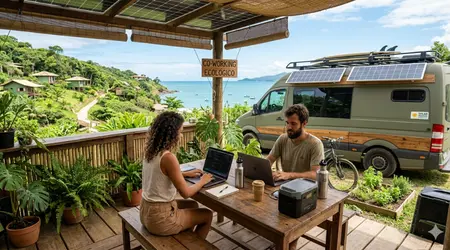
How does this work in practice in the everyday work environment of a nomadic person?
In practice, this requires a radical rethink in the selection of accommodations, means of transport, and the digital infrastructure used daily.
To Sustainable digital nomads To integrate into existing ecosystems, we must actively demand green electricity certificates when searching for housing.
Use platforms that specifically list and rate accommodations with solar energy, rainwater harvesting, and efficient thermal insulation.
A practical example shows how switching from daily cafe visits to an energy-efficient coliving space drastically reduces plastic waste.
A nomad in Thailand saved over 300 plastic bottles in just six months by using a filtering reusable bottle.
Such small, consistent steps add up to a gigantic relief for municipal waste collection worldwide.
The following table shows the real-world impact of different behaviors on the environment and offers direct, sustainable alternatives for your everyday life:
| Living area | Conventional behavior | Sustainable alternative | Ecological impact |
| mobility | Frequent domestic flights | Use of long-distance trains | Up to 80% CO₂ savings |
| Reside | Air-conditioned luxury apartments | Certified Eco-Coliving | Minimal power consumption |
| consumption | Imported supermarket goods | Local weekly markets | Strengthening local farmers |
| Technology | Annual purchase of new gadgets | Refurbished Devices & Repair | Massive reduction of electronic waste |
What criteria do green coliving spaces meet?
Green coliving spaces utilize 100% renewable energies, offer biodegradable cleaning products and actively promote recycling among international guests.
They also often work with local NGOs to give something back directly to the community.
How can you effectively reduce digital data clutter?
Regularly deleting cloud storage and old emails reduces the energy consumption of global server centers, which consume gigantic amounts of electricity.
Use green search engines like Ecosia, which use their advertising revenue to fund and support reforestation projects worldwide.
See also: Fair Trade on holiday: Buy souvenirs with a clear conscience
Why is regional food a climate savior?
Buying food at traditional markets avoids long transport routes and directly supports small farmers in their economic existence.
Avoid pre-packaged imported goods from overseas, which bring a devastating CO₂ footprint to store shelves.
What are the advantages of an environmentally conscious lifestyle when traveling?
A minimalist, green lifestyle not only protects nature, but also saves your wallet from unnecessary expenses.
Who Sustainable digital nomads and is organized in a resource-efficient manner, it notes that local products are usually much cheaper than imported branded goods.
The budget is saved, while the quality of life increases massively through authentic experiences away from mass tourism.
According to current data from World Travel & Tourism Council (WTTC) from 2025 already requires over 65% of travelers to use environmentally friendly options.
Those who join this movement secure long-term access to a global, like-minded community of responsible professionals.
You develop deeper connections with locals, as you are no longer perceived as a fleeting tourist, but as a respectful long-term guest.
Personal satisfaction increases when one's actions are in line with global climate goals and leave a positive mark.
A new sense of freedom emerges, based on mindfulness and respect rather than pure consumption and selfishness.
Ultimately, this lifestyle transforms your career, as sustainable thinking also strengthens your professional creativity and resilience.
How does sustainable travel save real money?
Avoiding constant changes of location drastically reduces transport costs and allows for the use of cheaper monthly rents for accommodation.
Cooking with regional ingredients is also many times cheaper than visiting Western-oriented restaurants on a daily basis.
Why does slow travel improve work quality?
Less travel stress means more focus, deeper concentration phases and significantly better work-life integration for creative and productive minds.
People who arrive at a location tend to work in a more relaxed manner and demonstrably deliver higher quality for their customers.
How does environmental protection strengthen personal networks?
The decision, Sustainable digital nomads Networking leads to intensive contacts with innovative founders in the field of global sustainability.
Valuable synergies and business partnerships are created, based on shared, future-oriented values and visions.
Which technological innovations support green nomads?
Modern gadgets and smart software solutions make it easier than ever to minimize your ecological footprint.
To Sustainable digital nomads To equip their workspaces, forward-thinking professionals rely on foldable solar panels and extremely energy-efficient, long-lasting LED work lights for their daily setup.
Portable high-capacity power banks make it possible to work outdoors without relying on fossil fuel power sources.
A second practical example concerns the use of eSIM cards, which completely eliminate the need for physical plastic SIM cards when changing countries.
Millions of these tiny plastic pieces end up in the trash every year, which can be elegantly and cost-effectively avoided through digital technology.
Choosing hardware manufacturers that offer modular and easily repairable laptops also conserves valuable resources.
The use of apps for real-time monitoring of personal electricity and water consumption raises awareness of the environment in everyday life.
These technological aids precisely show where potential savings lie and motivate an even more careful use of local resources.
In this way, digitalization becomes the most powerful tool for the global protection of our threatened ecosystems.
What can modern solar backpacks do today?
Innovative backpacks are equipped with highly efficient solar cells that provide smartphones and laptops with clean power while walking.
They offer independence from local power grids and make optimal use of the sun's power.
How do apps help with waste prevention?
Platforms such as Too Good To Go They help save surplus food from restaurants worldwide from being destroyed.
Nomads thus receive affordable meals and at the same time make an active contribution against global food waste.
Why are modular laptops the future?
Modular computers can be easily repaired or upgraded by replacing individual components in case of defects or technological advancements.
This prevents the entire device from being prematurely thrown into toxic electronic waste.
Conclusion: The future of travel lies in our hands.
The concept, as Sustainable digital nomads Traveling the world is the only viable path for the future of location-independent work.
We have learned that slow travel, local roots and the targeted use of green technologies can drastically minimize the environmental impact.
Each individual bears the responsibility for ensuring that the places visited remain livable and beautiful tomorrow.
In summary, conscious nomadism minimizes the ecological footprint while maximizing quality of life.
The transition requires discipline at first, but rewards us with deeper experiences and an absolutely clear conscience towards the environment.
Let's become pioneers of a new, responsible generation of global and sustainable remote workers together.
Which green gadgets or eco-friendly coliving spaces can you particularly recommend to your nomadic colleagues?
Share your experiences and best tips for sustainable travel with our global community in the comments below!
Frequently Asked Questions (FAQ)
How do I find reliable, sustainable accommodation abroad?
Look for established eco-certificates such as the Green Key or the EU Ecolabel and specifically check reviews on platforms according to sustainability criteria.
Is CO₂ compensation for flights really sensible and effective?
Yes, as long as you choose trusted providers who fund gold-standard projects that demonstrably reduce greenhouse gases and support local communities.
How can I reduce my plastic waste in countries without a functioning recycling system?
Consistently use your own reusable bottles with integrated UV-C water filters, buy solid soaps instead of plastic bottles, and use cloth bags when shopping.