
Community-based tourism: When travelers empower villagers
Advertisement
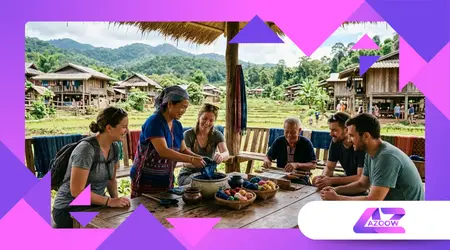
Community-based tourism will fundamentally revolutionize the global travel industry in 2026 through authentic encounters on equal terms.
Today, travelers are specifically looking for ways to actively and directly support the local population economically.
This approach transforms the traditional vacation into a genuine partnership between guests and hosts.
Villages worldwide are taking full control of their cultural heritage and natural resources.
Mass tourism often leaves behind devastated landscapes and dissatisfied locals in the affected regions.
Sustainable concepts, on the other hand, shift the economic focus directly to the families involved on the ground.
This ensures that the added value remains exactly where traditional services are provided on a daily basis.
Travelers experience authentic culture away from the well-known, overcrowded tourist hotspots.
Key points of the article
- Local value creation: Direct investments in village infrastructure.
- Cultural protection: Preserving indigenous traditions through respectful exchange.
- Ecological responsibility: Protecting sensitive ecosystems through gentle approaches.
What are locally guided tours?
This innovative model consistently places the self-determination of local communities at the center.
The villagers do not act as mere extras, but as entrepreneurs, tour guides and heritage conservationists.
Have you ever wondered how much of your travel money actually reaches the local community? With this concept, the majority of the income stays directly in the village.
The model sustainably breaks down old, colonial structures in the global travel industry.
Large external corporations are losing their dominant intermediary role to local cooperatives and family businesses.
This development strengthens the rural economy and creates long-term prospects for the younger generation.
A practical example can be seen in the Peruvian Amantaní project on Lake Titicaca. There, indigenous families manage the overnight stays on a rotating basis to ensure equal incomes for all members.
This prevents social inequalities and preserves the original way of life of the community.
The World Tourism Organization (UNWTO) confirms the urgency of this change for global climate protection.
Their latest reports show that sustainable projects are effectively stopping the exodus from rural areas.
Economic stability thus indirectly protects the intangible cultural heritage of the regions.
++ Off-grid travel: Sustainable adventures without infrastructure
How does this concept differ from ecotourism?
While ecotourism primarily focuses on protecting nature, the community-based tourism Putting people at the center.
The social component is inextricably linked here with the ecological footprint of the travelers. In practice, however, both approaches complement each other harmoniously.
See more: 10 sustainable travel destinations off the beaten track
What role do women play in these projects?
Women often form the organizational backbone of these village initiatives. They manage the finances, lead culinary workshops, and ensure medical care in the village.
This economic independence is noticeably changing the social hierarchies in traditional societies for the better.
See also: Fair Trade on holiday: Buy souvenirs with a clear conscience
Why is this form of travel booming specifically in 2026?
Travelers are increasingly rejecting standardized all-inclusive offers and demanding in-depth experiences.
The longing for genuine human connection is driving a massive demand for village stays. Technology also facilitates direct booking without expensive intermediaries.
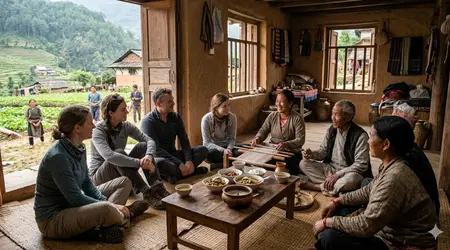
How exactly do the villages benefit from the visitors?
The economic effects go far beyond simply paying for accommodation and meals.
Through the community-based tourism Villages finance their own schools, medical stations, and clean drinking water systems.
The profits go into community funds, which are democratically managed by the residents.
This financial independence protects nature from exploitation by mining companies or deforestation.
If tourism brings more to the living forest than just timber, the ecosystem remains intact. This creates a new awareness of the value of one's own homeland.
Another example is the village of Ta Phin in Vietnam. There, the Red Dao use their knowledge of medicinal herbs for health tourism offerings.
The revenues ensure the preservation of their traditional terraced fields for future generations.
Traditional tourism often resembles a raid, draining resources and leaving behind waste.
In contrast, this model functions like a cycle in which energy and prosperity flow harmoniously between guests and hosts. This creates a win-win situation for both sides.
What infrastructure will be created through the revenue?
The municipalities are primarily investing in education, solar energy, and sustainable waste disposal systems.
These improvements enhance the quality of life for the entire population, independent of the direct impact of the tourism industry. Tourism thus serves as a catalyst for general development.
How can cultural destruction be effectively prevented?
Strict limits on visitor numbers protect the villages from social overload.
The communities themselves decide which rituals they share and which areas remain absolutely off-limits to outsiders. Respect for privacy always comes first.
Who ensures the fair distribution of funds?
Local committees monitor all income and distribute it according to a transparent formula.
Part of the money goes towards individual wages, the rest funds social projects for the entire village. This sustainably strengthens the community's cohesion.
Why is this movement changing global travel behavior?
In 2026, the travel decision will become a political statement for global justice.
Those who are interested in community-based tourism decides to actively combat poverty in rural areas.
This conscious choice fundamentally changes the dynamics between the Western world and the Global South.
Travelers return not as mere consumers, but as ambassadors of cultural diversity.
The profound insights gained into alternative lifestyles put one's own, often consumer-oriented Western lifestyle into perspective. This shift in awareness shapes one's actions even after returning to everyday life.
According to a recent study by the University of Eberswalde on sustainable development, over 70 percent of the spending on this type of travel remains in the region.
In stark contrast, with traditional mass tourism, often 80 percent of the revenue flows to international corporations. These figures speak for themselves.
The change is transforming the entire industry and forcing major travel providers to rethink their strategies.
Sustainability is no longer a marketing gimmick, but has become a fundamental necessity for the survival of the tourism industry. Consumer power is actively shaping the future of travel.
What expectations do modern sustainability tourists have?
Tourists are demanding absolute transparency regarding money flows and environmental standards.
They are happy to forgo luxury if the accommodation offers authenticity and social justice. The personal experience trumps impersonal comfort.
How can holidaymakers find reliable and certified projects?
Specialized platforms and labels such as "Fair Trade Tourism" make targeted searches easier.
These organizations monitor compliance with social standards and guarantee the participation rights of indigenous populations. This protects travelers from sophisticated greenwashing.
What does the future hold for this sector?
Digitization is allowing more and more remote communities direct access to the global travel market.
Experts predict a doubling of bookings in this segment by the end of the decade. Sustainable tourism is successfully moving beyond its niche.
How do the different forms of tourism compare?
The choice of travel mode significantly determines the distribution of funds and the protection of nature. The following matrix illustrates the fundamental differences between the systems in the current year 2026.
Sustainability matrix of tourism models
| tourism form | Local retention of profits | Cultural protective factor | Primary target group | Overall ecological balance |
| Mass tourism | Extremely low (below 15%) | Very low (commercial) | Price-conscious holidaymakers | Critical (high resource consumption) |
| Classic ecotourism | Moderate (approx. 40%) | Satisfactory (focus on nature) | nature lovers | Positive (protection of reserves) |
| Community-based | Very high (over 70%) | Excellent (Self-Determined) | Meaning-seeking individualists | Excellent (holistic approach) |
Summary of global perspectives
The community-based tourism This impressively demonstrates that travel can be both enriching and ethically responsible.
The model strengthens village self-governance, protects threatened cultural landscapes and ensures a fair distribution of wealth worldwide.
By allowing hosts to control tourism, we preserve the diversity of our planet.
The future of travel lies not in consuming places, but in sharing lifestyles.
Have you already visited a village tourism project on your travels, and how has this experience changed your perspective?
Feel free to share your personal experiences and thoughts with our community in the comments!
Frequently Asked Questions
Is community-based tourism more expensive than a regular vacation?
The costs are comparable to individual travel, however, the money goes directly to the hosts without any deductions.
They pay for genuine quality and honest hospitality instead of expensive marketing campaigns by large corporations.
Do travelers have to forgo all comfort?
No, the accommodations are clean, authentic, and often offer modern comforts like solar showers. Luxury here is defined by the uniqueness of the experience, not by gold-plated faucets.
How do guests communicate with the villagers?
Local, bilingual guides from the village often accompany the travelers and translate conversations. Furthermore, human body language and shared meals bridge all language barriers.