
The right choice for beverage cups: Refillable & reusable instead of disposable
Advertisement
The right choice for the beverage cup In 2025, this is not just a matter of conscience, but a legal necessity.
Since the introduction of mandatory reusable packaging in Germany and the EU strategy for waste reduction, the market has changed radically.
Nevertheless, the disposable cup remains a persistent environmental challenge.
The dynamics of the zero-waste lifestyle require an active rethinking of both consumers and retailers.
We need to free the convenient "coffee-to-go" principle from its wasteful burden. It's about seamlessly integrating sustainable practices into everyday life.
Why is the disposable cup still a problem despite the legal requirement?
Although reusable alternatives have been mandatory in Germany since 2023, disposable cups continue to dominate the streetscape.
Many consumers and small businesses avoid the complexity of deposit return systems. Convenience often trumps sustainability.
The initial mandatory use of reusable packaging was a necessary step, but it was not sufficient. More than just an alternative is needed; broad societal acceptance of reuse is required.
++ Low-waste office routine: Designing zero waste in everyday work
How many disposable cups are still used daily?
Despite progress, the figures from the Federal Environment Agency remain alarmingly high.
Estimates for 2024 show that millions of disposable cups are still being used daily. This represents an immense waste of resources.
This quantity of cups generates enormous amounts of waste. They not only burden landfills, but also the environment due to the high raw material and energy consumption involved in their production.
See more: Waste-free menstruation: Sustainable alternatives to tampons and pads
What is the main problem with so-called "recycling" cups?
Many disposable cups are falsely advertised as easily recyclable. They often consist of cardboard coated on the inside with a thin layer of plastic (polyethylene). This combination of materials makes recycling extremely difficult.
These composite materials can hardly be separated from each other in sorting facilities. Often these cups end up in residual waste or are incinerated, which significantly worsens their environmental impact.
See also: How to find sustainable clothing and avoid fast fashion
What role do "to-go" habits play in our culture?
The "to-go" phenomenon is deeply rooted in our modern, accelerated work culture.
Disposable cups symbolize speed and immediate availability. This cultural inertia is difficult to overcome.
We need to recognize that convenient "zero-waste" consumption is possible. It only requires one small but conscious step: The right choice for the beverage cup must become the new normal.
How do modern reusable systems work in practice?
Modern reusable systems offer a simple, standardized solution to avoid single-use waste. They often operate via a deposit system and are widely available in many cities at bakeries, cafes, and gas stations.
These systems make the switch considerably easier for consumers. They no longer need their own cup, but can rely on a hygienic, professional network.
What makes standardized deposit systems so effective?
Standardized systems, such as the established German systems Recup or Vytal, use uniform cup shapes. These can be returned to thousands of locations, regardless of where they were purchased.
This widespread acceptance lowers the barrier to use. It ensures that The right choice for the beverage cup It no longer presents a logistical challenge.
Why is the reuse rate crucial for the environmental impact assessment?
The environmental impact of a reusable cup is only better than that of a disposable cup if it is reused often enough. Experts estimate that, depending on the material, the cup needs to be reused 15 to over 50 times.
Systems that guarantee a high return rate and efficient cleaning achieve the best environmental results. Durability and usage intensity are the decisive factors here.
How municipal deposit systems can work
The city of Freiburg has introduced its own municipal deposit system, which uses the "Freiburg Cup". The city cooperates directly with local retailers and cleans the cups centrally.
This model shows that cities can act as coordinators.
It overcomes the scaling problems that private initiatives alone often cannot solve. The right choice for the beverage cup It thus becomes a shared responsibility.
What advantages do reusable cups offer consumers?
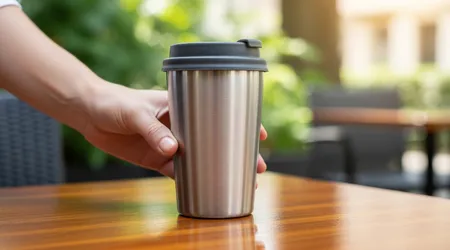
Bringing your own refillable cup is the most consistent zero-waste solution. It offers consumers not only ecological advantages, but also direct financial and hygienic incentives.
Many cafes reward customers' initiative with discounts. Furthermore, using your own cup ensures the highest level of personal hygiene control.
How can consumers save money by using their own reusable cups?
Many cafes offer discounts of between 10 and 50 cents per refill of a customer's own cup. With daily consumption, these small amounts can quickly add up to annual savings.
The financial reward makes The right choice for the beverage cup Attractive. The purchase of the reusable cup often pays for itself after just a few weeks thanks to the discounts.
Hygiene in the “Bring Your Own” model
Some retailers' concerns about the hygiene of customers' own cups are unfounded. According to an EU directive, retailers can fill cups via a... contactless handover carry out.
The cup is placed below the dispensing tap. The service staff does not touch the cup. This ensures compliance with strict food hygiene standards.
What analogy illustrates the convenience of reusable products?
Using a reusable cup is like wearing a seatbelt in a car. It might take a little getting used to at first.
But once it becomes a habit, the absence of the belt (or cup) is unimaginable and unreasonable.
The initial effort is replaced by a long-term feeling of security and responsibility. The right choice for the beverage cup It becomes routine, not a burden.
What role do technology and politics play in this transformation?
Technological innovations and stricter political frameworks are essential to accelerate the transition from single-use to reusable systems. Digital solutions, in particular, play a key role in scaling this transition.
Policymakers must ensure that the mandatory use of reusable packaging is not just a theoretical concept. It must be effectively enforced through targeted subsidies and controls.
How do digital deposit return systems help with returns?
Digital deposit systems use apps and QR codes to track cups. This makes the process faster and more transparent. Returns are often as simple as pressing a button at the machine.
This technology significantly increases user-friendliness and thus the response rate. The right choice for the beverage cup This simplifies things in the hustle and bustle of everyday life.
How can municipalities effectively monitor compliance with the mandatory reusable packaging requirement?
Local authorities must more strictly monitor compliance with the reusable packaging requirement. This is the only way to penalize free riders who want to avoid the effort of using the reusable alternative.
Fines and repeated inspections are necessary. They ensure fair competition and strengthen the credibility of zero-waste policies.
Why is reducing packaging more important than recycling?
Experts in the zero-waste field emphasize: The best packaging is the packaging that is never created in the first place.
reduction In the waste hierarchy, it always comes before recycling. Recycling also consumes energy and resources.
Therefore, the priority is clear: refillable and reusable cups are ecologically superior to disposable cups of any kind, including recyclable ones. We must avoid waste at the source.
| Cup type | Material composition | Life cycle assessment (average) | Costs (long-term) | Return & Reuse |
| Disposable (composite material) | Cardboard/Plastic (PE) | Poorly recyclable (difficult to recycle) | High (buy new each time) | 0 times |
| Reusable system (deposit) | Robust plastic/ceramic | Medium (good after > 15 uses) | Moderate (deposit required) | High (through deposit) |
| Own refillable cup | Stainless steel/bamboo/glass | Very good (excellent after > 50 uses) | Very low (purchase price only) | Very high (property) |
Conclusion: Act now to avoid waste.
The responsibility for sustainable consumption lies with both the legislator and the individual.
The shift towards reusable and refillable products is unstoppable, but its speed depends on our participation.
The right choice for the beverage cup It's the simplest, most visible contribution to a zero-waste lifestyle. Every refusal of a disposable cup is an active vote for our environment.
We need to rethink our convenience and set the course for a waste-free future. In light of the climate crisis, is it really justifiable to produce waste for just five minutes of pleasure?
Share your experiences and tips on how to switch to reusable products in your city in the comments!
Frequently Asked Questions
Is a reusable cup always the right choice for a beverage cup?
Yes, from an ecological point of view, reuse (reusable or refill) is always the best option, as it avoids waste production at the source and conserves resources.
What exactly does the mandatory use of reusable packaging mean in Germany since 2023?
The requirement states that every retailer offering disposable containers must also offer a reusable alternative at a price that is no higher than that of the disposable cup.
What if the cafe refuses to accept my own cup?
Retailers may not refuse to fill a cup if it is visibly clean. If there are hygiene concerns, they can offer contactless filling (below the tap) to comply with regulations.
Are there financial incentives for retailers to offer reusable packaging?
Yes, many municipalities offer financial incentives or reduced waste disposal fees. This is intended to offset the acquisition costs for the deposit return systems.
What materials are best for making your own refillable cups?
Stainless steel and glass are considered the best materials because they are very durable, do not absorb flavors, and are 100% recyclable when their lifespan ends.