
Zero waste when moving: Sustainable, efficient and less waste
Advertisement
Zero waste during the move It begins weeks before the actual date, in your mind and in the deepest layers of your closets.
Moving house is often considered an ecological nightmare, as mountains of plastic wrap and tape usually fill the neighborhood's garbage cans to overflowing.
However, in today's world, in 2026, awareness of resources has grown radically, opening up new avenues for sustainable logistics.
Those who plan wisely see the move not as a disposal operation, but as an opportunity for a conscious inventory and an ecological new beginning.
Guide to green relocation
- Radical sorting: How to donate old items sensibly instead of throwing them away.
- Reusable logistics: Clever alternatives to classic cardboard boxes and plastic waste.
- Gentle packaging: Use everyday objects as a shield for fragile items.
- Sustainable cleaning: Chemical-free shine for old and new homes.
Why is radical decluttering the basis for less waste?
Efficient Zero waste during the move It starts with the realization that every gram of weight in the truck consumes valuable energy and resources.
Moving is like a A sieve for one's own life: Only the essentials should pass through the mesh into the new home.
Many people underestimate how much unused ballast lies dormant in basements, causing unnecessary waste in the form of packaging material during transport.
Sorting out items early not only reduces the transport volume but also saves a significant amount of time and physical effort on moving day.
Sell well-preserved furniture on local platforms or use giveaway boxes to give items a second life.
A responsible journalist would emphasize that waste prevention begins with refraining from transporting unnecessary items.
Donate books to public bookcases and clothes to charitable organizations instead of throwing everything into the grey residual waste container.
This social component of waste prevention also strengthens the sense of community in your old neighborhood before you leave.
How does donating instead of throwing away work?
Research local charity shops, which often even offer pick-up services for larger pieces of furniture to minimize your transport costs.
This way, your old sofa won't end up on the side of the road, but will bring joy to someone else for many years to come.
Use digital networks to find targeted buyers for small parts that would otherwise end up in the trash.
An intelligent move utilizes the circular economy to drastically reduce the ecological footprint of the entire operation.
++ Learn to do your own repairs: move away from throwing things away, towards reusing.
What are the advantages of "decluttering" beforehand?
Less luggage means fewer boxes, less tape, and ultimately a smaller, cheaper vehicle rental for the transport route.
You save real money while simultaneously protecting the environment and significantly reducing the stress of moving.
Become aware of your possessions and start the new phase of your life feeling liberated, without the burden of old impulse buys.
A minimalist approach ensures that your new apartment remains an oasis of calm from the very beginning.
Which sustainable packaging materials are truly useful?
The concept Zero waste during the move It actually prohibits the purchase of new cardboard boxes, which are often disposed of after a single use.
Instead, use robust rental boxes made from recycled plastic that can be reused hundreds of times.
Imagine how much plastic waste is avoided if not a single roll of bubble wrap is used for your dishes.
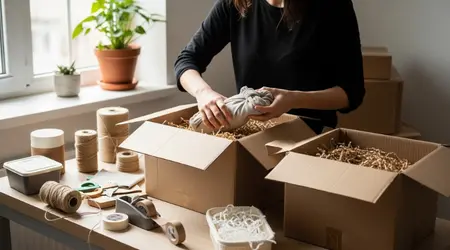
Instead, use towels, bed linen and socks to cushion fragile items safely in the boxes.
According to a study by the Federal Environment Agency, an average move generates approximately 30 to 50 kilograms of packaging waste per household.
This enormous amount can be reduced almost completely to zero through the use of textiles and reusable systems.
Ask for banana boxes in supermarkets or use existing suitcases and backpacks as stable means of transport.
Why spend money on disposable materials when your wardrobe already provides the perfect padding for your glasses?
See more: Zero waste in rented apartments: Small solutions for limited space
Where can you find reusable moving boxes to rent?
Nowadays, specialized providers in almost every major city offer box subscriptions, where the boxes are delivered and picked up again.
These systems are often more stable than cardboard and can be stacked much more compactly and safely in the moving van.
Neighbors and friends often still have old cardboard boxes in their basements, just waiting to be used for another round.
Actively exchanging information conserves resources and promotes communication within your social environment before the move.
See also: The right choice for beverage cups: Refillable & reusable instead of disposable
How do you replace adhesive tape and plastic wrap?
Use tension straps or rubber bands to secure blankets around furniture instead of wrapping them with endless meters of stretch film.
These aids are durable and will continue to serve you well in everyday life even after the move.
Old newspapers or brochures are excellent as filling material if towels are not enough, and can then be recycled with waste paper.
Make sure to introduce as little new material as possible into the cycle.
How can you make moving day environmentally friendly and efficient?
A successful Zero waste during the move This also includes feeding the helpers, which often ends in chaos with disposable tableware.
Prepare finger food that doesn't require cutlery, and use reusable water bottles instead of countless small plastic bottles for hydration.
Analog planning is key here: A large water container and washable napkins save huge amounts of waste during the strenuous hours.
Remember that your helpers will appreciate the sustainable example and may even adopt it for their own next move.
Choose a moving company that uses electric trucks or at least offers CO2 compensation for the kilometers driven.
Many modern service providers have already specialized in green logistics and actively support zero-waste packaging on site.
Plan your route precisely to avoid unnecessary empty journeys and keep fuel consumption as low as possible.
Efficiency and sustainability go hand in hand here to keep stress levels low for both people and nature.
Which cleaning products are environmentally friendly?
Use vinegar, citric acid and baking soda for the final cleaning of your old apartment, instead of buying aggressive chemical cleaners in plastic bottles.
These home remedies are biodegradable, inexpensive, and often achieve better results on limescale and grease.
Washable microfiber cloths or old cotton rags completely replace kitchen rolls and disposable cleaning cloths, leaving no unnecessary waste.
This way you can hand over your old apartment to the new tenants with a clear conscience and sparkling clean.
How do you properly dispose of unavoidable waste?
Should any items remain at the end, please use recycling centers for the proper separation of wood, metal and electronic waste.
Correct sorting is the final important step in returning valuable raw materials to the production cycle.
Hazardous waste such as leftover paint or batteries should never end up in household waste, as they can massively damage the environment.
Find out in advance about the collection points in your city so you don't get under time pressure on moving day.
Sustainability check for your move
| Area | Conventional method | Zero Waste Alternative | Environmental benefit |
| Cardboard boxes | Buy new cardboard boxes | Rental boxes or used crates | Resource conservation |
| upholstery | Bubble wrap / Styrofoam | Towels, blankets, clothing | Avoiding plastic |
| Closure | plastic adhesive tape | Paper tape or straps | Improved recyclability |
| Catering | Pizza in a cardboard box / Disposable bottles | Home-cooked meals / Reusable bottles | Waste reduction |
| cleaning | Special chemical cleaners | Vinegar, baking soda and castile soap | Water protection |
Zero waste during the move This is not a utopian idea, but the result of a conscious decision against the throwaway mentality.
By combining early decluttering, the use of reusable systems and eco-friendly cleaning products, you can transform a stressful event into a green statement.
Sustainability here does not mean abstinence, but rather the intelligent use of existing resources.
Those who consistently apply the principles of waste prevention save costs in the long run and begin the new chapter in life with a noticeable ease.
An environmentally friendly move not only protects the climate, but also sends a clear message about responsible living in our modern society.
Have you already gained experience with sustainable moving techniques or do you have a secret tip for upholstery? Share your experiences in the comments!
Frequently Asked Questions
Where can I get used cardboard boxes for free?
Ask at local supermarkets, bookstores, or check neighborhood apps like "Nebenan.de". Many people are happy to have their used cardboard boxes picked up and reused.
Are plastic rental boxes really more environmentally friendly than cardboard ones?
Yes, provided they are reused often enough. Because they are more stable, they protect the contents better and, after their long lifespan, can usually be recycled 100%, whereas cardboard often loses stability after just a few cycles.
How do I wrap dishes without tissue paper?
Use your socks for glasses and wrap plates in your T-shirts or kitchen towels. This saves space, as you're packing clothes and dishes at the same time, and offers excellent protection against bumps and knocks.
What do I do with old paints and chemicals when I move out?
These items must be disposed of as hazardous waste at designated collection points or recycling centers. Many municipalities also offer mobile hazardous waste collection services that visit residential areas on specific dates.
Is it really possible to move house completely without waste?
A "low waste" move is more realistic than an absolute zero-waste goal. It's about drastically reducing waste; a few pieces of tape or scraps of paper aren't a failure as long as the overall approach remains sustainable.