
Why energy-saving tips from the 90s no longer work today
Advertisement
Why energy-saving tips from the 90s It is obvious that in today's interconnected world full of intelligent energy guzzlers and smart grids, they simply no longer have the desired effect.
In the nineties, it was often enough to replace the incandescent light bulb with a bulky energy-saving lamp to noticeably reduce the monthly electricity bill.
Today we live in an era of digitalization, in which the standby power consumption of networked devices often negates the classic savings achieved by simply switching them off.
The outdated methods completely ignore the fact that our modern infrastructure places entirely different demands on efficiency than the technology of thirty years ago.
Guide to modern efficiency
- Technological change: Why old rules of thumb for modern heat pumps and LED systems can often even be counterproductive today.
- Standby problems: The hidden costs of permanent networking, which were absolutely not an issue for households in the 1990s.
- Intelligent control: How smart thermostats and AI-supported systems can more efficiently replace manual ventilation and turning down the heating.
- Across sectors: The path from simply saving electricity to a holistic strategy for heat, mobility and on-site electricity generation.
What fundamental changes have occurred in heating technology?
One major reason, Why energy-saving tips from the 90s The reason for their failure today lies in the inertia and intelligence of modern heating systems such as heat pumps.
Previously, it was recommended to completely switch off the heating when absent, which worked with old oil heating systems, but is inefficient today.
Modern systems operate most efficiently when they maintain a constant low temperature, instead of suddenly reheating cooled rooms at a high energy cost.
Anyone who still turns their heating up and down constantly, like in 1995, is massively increasing their electricity consumption.
Why is lowering the temperature more complex today?
In the past, houses were less well insulated, so rapid cooling justified radically turning down the thermostats to immediately minimize heat loss to the outside.
In highly insulated buildings from 2026, however, the heat remains stored for so long that short periods of temperature reduction hardly result in measurable savings.
Furthermore, modern heating systems have intelligent algorithms that control the flow temperature extremely precisely based on the outside temperature and the actual needs of the residents.
Manual intervention by the user often disrupts these optimized cycles and leads to an uneven energy flow.
++ Energy-efficient rental housing: What is actually allowed
How do smart thermostats affect energy-saving potential?
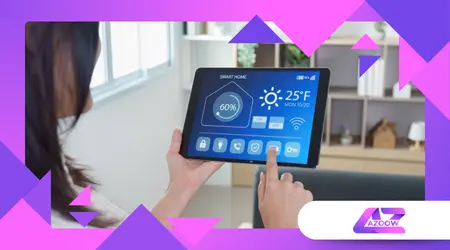
Manual control of radiators, which was standard in the 90s, is now being replaced by self-learning systems that automatically detect window openings.
This technology prevents heating by turning on open windows, which used to be one of the biggest energy wasters in every household.
Another aspect is the integration of weather forecasts into the heating control system, which already knows in the morning how much the sun will heat the house at midday.
Such proactive adjustments were technically impossible or even inconceivable with the mechanical controllers of the past.

Why is standby mode more dangerous today than it used to be?
Another point, Why energy-saving tips from the 90s What is no longer relevant is the permanent internet connection of almost all household appliances in our everyday lives.
In the 90s, a television in standby mode consumed a lot of power, but it was "dumb" and did not constantly communicate with servers.
Nowadays, smart TVs, voice assistants and Wi-Fi routers draw power around the clock to receive commands or download updates in the background.
According to studies by the German Federal Environment Agency, this "vampire load" now accounts for a significant portion of private electricity consumption, which simply did not exist before.
See more: Saving energy while cooking: Tips for kitchen & stove
Why is unplugging less effective today than previously thought?
Many modern devices are designed to remain constantly connected to the network in order to maintain their internal memory or to perform system checks autonomously.
Hard disconnection from the power grid can even lead to data loss or a shortened lifespan of components in sensitive electronics today.
While previously it was generally recommended to switch everything off, today it is necessary to differentiate which devices can actually be disconnected from the mains and which are optimized for standby mode.
For example, many OLED TVs perform important cleaning programs for the panel after being switched off, which would be interrupted if the power were disconnected.
See also: Balcony power plants put to the test: What small solar panels can achieve
What role do efficient power supplies play today?
The efficiency of power supplies has improved and developed massively since the 1990s due to legal requirements such as the EU Ecodesign Directive.
An old, heavy transformer power supply from the 90s was a small heater, while modern switched-mode power supplies hardly produce any significant waste heat when idle.
This means that the potential savings from using a single mobile phone charger are now negligible compared to the 1990s.
Today, the focus must be on the total number of devices and their continuous background activities on the home network.
How do LEDs and A+++ appliances affect our energy-saving behavior?
The efficiency revolution in light bulbs is the clearest proof, Why energy-saving tips from the 90s today, they often completely miss the point of the actual problem.
Extinguishing a 60-watt incandescent bulb was an effective energy-saving measure back then, whereas a modern 6-watt LED hardly makes a difference anymore.
Today, lighting an entire house often consumes less electricity than a single old refrigerator from 1992 running continuously.
Anyone who panics and switches off the lights today, but leaves their old wine fridge running in the basement, is setting their energy priorities completely wrong.
Why is the washing temperature more important than the duration today?
Previously, the advice to only use the washing machine when fully loaded was the most important rule in order to save water and expensive heating energy.
However, modern machines have an automatic quantity control system that precisely adjusts water and electricity consumption to the weight of the actual load.
Today, the choice of temperature is much more crucial, as modern detergents already develop their full cleaning power at 20 or 30 degrees Celsius.
Washing at 60 degrees still consumes an unnecessarily large amount of energy today, even though the machine itself is technically highly efficient.
What does the end of the classic energy-saving light bulb mean?
In the 1990s, toxic, mercury-containing compact fluorescent lamps were the pinnacle of innovation, but they required long warm-up periods to reach their full brightness.
It was advised to leave the light on when leaving the room only briefly, in order to conserve the cycles.
LEDs no longer have this limitation; they reach full brightness instantly and can withstand virtually unlimited switching cycles without any wear and tear.
In today's world, it therefore makes perfect sense to consistently switch off the lights, even if only for a few seconds.
Energy consumption comparison (1990 vs. 2026)
| Device type | Consumption in 1990 (kWh/year) | Consumption 2026 (kWh/year) | Savings in % |
| Refrigerator (Standard) | approx. 450 kWh | approx. 90 kWh | 80% |
| Lighting (House) | approx. 600 kWh | approx. 80 kWh | 86% |
| Washing machine (cycle) | approx. 2.0 kWh | approx. 0.5 kWh | 75% |
| Television (operation) | approx. 250 kWh | approx. 60 kWh | 76% |
| Standby load (total) | approx. 50 kWh | approx. 250 kWh | -400% (increase) |
The new logic of efficiency
In summary, the world of energy efficiency has become more complex, but also more rewarding if you use the right levers.
We have seen, Why energy-saving tips from the 90s in an age of heat pumps, LEDs and smart homes, they are no longer sufficient.
Instead of focusing on small gestures like briefly switching off an LED, we should focus on system optimization and intelligent control today.
The key no longer lies in abstinence, but in the clever use of technology that thinks for us and saves us money.
Those who adapt their habits to the reality of 2026 will not only save money but also make a real contribution to climate protection.
Do you still use old household appliances from the 90s and have you ever measured their actual energy consumption? Share your experiences in the comments!
Frequently Asked Questions
Should I turn off my router at night?
Technically speaking, switching off the router saves about 10 to 15 watts per hour, which adds up over the year.
However, this can cause automatic updates from your provider to fail or disrupt smart home functions such as alarm systems, which is why a schedule in the router menu is often the better solution.
Is it worth replacing a functioning old refrigerator?
In most cases, yes, because a modern A-class appliance is so much more efficient that the purchase costs are often recouped through electricity savings after just a few years.
From an energy perspective, a device that is over 20 years old is usually a financial burden, even if it still cools perfectly.
Is shock ventilation still the best advice?
Yes, the principle of shock ventilation remains timeless, as it quickly exchanges the stale air without the walls and furniture in the room cooling down.
However, in buildings with automatic ventilation systems and heat recovery, this should be avoided, as the system already handles the exchange much more efficiently.
Why does my new television use more energy than my old CRT television?
Although the technology has become much more efficient per inch of screen area, modern screens are often so much larger that overall power consumption increases.
A 75-inch 4K display, despite LED technology, requires more energy than a tiny 50-centimeter CRT television from the past.
Do I really still need to remember to switch off LED lamps?
Even though LEDs are extremely energy-efficient, the consumption of many light sources throughout the house still adds up noticeably over the course of the year.
Since LEDs have no start-up delay and do not wear out, consistently switching them off remains the simplest and most effective method to save energy without cost.