
Why I no longer have a television – and what has changed

Advertisement
Why I no longer have a television, is a decision that has radically slowed down my everyday life in 2026 and noticeably improved my mental clarity.
In an era of constant sensory overload, the black rectangle in the living room became an altar of passivity for me, which I eventually tore down.
Giving up the classic TV set was not a step back into the Stone Age, but a conscious step towards more self-determination and focus.
Instead of letting algorithms entertain me, I now actively shape my free time and discover untapped potential in my own mind.
Signposts to new freedom
- Time sovereignty: How regaining three hours of daily airtime enabled new hobbies and deeper social contacts.
- Spatial aesthetics: The visual liberation of the living room from a dominant electrical appliance to a place of true tranquility.
- Mental hygiene: Protection from negative news loops and manipulative advertising through targeted, conscious media selection on the laptop.
- Sleep quality: Why avoiding blue light in the evening has had a lasting positive impact on my recovery phases and dreams.
What are the advantages of a life without linear television?
The main reason, Why I no longer have a television, lies in the immense time savings, which I could immediately use for more meaningful activities.
According to statistical surveys, Germans watch television for an average of over 200 minutes a day, which corresponds to a huge lifetime of passivity.
Today I invest this newly gained time in reading challenging literature, regular exercise, and genuine conversations with friends and family.
It's amazing how much creative energy is suddenly released when you're no longer just a passive recipient of other people's content.
How does concentration improve?
Without the constant background noise of the television, my ability to do deep work and deep relaxation has increased massively.
I no longer let myself be pulled out of my thoughts by advertising breaks or loud trailers, but determine the rhythm of my day myself.
This newfound stillness in the house acts like a balm for the nervous system, which is already under constant stress in the digital age.
I have learned not to immediately numb boredom with consumption, but to use it as fertile ground for new ideas.
++ How to keep your hobbies minimalist without losing the fun
Why does consumer pressure decrease without TV?
Television advertising is programmed to sow dissatisfaction and awaken needs that we wouldn't even have without the screen.
Since escaping that, I feel a significantly less urge to constantly buy new products or follow short-lived trends.
My minimalist lifestyle is strengthened by the fact that I am no longer exposed daily to hundreds of suggestive messages that make me feel deprived.
This not only saves a lot of money, but also leads to a deeper satisfaction with what I already own.
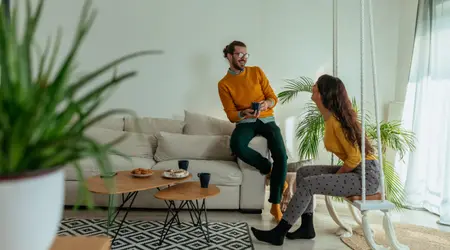
How does abstinence change social interaction?
A key aspect, Why I no longer have a television, is the return to genuine presence in my interpersonal relationships at home.
We used to stare at the screen together, but now we look into each other's eyes again at dinner and actively listen.
The living room is no longer geared towards a technical device, but once again functions as a genuine meeting place for honest exchange.
We discuss our experiences instead of talking about fictional characters or staged reality shows, which has noticeably deepened our bond.
See more: Minimalism in the home office: Focus instead of distractions
What happens when friends visit?
Guests are often surprised at first, but after a short time conversations develop that reach a depth that would be impossible with the television running.
There is no longer a visual distraction factor that subtly draws attention away from the other person and keeps the conversation superficial.
We play board games again, listen to music together, or simply enjoy the silence with a good glass of wine in a relaxed atmosphere.
This quality of encounter has become a luxury that I gain anew every day by foregoing the television.
See also: Zero Waste in the Office: Sustainable Solutions for the Workplace
How does it affect the upbringing of children?
By setting an example by not using television, I teach children that entertainment doesn't necessarily have to come from a box that amuses them.
They develop greater initiative when playing, crafting and exploring nature, which promotes their cognitive development and imagination.
There is no longer a battle over screen time, as the device is simply no longer present in the household as a constant temptation.
Instead, we now use media very selectively and collaboratively on the computer for selected documentaries or high-quality films.
Why is digital abstinence in the living room healthy?
The decision, Why I no longer have a television, was ultimately also a logical step for my long-term physical and mental health.
The blue light from large screens inhibits melatonin production and often leads to restless sleep and a disrupted internal biological clock.
Since the device is gone, I go to bed earlier and wake up in the morning feeling much more rested and energized for the day.
I use the evening for gentle stretching exercises or meditation, which effectively reduces my stress level after work to a minimum.
How does this affect the psyche?
Television news often relies on sensationalism and fear to captivate viewers, leading to a distorted perception of the world.
I now only consume news in text-based and measured doses, which makes me more emotionally stable and less susceptible to doomscrolling.
The constant availability of crisis reports in image and sound puts a much greater strain on the subconscious than one admits to oneself at the moment of consumption.
Without TV, I filter information more actively and protect my mental health from unnecessary fear-mongering and emotional manipulation.
Is it still possible to enjoy movies?
Of course, I still watch films occasionally, but I do this very consciously as a special occasion at my work monitor or in the cinema.
The act of "gazing" has been replaced by an act of "seeing," in which the quality of the content is absolutely paramount.
A good work is appreciated much more when it is not consumed as mere background noise while using a smartphone on the couch.
The conscious decision to choose content transforms media consumption back into a valuable cultural experience rather than a dull habit.
Comparison: Everyday life with vs. without television (data from 2026)
| Area | With TV (standard) | No television (Minimalist) | effect |
| Leisure activities | Passive background noise | Active hobbies / sports | More energy & focus |
| Sleep quality | Sleep disturbances caused by blue light | Deep, restful sleep | Improved regeneration |
| Social | coexistence | Genuine communication | Deeper relationships |
| Buying behavior | Impulse purchases driven by advertising | Conscious consumption | Financial savings |
| Space utilization | Altar arrangement | Open, calm design | Higher quality of living |
A new chapter in mindfulness
In summary, it can be said that Why I no longer have a television, which has improved the quality of life in all areas.
We have seen how abstinence leads to more time, deeper social bonds, and more stable mental health.
It is a liberation from the role of passive consumer to an active shaper of one's own valuable life time.
The resulting silence in the living room is not a deficiency, but an invitation to self-reflection and genuine experience.
Those who have the courage to unplug will be rewarded with a presence that no 8K screen could ever simulate.
Have you ever thought about putting your TV in the basement for a month, or are you afraid of the silence? Share your experiences in the comments!
Frequently Asked Questions
Won't you miss important news if you don't have a television?
Not at all. I deliberately read digital newspapers and listen to podcasts in the mornings, which often leaves me better and more deeply informed than through short news reports on TV.
One filters out the "noise" and concentrates on the essential facts and background of the current world situation.
Isn't a television important for social integration (small talk)?
That may have been the case in the past, but nowadays most conversations are based on viral content from the internet or streaming services anyway.
Since I can selectively watch this content on my laptop when I want to, I remain capable of participating in discussions without owning a TV.
How do children react to the missing device?
Children adapt surprisingly quickly when alternatives such as books, art supplies, or nature experiences are offered.
They often become more creative and independent, as they no longer wait for a screen to entertain them and passively capture their attention.
What do you do on rainy Sunday afternoons?
This is the perfect time for long hours of reading, extensive cooking, board games, or simply a guilt-free nap.
A rainy day without television feels much longer and more relaxing, as you perceive and shape the time more consciously.
Does one really save money by abstaining?
Yes, definitely. You not only save on the purchase costs and electricity, but above all on the fees for cable connections or expensive pay-TV subscriptions.
Furthermore, the risk of impulse purchases decreases, as one is no longer exposed to constant, highly optimized TV advertising and artificial consumer pressure.