
Packaging-free habits: Everyday life without extra effort
Advertisement
Packaging-free habits Today, they are no longer a radical renunciation, but rather an expression of a modern, conscious lifestyle in our cities.
Anyone walking through German supermarkets in 2026 will immediately notice the change towards an efficient circular economy without unnecessary ballast.
The need to reduce plastic waste has long since entered the mainstream and massively shapes our everyday lives.
Sustainability in this context does not mean more time spent, but rather a smart optimization of existing routines for a better tomorrow.
At a glance: Your guide to everyday life
- Understanding the logic behind zero-waste routines.
- Practical application during weekly shopping and on the go.
- Economic advantages and time savings through minimalism.
- Current market data on packaging reduction 2026.
Why are packaging-free habits so important today?
Climate change and resource scarcity are forcing us to finally end linear consumption.
Every piece of plastic we save today relieves the burden on marine ecosystems and noticeably reduces our CO₂ footprint.
Efficiency is the new status symbol, as unnecessary packaging only takes up space in the household bin.
A modern household is defined today by what it no longer owns or throws away.
How does waste prevention directly affect our environment?
According to current data from the Federal Statistical Office, the amount of packaging waste in Germany decreased significantly by the beginning of 2026.
This development shows that collective Packaging-free habits actually represent a measurable relief for municipal waste disposal systems.
Less microplastic in our soils also means healthier food for all of us in the long run. It's a cycle that begins with the decision we make in front of the supermarket shelf and directly benefits us.
++ Overcoming Zero Waste Fatigue: Staying Sustainably on Track
What role does politics play in waste prevention?
The EU Packaging Regulation has forced the industry to radically promote reusable systems and make single-use options more expensive.
Consumers are responding by increasingly using their own containers, which has permanently changed market dynamics.
Government incentives now support shops that rely entirely on zero-waste stations instead of plastic wrap.
These structural changes make the transition to a life without plastic waste much easier.
How can you shop plastic-free without stress?
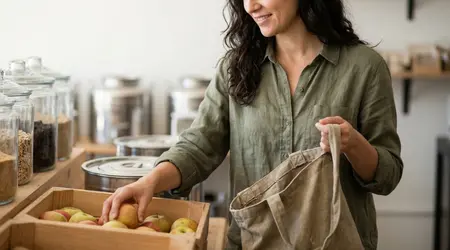
Smart shopping begins in your mind, even before you leave home. Keeping your bags and glass containers within easy reach in the hallway makes it less likely you'll forget them and helps you avoid impulse purchases of plastic.
Many supermarkets now offer digital terminals that weigh customers' own containers in seconds.
This makes going to the store a smooth routine without the hassle of repacking at the checkout.
See more: Waste-free menstruation: Sustainable alternatives to tampons and pads
Where can I find the best options for unpackaged goods?
Fresh food counters and weekly markets are the first places to go to wrap fruit, vegetables and cheese directly in your own cloths.
But discount stores are also following suit and installing dispensing stations for cleaning products and dry basic foodstuffs.
You no longer have to drive across the city to Packaging-free habits to successfully integrate it into the schedule.
Availability has increased massively in the last two years thanks to widespread automation.
See also: How to find sustainable clothing and avoid fast fashion
How do I organize my pantry efficiently?
Uniform glass containers not only look aesthetically pleasing, but also keep food fresh for significantly longer.
Transparency allows you to keep track and only buy what you actually use.
This system prevents food waste, as no hidden bags are forgotten in the back corners of the cupboard.
Clarity is the key to a sustainable and relaxed household.
What are the advantages of waste reduction in everyday work life?
Most waste is generated in the office or on the go, often from disposable coffee cups or quick snacks. Those who take precautions here not only save valuable resources but often also a lot of money through discounts.
A high-quality stainless steel bottle and a lunchbox are the most loyal companions for modern employees in 2026.
It signals a sense of responsibility and a structured mind towards colleagues and superiors.
Why is it financially worthwhile to provide your own food?
Those who cook meals in advance and take them in glass containers avoid the expensive and often unhealthy ready meals from the refrigerated section.
Investing in good hardware usually pays for itself within the first month through small savings.
In addition, you save time during your lunch break, as you no longer need to search for a snack.
This additional rest period increases productivity and overall well-being during working hours.
How do I establish new routines within the team?
Joint initiatives such as a "milk filling station" in the break room can halve the plastic waste of an entire team.
Often, all it takes is a trigger to Packaging-free habits to establish it collectively as the new standard.
Companies are actively promoting such approaches today in order to achieve their own sustainability goals more quickly.
A waste-free office is therefore a business card for modern corporate culture and ecological foresight.
Current market data and comparisons
To illustrate the relevance, it helps to look at the hard facts of the industry. The following table illustrates the savings achieved through consistent waste prevention.
| category | Savings per year (approx.) | Environmental impact (CO₂ equivalent) |
| beverage bottles | 180 pieces | -12 kg |
| plastic bags | 50 pieces | -2 kg |
| Coffee-to-go cups | 120 pieces | -8 kg |
| Fruit packaging | 200 units | -15 kg |
Source: Own research based on market trends in the circular economy 2026.
Like a well-oiled machine, a household functions better when no unnecessary parts (packaging) block the gears.
Have you ever wondered: Why do we actually pay for trash that we throw away immediately after buying it?
What role does technology play in waste prevention?
Smart home systems can now track the fill level of storage jars and automatically create shopping lists as needed.
This prevents overbuying and ensures that you always go to the market with the right containers.
Apps also connect consumers with local producers who offer their goods directly from the farm without outer packaging.
Digitalization is therefore a powerful ally for our daily lives. Packaging-free habits become.
Are smart deposit return systems the future?
Almost all cities now have comprehensive reusable systems for restaurants and retailers controlled by an app.
You borrow bowls or cups and simply return them to any station.
The system works similarly to a bicycle rental service and often makes owning your own containers unnecessary while traveling.
In 2026, convenience and ecological conscience no longer have to be mutually exclusive.
How safe are modern zero-waste systems?
Hygiene standards have been raised to a new level by contactless filling stations, often surpassing conventional shelves.
Sensors ensure that exactly the desired amount is dispensed into the container without spillage.
This not only minimizes dirt but also guarantees a longer shelf life for the goods in the store.
Technological innovations make Packaging-free habits making it safer and more attractive to the general public.
Conclusion: A small step for us, a giant leap for nature
The transition to a zero-waste lifestyle is not a sudden change, but a continuous learning process full of small successes.
If we Packaging-free habits Once we understand plastic as an integral part of our identity, abstaining from it becomes second nature.
Ultimately, these conscious decisions not only give us a cleaner environment, but also more quality of life and time.
It's about taking responsibility without losing the joy of daily consumption and enjoyment.
Share your experiences in the comments: Which packaging-free step was easiest for you to implement?
Frequently Asked Questions
Isn't shopping without packaging much more expensive?
In fact, you often save money because you only buy the amount you actually need. Furthermore, the marketing and design costs for packaging are eliminated, which keeps the base prices stable.
How do I deal with spontaneous purchases?
Get into the habit of always carrying a foldable cloth bag in your pocket. For spontaneous grocery purchases, many shops now offer reusable glass jars or biodegradable paper bags.
Are packaging-free habits time-consuming?
Only during the initial transition phase, when searching for new sources. Once the routine is established, you'll save time. Packaging-free habits Time is saved by eliminating the need for constant disposal of plastic waste at home.
What do I do if there is no zero-waste shop near me?
Use the fresh food counters of conventional supermarkets and ask them to fill your own containers. Many chains adjusted their policies for this in 2026 to be more customer-friendly.