
Celebrations and events without waste: Planning a zero-waste party

Advertisement
Parties and events without waste In 2025, it will no longer be a niche, but a smart necessity for conscious hosts.
Every party, every event generates mountains of waste, from plastic cups to leftover food. We need to rethink our approach.
Switching to zero waste not only massively reduces environmental impact, but also often saves costs.
It proves that large events and small celebrations can be both stylish and environmentally friendly.
What is the main problem with traditional events?
The biggest waste problem at festivals and events is the use of disposable products, especially in the catering industry. Disposable tableware, napkins, and packaging dominate the waste stream.
These products often end up directly in landfills or incinerators. They waste valuable resources and cause significant CO2 emissions during their production.
Why is single-use plastic particularly problematic?
Single-use plastics, such as those often used for cups and cutlery, are extremely durable. They break down into microplastics that pollute soils, water, and even our food chain.
Even “biodegradable” alternatives are often misleading and require special industrial composting facilities, which are rarely available.
++ Zero waste in rented apartments: Small solutions for limited space
How can event organizers minimize waste in advance?
The key lies in the planning: Parties and events without waste It starts with avoidance. Buy in bulk and completely avoid pre-packaged snacks and drinks.
Choose local suppliers who accept reusable containers. This eliminates packaging waste before it is even created.
See more: Waste-free menstruation: Sustainable alternatives to tampons and pads
The rental concept for dishes
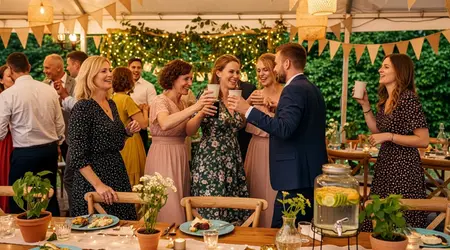
An event organizer rents high-quality reusable dishes, glasses, and cutlery from a professional rental service. This service also handles the final cleaning.
This is often more cost-effective than buying disposable items. It guarantees style and ensures that no waste is generated after the party, apart from organic waste.
How can catering be designed to be zero waste?
Catering is a critical area for waste reduction, especially when it comes to food. It requires conscious menu planning and accurate estimates of guest numbers.
The goal is to avoid food waste and to make good use of leftovers or compost them instead of simply throwing them away.
See also: How to find sustainable clothing and avoid fast fashion
What strategies prevent food waste?
Plan the menu using versatile ingredients that are easy to prepare. Accurately recording RSVPs is essential for precise portion sizes.
Make sure there's a clear plan for what to do with the leftovers at the end of the event. This could involve partnering with a local food bank or organizing a fundraising event.
How can you organize drinks without creating bottle and can waste?
Opt for large dispensers for water, juices, and sodas instead of individual bottles. Offer local beers on tap or in reusable crates.
Encourage guests to bring their own reusable bottles, or provide stylish reusable glasses.
The leftovers buffet the next day
The hosts intentionally plan for a little extra food so that they can invite the guests to a relaxed "leftover brunch" the next day.
Alternatively, they provide sustainable containers in which guests can take leftovers home at the end of the evening. This is a kind gesture that avoids waste.
How does the logistics of waste separation work?
Even the best zero-waste party generates some unavoidable waste (e.g., wine corks, certain food packaging). Consistent recycling is the next step.
Clear and simple signage of the collection points is essential to ensure that guests dispose of the waste correctly.
Which separation systems are most effective?
Use clearly labeled, visually appealing containers for Compostable, recycling (Paper, glass, metals) and only as a last resort for Residual waste.
Place the stations in highly visible locations and don't let them overflow. A "waste guide" among the hosts can help with any questions.
Why is composting so important at zero waste parties?
Food scraps and biodegradable napkins make up a large part of party waste. Composting transforms these valuable materials into new soil.
This closes the loop and prevents organic waste from ending up in incineration plants, where it unnecessarily releases CO2 and methane.
Waste management as a cycle
Traditional waste management is like a straight path to the landfill.
Parties and events without waste see waste management as a circulatory system (Table below), where everything that goes in is reused. There is no "end-of-the-road" mentality.
What can we learn from professional zero waste events?
The professional events sector, from festivals to conferences, has shown that Parties and events without waste are possible on a large scale. The key lies in partnerships with service providers.
These events utilize innovative logistics and are committed to strict guidelines that guarantee the success of waste prevention.
What innovations are being used in the event sector?
Many large event organizers now use digital tickets instead of paper and work with professional reusable system providers who centrally manage cups and dishes.
Some events use solar or wind energy for their power supply and work with local farms for food provision.
How do you achieve high guest acceptance?
Communicate the zero-waste concept positively and enthusiastically. Briefly and kindly explain to your guests why you use reusable dishes and where they can dispose of them.
If the concept is implemented well and stylishly, guests will experience sustainability as an added value and not as a limitation.
A study by the German Federal Environment Agency (2024) found that events that consistently switch to reusable systems reduce their residual waste by an average of 85% can reduce this, which clearly demonstrates the efficiency of this approach.
| Waste category | Zero Waste Alternative | Basis for avoidance | Resource saving |
| Disposable tableware | Reusable tableware, rental service | Avoidance | Plastic/paper, water, energy (production) |
| Beverage packaging | Barrel, dispenser, reusable bottles | Avoidance | Glass, aluminum, plastic (transport and disposal) |
| Leftover food | Composting, donations, leftover brunch | Utilization | Methane emissions (landfill), nutrient loss |
| decoration | Natural or reusable materials | reuse | Plastics, production energy, landfill area |
Conclusion: Zero waste is the future of celebrations.
Parties and events without waste is more than a logistical challenge; it is a conscious decision for a responsible future.
Avoiding single-use products and reducing food waste shows respect for our planet.
The next time you're planning, ask yourself: Does this really need to be thrown away?
Start your next party with maximum fun and a minimal footprint! Share your best tips and zero-waste experiences in the comments!
Frequently Asked Questions
Isn't cleaning reusable dishes more harmful to the environment than cleaning disposable dishes?
No. Studies show that reusable tableware significantly improves the environmental footprint when reused correctly and cleaned energy-efficiently. Its lifespan is much longer.
What do I do with organic waste if I don't have a compost heap?
Use your municipal organic waste bin or inquire about local collection points. Alternatively, some cities also offer special collection services for event-related organic waste.
Where can I get large quantities of reusable cups?
There are specialized companies (e.g. Recup partners) that rent out reusable cup systems including logistics and cleaning for events of any size.
Do I need to inform my guests about the zero-waste rules?
Yes, a friendly, brief explanation on the invitation or upon arrival is helpful. Guests usually understand the concept immediately if it's well-organized.
Can I reuse my decorations?
Absolutely. Use fabrics, plants, LED fairy lights, or wood. These materials can be reused for future celebrations or around the house instead of ending up in the trash.