
Sustainable mobility in everyday life: Less car, more sharing & cycling
Advertisement
Sustainable mobility in everyday life defines today how we can let our cities breathe and reclaim valuable time instead of wasting it in daily traffic jams.
Saying goodbye to your own combustion engine car is no longer a sacrifice, but a gain in freedom, as modern sharing concepts keep us flexibly mobile at all times.
In 2026, we will experience a revolution in transportation that will radically transform public space and finally give the bicycle the priority it deserves.
Those who rely on smart networking today not only protect the environment, but also massively reduce their monthly fixed costs for transport and maintenance.
Key aspects of the modern mobility transition
- The transformation from a status symbol car to a flexible service user.
- The role of e-bikes and cargo bikes as a real alternative.
- Increased efficiency through intelligent sharing systems in urban areas.
Why is sharing changing our urban landscape?
The logic of ownership gives way to the principle of availability, since a private car statistically takes up space for about 23 hours a day.
Car sharing and ride-pooling allow us to use resources more efficiently and create space for green areas or wider cycle paths, which noticeably improve our quality of life.
Today, smart apps seamlessly link buses, trains and rental bikes, making the journey chain work without waiting times and rendering one's own vehicle superfluous.
This digital network is the backbone for Sustainable mobility in everyday life, as it perfectly balances individual needs with ecological responsibility.
How does effective ride-pooling work?
Ride-pooling involves several passengers with similar destinations sharing a vehicle, which reduces the number of journeys and significantly lowers traffic congestion.
Algorithms calculate the optimal route in real time, so that nobody has to take long detours and everyone still arrives safely and quickly.
This system bridges the gap between traditional public transport and individual door-to-door service, especially in outlying areas or at late hours in the city.
It massively reduces parking pressure, as fewer vehicles are in use at the same time and the existing fleet is better utilized instead of standing around unused.
++ Low-waste gift strategy: Experiences with long-lasting presents instead of short-lived items.
What are the advantages of car sharing?
Car sharing allows access to different types of vehicles depending on current needs, from small city cars for shopping to vans for large moves.
Users only pay for the actual driving time, while costs for insurance, taxes and expensive workshop visits are completely eliminated, which saves money.
It also promotes the use of state-of-the-art electric vehicles, which many individuals might otherwise not be able to afford due to the high purchase costs.
This democratizes access to emission-free technology and reduces CO2 emissions in municipalities through the more modern fleet compared to the old fleet.
Why is the bicycle the winner of the transport revolution?
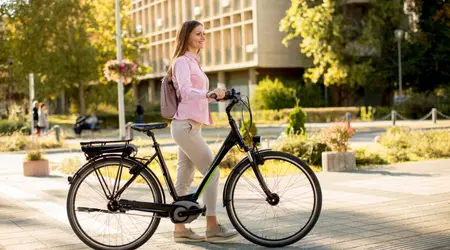
The bicycle has evolved from a purely recreational device to the most efficient means of transport for short distances, as it produces no emissions and takes up hardly any space.
In a world where time is the most valuable resource, the bicycle offers the guarantee of never having to sit in traffic jams or search for parking spaces.
E-bikes now extend this range of action to commutes of over 15 kilometers, without having to arrive at the office or appointments sweaty.
Sustainable mobility in everyday life This means simply integrating physical activity into the daily routine while effectively strengthening the cardiovascular system.
See more: Waste-free menstruation: Sustainable alternatives to tampons and pads
What can modern cargo bikes do?
Cargo bikes are now replacing the second car in many households, as they can effortlessly and safely transport weekly shopping, crates of drinks or even two children at the same time.
Thanks to powerful electric motors, inclines or heavy loads are no longer an obstacle, which massively lowers the barrier to switching from cars.
Businesses are increasingly using them for the "last mile" to deliver packages directly to the front door without blocking sidewalks or streets.
This development relieves inner cities of delivery vans and reduces noise levels, improving the quality of life for pedestrians and residents in the neighborhoods.
See also: How to find sustainable clothing and avoid fast fashion
How safe are modern cycle paths?
The infrastructure in 2026 will increasingly rely on "protected bike lanes", which offer physical protection from motorized individual traffic through structural separation.
This safety is crucial so that children and seniors can participate in cycling without fear and so that the bicycle is accepted as a fully-fledged means of transport.
Today, intersections are being redesigned so that cyclists are seen first and have priority, which drastically minimizes the risk of accidents caused by blind spots.
Good cycle paths are like veins in a healthy body; they must flow so that the entire city system can function efficiently and without disruption.
How does digitalization connect our transport systems?
The seamless integration of different modes of transport into a single platform allows us to react spontaneously and flexibly to any situation throughout the day.
Today we can book a ticket with just one click that is valid for the train, the rental bike and the autonomous shuttle bus simultaneously, without any paperwork.
In this context Sustainable mobility in everyday life to a comfortable experience that reduces stress and gives us full control over our routes.
Data-based traffic management systems also optimize the flow, proactively avoid traffic jams and always guide us directly to our destination via the most ecologically sound route.
What is Mobility as a Service?
This concept views mobility as a service, where the focus is no longer on the vehicle itself, but on the pure transport from point A to B.
Users take out subscriptions that cover a certain quota of kilometers or journeys across all available means of transport, entirely without any ownership obligation.
It creates transparency about the actual costs of transportation and motivates people to choose the most climate-friendly means of transport more often, instead of habitually getting into a car.
This systemic approach breaks down old thought patterns and paves the way for a resource-conserving society that understands mobility as a fundamental right.
Why is real-time information important?
Real-time data immediately informs us about delays, available sharing vehicles nearby, or closed roads, allowing us to dynamically adjust our route immediately.
This reliability builds trust in alternative forms of transport, as uncertainty about connecting services almost completely disappears thanks to precise digital forecasts and alternative suggestions.
Knowing that the cargo bike is ready and waiting at the next corner reduces the urge to reach for our private keys for short errands.
Digitization is therefore the glue that binds the individual building blocks of the sustainable movement together to form a stable and attractive overall picture for all citizens.
Analysis of transport efficiency
A recent study by the Federal Environment Agency (2025) proves that cyclists in city centers reach their destination faster on average over distances of up to 5 kilometers.
The combination of sharing and cycling also saves an average of 400 euros per month compared to maintaining a mid-range car, which represents an enormous financial relief.
Imagine your car is an expensive gym membership that you hardly use, while your bicycle is the free running park right outside your front door.
Would you continue to pay for an empty treadmill when you can move around much more flexibly and healthily outdoors?
Will we in the future view the parking space in front of the house as a relic of a bygone era?
| criterion | private car | Bicycle / E-bike | Sharing models |
| Cost per month | approximately €500 – €700 | approximately €10 – €30 | approx. €50 – €150 |
| Land use | High (12 sq m) | Very small (1 sq m) | Low (shared) |
| CO2 emissions | High | Zero | Minimal |
| flexibility | Conditional (traffic jam/parking) | Very high | High |
| Maintenance costs | High | Small amount | None (for users) |
Sustainable mobility in everyday life It requires courage to change, but rewards us with healthier cities, cleaner air and significantly more money in our pockets.
Switching to bicycles and sharing is no longer a technical problem, but a conscious decision for a livable future and against stagnation.
By shifting the focus from owning to moving, we are actively shaping the urban space of tomorrow and making a statement against waste.
Every kilometer traveled by bicycle or shared vehicle is a direct contribution to climate protection and strengthens the community through efficient use of space.
Today we have all the tools in our hands to reinvent our mode of transportation and finally leave the stress of the old system behind us.
Share your experiences with switching to car sharing or cycling in the comments and inspire others to take this important step!
Frequently Asked Questions
Isn't car sharing more expensive in the long run than owning your own car?
No, for most people who drive less than 10,000 kilometers a year, sharing is significantly cheaper, as fixed costs such as depreciation and insurance are eliminated.
What do I do when cycling in bad weather?
Modern functional clothing and the expansion of covered cycle paths make cycling possible all year round, and shared cars offer a good backup solution for extreme days.
Are there sharing services available in rural areas?
By 2026, village car concepts and on-demand bus systems will expand massively to provide transportation even outside of major cities. Sustainable mobility in everyday life to ensure.
How secure is my data in mobility apps?
Current European standards guarantee the highest level of data security, while anonymized movement profiles help to plan the transport network of the future in a more needs-based and efficient manner for everyone.
Can cargo bikes really handle the weekly grocery shopping?
Yes, modern models offer a payload of up to 200 kilograms and special accessories, so that even large shopping trips for families can be transported stably and without physical effort.