
Energy certificate: obligations, costs and tips for landlords
Advertisement
Energy certificate This document is indispensable for landlords in Germany when it comes to renting out or selling real estate.
In a time when energy efficiency and sustainability are becoming increasingly important, the Energy certificate not only a legal obligation, but also a tool to offer tenants transparency about energy costs.
The Building Energy Act (GEG), which replaced the Energy Saving Ordinance (EnEV) in 2020, tightened the requirements. But what does that mean for landlords?
What obligations exist, what costs are incurred, and how can landlords act cleverly to avoid fines while simultaneously making their property more attractive?
This article examines the topic from various perspectives, provides practical tips, and shows how landlords can benefit from a Energy certificate can benefit.
Let's delve into the subject together and clarify how you can make your property future-proof.
Why is an energy performance certificate mandatory?
The obligation to Energy certificate It is rooted in the Building Energy Act (GEG), which has been in effect since November 2020.
It calls on landlords to include a [missing information] when renting out a property or selling a property. Energy certificate to be submitted. The aim is to make the energy efficiency of a building transparent to tenants and buyers.
Without this proof, fines of up to €15,000 may be imposed. Energy certificate It must be presented at viewings or visibly displayed. Since 2014, mandatory information has also been required in real estate advertisements.
++ Municipal energy transition: How cities become pioneers
Exceptions exist for listed buildings and properties with less than 50 square meters of usable floor space. However, in most cases, registration is unavoidable.
Landlords should take legal requirements seriously, as authorities consistently prosecute violations. A lack of compliance can lead to legal action. Energy certificate It can also undermine the trust of potential tenants.
So why hesitate? Energy certificate It not only protects against penalties, but also increases the attractiveness of your property in an environmentally conscious market.
Types of energy performance certificate: demand or consumption?
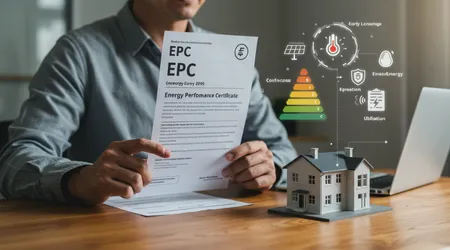
There are two types of Energy performance certificateThe two are the energy performance certificates: the energy demand certificate and the energy consumption certificate. Both fulfill the legal requirement, but differ in their informative value.
The energy performance certificate analyzes the energy characteristics of a building, such as insulation and heating system. It is more precise, but also more complex and expensive.
The energy performance certificate is based on actual consumption data from the last three years. It is cheaper, but depends on the residents' usage patterns.
For new buildings or buildings with fewer than five residential units that were built before 1977, an energy performance certificate is mandatory. Landlords are otherwise free to choose.
See more: Buying energy-efficient appliances – what you really need to pay attention to
An energy performance certificate provides potential tenants with a more reliable estimate of energy costs. This can be a competitive advantage when renting out a property.
The choice depends on your budget and the property. An energy performance certificate is often the better choice for long-term transparency.
Cost of an energy performance certificate
The cost of a Energy certificate Prices vary depending on the type and provider. A consumption-based energy performance certificate costs approximately 50 to 150 euros, while a demand-based certificate costs 100 to 500 euros.
The price range depends on the complexity of the building. Multi-family homes are more expensive because more data needs to be analyzed.
Landlords bear the costs alone; passing them on to tenants is not permitted by law. In condominium associations, the owners share the costs.
Online providers often offer cheaper options, but beware: without an on-site inspection, the quality can suffer. Reputable providers are crucial.
See also: LED lighting: Why switching is always worthwhile
According to a study by the North Rhine-Westphalia Consumer Center (2025), landlords with an energy performance certificate save money in the long run due to improved rentability. The investment pays off.
Compare offers and check the exhibitor's qualifications. A high-quality Energy certificate It's an investment in the future of your property.
Practical tips for landlords
A Energy certificate It's more than just an obligation. Use it to make your property more attractive. Here are some practical tips for landlords.
Display your ID clearly during viewings. This demonstrates transparency and professionalism, which prospective tenants appreciate.
Real estate advertisements must include mandatory information such as energy efficiency class and energy source. Failure to provide this information can result in legal warnings.
Engage qualified professionals, such as architects or building energy consultants, to ensure accurate data. This will prevent future liability disputes.
Check the validity of the ID card regularly (10 years). An expired ID card can cause problems when renting the property to a new tenant.
Take advantage of the modernization recommendations in the energy performance certificate. They reveal potential savings and can increase the property's value for environmentally conscious tenants.
The role of the energy performance certificate in rentals
The Energy certificate It's a selling point. A good energy efficiency rating (A+ to C) makes your property more attractive to tenants.
Tenants are increasingly paying attention to low utility costs. A good Energy certificate This signals lower heating costs and makes your property stand out from others.
Example: Landlord Müller modernized his heating system and improved the insulation. His energy performance certificate showed class B, which sped up the rental process.
A poor energy efficiency rating (e.g., class FH) can be a deterrent. Investments in energy efficiency are worthwhile to remain competitive in the long term.
The certificate is also a statement of sustainability. In times of climate change, tenants expect landlords to demonstrate responsibility.
In a 2024 survey by the German Federal Environment Agency, 78% of tenants stated that energy efficiency is a crucial factor when searching for an apartment. Take action!
New developments and challenges 2025
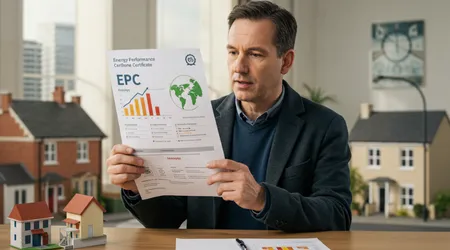
In 2025, the GEG (Building Energy Act) will bring new challenges for landlords. The CO2 tax will rise to 55 euros per ton, which will increase heating costs.
Landlords must inform tenants about energy consumption and potential savings. A current Energy certificate This obligation is made easier and creates trust.
The EU's energy efficiency mandate requires gradual energy improvements. An energy performance certificate helps to identify and plan for renovation needs early on.
Smart meters will become mandatory for properties with photovoltaic systems or heat pumps in 2025. They will supplement the energy performance certificate with precise consumption data.
Landlords should prepare for stricter checks. Authorities are verifying property advertisements and viewings for correct identification information.
For example, landlady Schmidt used her energy performance certificate to apply for subsidies for a heat pump. This increased the attractiveness of her apartment.
Table: Comparison of energy performance certificates based on calculated energy demand and those based on actual energy consumption
| criterion | Energy performance certificate | Energy performance certificate |
|---|---|---|
| basis | Energy properties of the building | Actual consumption (3 years) |
| Cost | €100–500 | 50–150 € |
| accuracy | Higher, regardless of user behavior | Depending on user behavior |
| Duty | New buildings, old buildings pre-1977 | Free choice when there is no obligation |
| Meaningfulness | More precise, reliable in the long term | Less precise, usage-dependent |
Conclusion: The energy performance certificate as a key to the future
The Energy certificate It is more than a bureaucratic hurdle; it is a tool for transparency, sustainability, and competitiveness.
Landlords who use it strategically benefit twice over: They comply with legal requirements and increase the attractiveness of their property.
Imagine your Energy certificate It would be like a health certificate for your house; it shows how fit your property is for the future.
In times of rising energy prices and stricter climate regulations, a good energy performance certificate is a clear advantage. Act now: Commission a qualified issuer and check...
Modernization opportunities and make your property fit for 2025 and beyond. Your tenants and the environment will thank you.
Frequently Asked Questions (FAQ)
1. What happens if I don't provide an energy performance certificate?
Failure to provide identification can result in fines of up to €15,000. Furthermore, it can make renting a property more difficult, as tenants expect transparency.
2. Can I pass on the costs for the energy performance certificate to the tenants?
No, the landlord bears the costs. Passing them on to the tenant is not permitted under the GEG (German Building Energy Act).
3. How long is an energy performance certificate valid?
An energy performance certificate is valid for 10 years. After it expires, a new certificate must be issued if the property is rented or sold.
4. What is the difference between an energy performance certificate based on calculated energy demand and one based on actual energy consumption?
The energy performance certificate based on calculated energy demand analyzes the building's characteristics, while the energy performance certificate based on actual consumption data is more precise but also more expensive.
5. Do I have to include the energy performance certificate in the advertisement?
Yes, if an energy performance certificate is available, information such as energy efficiency class and energy source must be included in real estate advertisements, otherwise warnings may be issued.
Sources:
- Consumer Advice Centre NRW (2025): “Energy Performance Certificate: Obligations for Landlords”
- German Federal Environment Agency (2024): “Energy efficiency in the search for housing”