
The best apps for saving energy in everyday life
Advertisement
The best apps for saving energy in everyday life These will be indispensable tools for every household in 2025 that wants to reduce its energy costs and contribute to the energy transition.
The volatile market situation and the ongoing need to reduce our ecological footprint have immensely increased the importance of intelligent consumption management.
We need not only the will to save, but also precise digital support.
The smartphone we hold in our hands every day is thus transformed into a powerful control center for the energy flow of our home.
These digital assistants expose hidden energy guzzlers, optimize heating schedules, and give us unprecedented transparency about our consumption.
Anyone who still reads their meter readings once a year is ignoring the enormous savings potential that lies in real-time analysis.
Why is transparency regarding energy consumption so important?
The average household wastes energy because consumption remains invisible until the annual bill arrives.
Apps bridge this information gap by visualizing energy flow and thus making it measurable. Only when we know, When and where We can act effectively when most of the energy is being consumed.
How do apps help identify the "standby killer"?
Many devices, from televisions to coffee machines, continuously draw power in standby mode – often unnoticed.
Special apps, often in combination with smart plugs, measure the power consumption of these devices down to the minute.
They show in euros and cents how expensive the convenience of not completely switching off devices is, thus providing the motivation for immediate action.
The app “Energy Buddy” shows the Müller family that their old server in their home office incurs €15 per month in standby costs.
A smart plug that automatically switches off the server at night saves them €180 per year. This immediate financial feedback mechanism is psychologically very effective.
The best apps for saving energy in everyday life They transform abstract numbers into concrete, motivating savings amounts, which promotes continuous, committed behavior.
++ Identify and replace energy guzzlers in the household
What role does gamification play in saving energy?
Modern energy apps use playful elements, known as gamification, to make saving energy more attractive.
Users receive badges or advance in ranks when they reach certain savings targets. This turns savings into a positive form of competition.
Some apps even allow you to compete with friends or neighbors, which creates an additional incentive.
These social and playful components lead to a change in behavior that is significantly more sustainable than simple appeals.
Which digital assistants optimize heating costs?
Heating energy accounts for the lion's share of private energy consumption. This is where the greatest potential for savings lies, which modern, networked apps can unlock.
They enable precise, needs-based control that eliminates human error.
See more: 10 myths about renewable energy – what’s really true?
How does the smart heating control via app work?
Smart thermostats, coupled with their manufacturer apps (e.g. tado° or Eve), allow heating schedules to be defined down to the minute, based on the presence of the residents.
The app uses geofencing to automatically turn down the heating as soon as the last person leaves the house, and turn it back up when someone returns.
This avoids the unnecessary heating of empty rooms. At the same time, you can create individual daily and weekly schedules that increase comfort and reduce costs.
How much energy could be saved in Germany if every household ran its heating for just one hour less per day?
Studies show that significant savings are possible simply by using programmable thermostats compared to manual systems.
The best apps for saving energy in everyday life They offer an intuitive user interface for complex control systems.
See also: Solar system on the balcony: Is this mini power plant worth it?
Can weather data influence energy efficiency?
Absolutely. State-of-the-art energy management apps incorporate current weather forecasts into their calculations.
If the app knows that bright sunshine is expected for tomorrow at noon, it reduces the heating output in the sunny rooms as a preventative measure.
Saving energy with a modern app is like navigating with a GPS instead of just looking at a printed map.
The GPS takes this into account Real-time-Traffic (your current consumption) and expected Conditions (the weather) for the most efficient route (the savings goal).
Smart meters and the next generation of energy-saving apps
The nationwide rollout of smart meters in Germany will revolutionize the use of energy apps in the coming years. From 2025, installation will be mandatory for many high-consumption households.
What advantages do smart meters offer for the app user?
Smart meters deliver energy consumption data at very short intervals, often every quarter hour or even every minute, directly to the associated apps.
This replaces error-prone manual input and enables unprecedented precision in analysis.
This detailed data allows the apps to use machine learning and AI to identify consumption patterns much more accurately.
The app can then provide truly individual and tailored money-saving tips that are precisely adapted to the household's behavior pattern.
What are dynamic electricity tariffs and how do apps use them?
Some apps can connect to so-called dynamic electricity tariffs. These tariffs vary the price per kilowatt-hour depending on the current load and generation in the grid. Electricity is cheaper when a lot of wind and solar energy is being produced.
The app identifies periods of low electricity prices and automatically controls large appliances, such as the electric car's wallbox or the washing machine, to run precisely during these times. This maximizes cost savings while simultaneously utilizing "green" electricity.
The German Federal Environment Agency (UBA) highlighted in its analysis for the year 2024 that the Final energy consumption of private households in 2024 decreased by 13.21 TW/cm³ compared to 2008. This is a trend that is being massively accelerated by these smart technologies.
Which top apps will dominate the market in Germany in 2025?
The market is dynamic, but some applications have established themselves as leaders due to their user-friendliness and range of functions. Each offers different focuses for different user types.
| App category | Popular app (example) | Core function/focus | Target audience |
| Energy monitoring & analysis | EnergyCheck (co2online) | Manual/scan data entry, CO2 footprint calculator | Beginners, environmentally conscious |
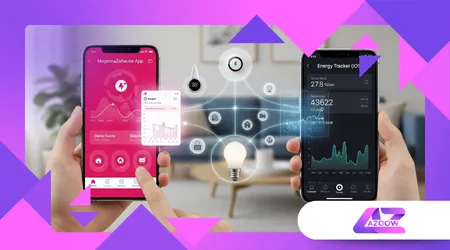
| Smart home control | MagentaZuhause App (Telekom) | Integration of smart home devices (heating, lighting, sockets) | Smart home owners |
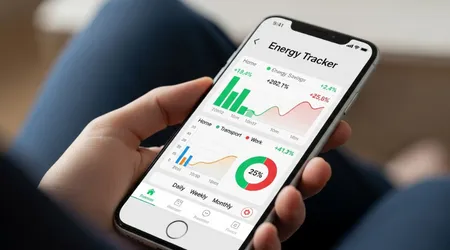
| Meter reading visualization | Energy Tracker (iOS) | Graphical representation of electricity, gas, and water consumption | Detail analyst |
| Dynamic tariff optimization | e.g. Tibber app | Automatic control of consumption based on electricity price | Users with smart meters |
What are the strengths of pure monitoring apps?
Apps like the Energy Check They stand out due to their simplicity and focus on awareness. They often don't require a smart meter, but rely on manual meter readings or meter scanning.
This makes them suitable for every The household can be used immediately. The biggest advantage lies in the breakdown of consumption values and the direct comparability with similar households.
The user can immediately see where they stand in comparison to the average and which cost-saving measures promise the greatest leverage.
Why is device integration the key to efficiency?
Modern smart home apps that combine lighting, heating and sockets in one system are the gold standard.
They allow for more complex automations: The light in the hallway switches off automatically when the smart door is locked, and the heating turns down.
Mr. Schmidt uses the app for his heat pump. It is connected to his smart meter and receives data about the current feed-in from his PV system.
The app only starts heating water when enough self-generated solar power is available, drastically reducing the use of expensive grid electricity. This is the intelligent use of... The best apps for saving energy in everyday life.
Conclusion: Digital intelligence for a sustainable future
The use of The best apps for saving energy in everyday life By 2025, it will no longer be an optional gimmick, but a necessity for financially savvy and environmentally responsible households.
They provide us with the precise data and automation needed to tackle current energy challenges.
The interplay of smart meters, dynamic tariffs and intuitive apps will fundamentally change our energy use.
Have you already started digitally optimizing your home, or are you still letting money and CO2 escape unused?
Share your experiences and your personal top money-saving tips with us in the comments., and let's maximize the savings potential together!
Frequently Asked Questions (FAQ)
Are these energy-saving apps free?
Many purely monitoring apps, such as those from the environmental consulting firm co2online, are free. Apps that control smart home hardware (e.g., thermostats) are often free, but require the purchase of the corresponding networked devices.
How secure is my usage data in these apps?
Reputable providers and apps from German energy advice centers place importance on data protection and often store data anonymously or only locally.
For smart home systems, you should carefully review the privacy policy of the respective manufacturer, as personal usage patterns may arise here.
Do I need a smart meter to save energy?
No. Many The best apps for saving energy in everyday life They allow manual input or scanning of the meter and still offer valuable analyses and potential savings.
However, a smart meter increases precision and enables the use of dynamic tariffs.
Can the app automatically switch my electricity provider?
No, pure energy-saving apps don't automatically switch providers. However, some provider apps or specialized comparison portals offer features that optimize and simplify the switch based on your calculated consumption data.