
Energy efficiency: How you can make your home sustainable
Advertisement
Rising energy costs and increasing environmental pollution make it urgently necessary to make energy consumption more efficient.
Energy efficiency Energy efficiency means using energy optimally without sacrificing comfort or quality of life. Those who design their homes to be energy-efficient can not only save considerable costs but also reduce their ecological footprint.
But many people don't know where to start. Which measures are truly effective? Which investments pay off in the long run?
This article provides a comprehensive guide on how to make your home more sustainable – with simple everyday tips and long-term modernization strategies.
Why is energy efficiency so important?
Energy is often used inefficiently in households, leading to avoidable waste and high costs.
Many people underestimate how much energy is lost through unnecessary use or poor insulation.
Inefficient energy consumption not only has a negative impact on your wallet, but also has far-reaching ecological and social consequences.
Inefficient energy consumption leads to several problems:
- High costs: Electricity, heating, and hot water make up a significant portion of monthly expenses. An inefficient system drives these costs up and puts unnecessary strain on the household budget. Especially in times of rising energy prices, this can represent a huge financial burden.
- Environmental damage: High energy consumption means more CO₂ emissions, which contribute significantly to global warming. Power plants that burn fossil fuels release not only carbon dioxide but also other pollutants that cause air pollution and health problems. Improved energy efficiency directly contributes to climate protection.
- Waste of resources: Fossil fuels like gas, coal, and oil are finite, and their extraction has a massive impact on the environment. Coal mining destroys entire landscapes, while oil and gas extraction leads to environmental damage such as oil spills and methane emissions. Using energy efficiently helps conserve these valuable resources.
- Reduced living comfort: Poor insulation and inefficient heating systems lead to unpleasant temperature fluctuations. In winter, it stays cold because heat escapes quickly, while in summer it overheats because the house cannot maintain a constant temperature. Good energy efficiency ensures a stable, comfortable living environment all year round.
- Dependence on energy suppliers: Those who consume a lot of energy are more dependent on electricity and gas suppliers. Price fluctuations and energy crises can put a significant strain on household finances. By implementing energy efficiency measures, households can become more independent from external suppliers and improve their control over their own energy costs.
Improved energy efficiency can prevent all these problems. Even small changes in daily life have a big impact.
Immediately implementable measures for greater energy efficiency
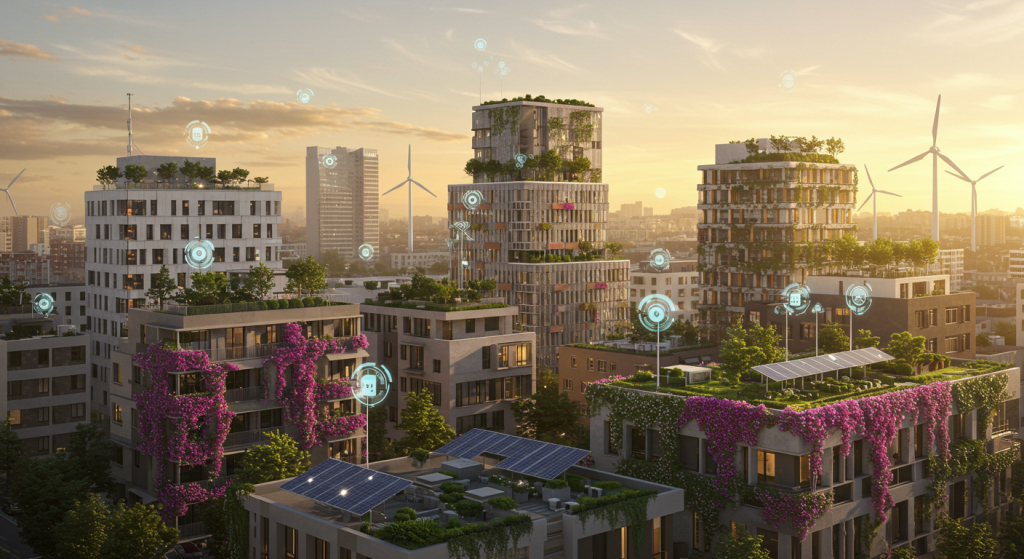
Not every measure requires high investments. Many small changes can be implemented without much effort and already bring noticeable savings.
Efficient heating and proper ventilation
In most households, heating accounts for approximately 70% of total energy consumption. Incorrect heating practices can lead to significant additional costs.
- Choose optimal room temperatures:
- Living spaces: 20°C
- Bedroom: 16–18°C
- Bathroom: 22°C
- Kitchen: 18°C
- Ventilate with care: Instead of leaving windows tilted open for extended periods, you should ventilate by opening them fully for 5-10 minutes several times a day.
- Modern thermostats use: Smart thermostats automatically regulate the temperature and adapt it to the daily routine.
- Keep radiators clear: Do not place furniture or long curtains in front of radiators, as this will hinder heat distribution.
+ The environmental impact of the fashion industry and how to reduce your carbon footprint.
Reduce electricity consumption
Electricity is also frequently wasted unnecessarily. Consumption can be significantly reduced through conscious use and small adjustments.
- Use LED lamps: They consume up to 80 % less energy than conventional light bulbs.
- Avoid standby mode: Devices should be completely switched off, as they continue to consume power in standby mode.
- Choose efficient household appliances: When buying a new product, pay attention to energy efficiency class A+++.
- Use devices effectively: Washing machines and dishwashers should only be operated when fully loaded.
Long-term investments for an energy-efficient home
In addition to the small changes, there are also larger investments that will bring significant savings in the long term.
Insulation and modern windows for better energy efficiency
A large proportion of heat loss in households is caused by poor insulation and outdated windows.
- Roof and facade insulation: Good insulation can reduce heating energy consumption by up to 30%.
- Modern windows: Double or triple glazing keeps the heat in during the winter and out during the summer.
- Sealing doors and windows: Avoid drafts and close energy leaks with simple seals.
Use renewable energies
Renewable energies reduce CO₂ emissions and make us more independent from energy suppliers.
- Photovoltaic systems: They enable you to produce your own solar power and reduce electricity costs.
- Solar thermal energy: Using the sun to heat water.
- Heat pumps: A sustainable alternative to conventional heating systems.
Comparison of measures: Savings potential and costs
The following table shows which measures are particularly worthwhile and how quickly they pay for themselves.
| measure | Costs | Savings potential | Payback period |
|---|---|---|---|
| LED lamps | Small amount | Up to 80 % | Immediately |
| Smart thermostats | Medium | Up to 10 % | 1–2 years |
| Insulation of roof and facade | High | Up to 30 % | 5–10 years |
| Photovoltaic system | Very high | Depending on usage | 8–12 years |
| Double or triple glazing | High | Up to 20 % | 10–15 years |
Conclusion: Energy efficiency pays off
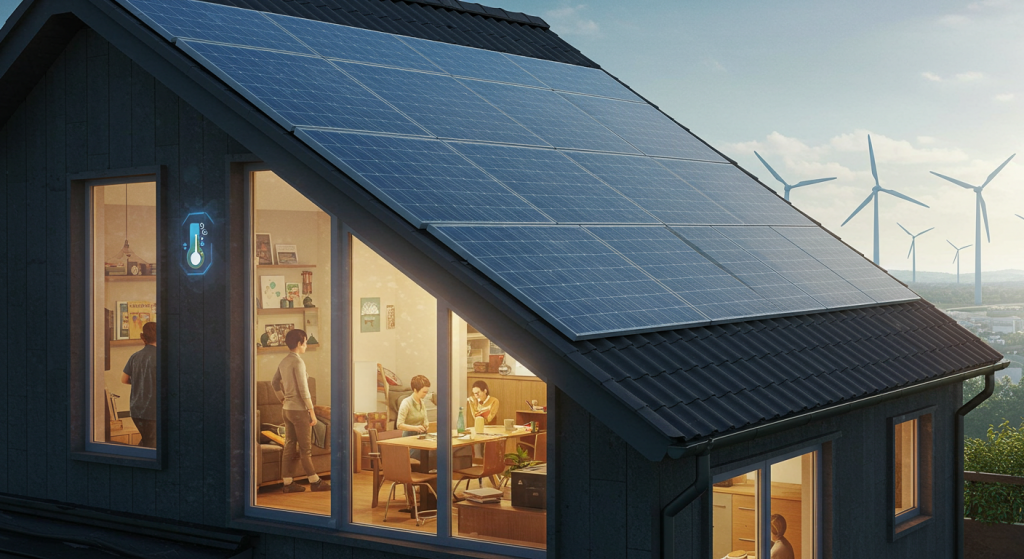
A energy-efficient home It offers numerous advantages: lower energy costs, greater comfort and a positive contribution to environmental protection.
Many measures are easy to implement, such as using heating and electricity consciously. Others, like insulation or the use of renewable energies, require an investment, but this pays off in the long run through savings.
Every step towards Energy efficiency It's a win-win situation – both for your wallet and for the environment. Those who act now not only benefit from immediate savings, but also contribute to conserving resources and securing a sustainable future.
Whether through small changes in behavior or larger investments – optimizing energy consumption is a crucial factor for a more environmentally friendly lifestyle.
Those who design their homes to be energy-efficient not only make them more sustainable, but also increase their own living comfort and the value of their property. Now is the best time to start implementing it!
FAQ: Frequently asked questions about energy efficiency
1. What is the simplest way to save energy?
The simplest method is to avoid the standby mode of electrical appliances and to use LED lamps.
2. Is switching to a photovoltaic system worthwhile?
Yes, a solar power system can reduce electricity costs in the long term and pay for itself after 8–12 years, depending on consumption.
3. How much can I save through better insulation?
Good insulation can save up to 30% of heating costs.
4. Are smart home devices really effective?
Yes, smart thermostats and sockets help to control and reduce energy consumption.
5. Which devices consume the most electricity?
The biggest energy consumers are refrigerators, clothes dryers, old heating systems and electric boilers.
6. Is green electricity really more environmentally friendly?
Yes, because it comes from renewable sources such as wind or hydropower and causes less CO₂ emissions.
7. How can I tell if my home is energy efficient?
An energy performance certificate or an energy consultant can help assess the condition of the property.