
The environmental impact of the fashion industry and how to reduce your carbon footprint.
Advertisement
The Fashion industry It faces enormous challenges that go beyond mere fashion taste.
With a significant increase in global clothing purchases from around 50 billion to more than 100 billion garments between 2000 and 2015, and a forecast that global demand could increase by almost 100 billion by 2030, the importance of sustainable fashion is becoming increasingly apparent.
In 2018, German households spent an average of 780 euros per person on clothing, with over 90% of these items being imported.
The Environmental impacts of the fashion industry are serious. Immense quantities of chemicals are used in the production of clothing, around 1 kilogram per kilogram of clothing, and many of these are toxic.
In addition, the textile industry causes approximately 1.2 billion tons of CO2 emissions annually, which corresponds to about 5 % of global emissions.
In light of these worrying figures, it is important to find ways for consumers to actively influence their lives. Reduce your carbon footprint can.
The switch to sustainable fashion Everyone can support this through conscious purchasing decisions and reduced textile consumption.
In the following article, we will discuss the various aspects of Environmental impacts of the fashion industry to examine in detail, especially the influence of Fast Fashion, and present you with strategies on how to reduce your personal stress.
Introduction: The Challenges of the Fashion Industry
The Challenges of the fashion industry are diverse and complex. At the forefront is the Environmental problems, which is intensified by the incessant demand for new trends. Fast FashionThis rapidly spreading business model has not only led to enormous overproduction but has also exacerbated the waste problem. According to estimates, the Fashion industry responsible for approximately 10% of global CO2 emissions, highlighting the urgency of a change of thinking.
Approximately 92 million tons are produced annually. Textile waste This amount is equivalent to the clothing of approximately 250 million people. An example of the high resource consumption is the production of a single T-shirt, which requires about 2,700 liters of water – that's the amount of water a person needs for almost three years. Fashion industry Water consumption is higher than in any other industry, which means Environmental problems moves even further into the spotlight.
Over a 15-year period, clothing consumption increased by 601 metric tons, significantly contributing to environmental pollution. If sustainable practices are not implemented, textile waste could increase by another 601 metric tons by 2030. Despite the fact that 801 metric tons of clothing manufacturers have declared sustainability as a goal, only 301 metric tons have implemented feasible strategies. This discrepancy clearly demonstrates the Challenges of the fashion industry.
Another alarming finding is that around 851 TP3T of newly produced textiles end up in landfills and are not biodegradable. Research also shows that 541 TP3T of consumers believe the fashion industry should do more for the environment. environmental protection should do. Therefore, the need to develop environmentally friendly alternatives and simultaneously change consumer perceptions is of utmost importance.
In summary, it can be said that the Challenges of the fashion industry This requires fundamental change. Consumers need to be informed about the impact of their purchasing decisions, while companies should actively strive for sustainable practices. Only through this joint effort can the pressure on our ecosystem be reduced.
The role of fast fashion in environmental pollution
Fast Fashion has become one of the main causes of pollution developed. This industry produces approximately 92 million tons annually. Textile wasteUnimaginable quantities are burdening our landfills. The fashion industry is responsible for approximately 101,000 tons of global greenhouse gas emissions, significantly exacerbating climate change. Every second, one million garments are produced worldwide, many of which have only a short lifespan.
A remarkable aspect of the Fast Fashion The extremely short lifespan of these garments is a major issue. This annoying trend reduces their lifespan to an average of 5-7 wear cycles, meaning that up to 601,000 garments end up in the trash within a year of purchase. At the same time, the Textile production significantly to Water pollution with around 20% of the water wasted in the world coming from this industry.
| statistics | Value |
|---|---|
| Annual waste from fast fashion | 92 million tons |
| Global greenhouse gas emissions | 10% |
| Clothing production per second | 1 million |
| Water pollution through the textile industry | 20% |
| Data on recycling rates | 1% |
Equally dramatic is the water consumption for the production of a single T-shirt, which amounts to approximately 2,700 liters. Given such statistics, it is crucial to consider the impact of Fast Fashion to think about the planet. environmental protection Urgent measures are needed to curb the pollution caused by this industry.
The environmental impact of the fashion industry
The fashion industry has become one of the biggest sources of environmental pollution. Globally, approximately [amount missing] of [amount missing] of [amount missing] of [amount missing] is produced annually. 92 million tons Waste is generated by this industry. Some of this waste comes from clothing production, which has doubled since 2000, from 50 billion to around 100 billion garments purchased annually. Water consumption is enormous. In 2015, approximately [amount missing] of water was used worldwide. 79 billion cubic meters of water for the Textile production used, which had devastating effects on the Water pollution has.
Particularly alarming is the high water consumption in specific applications. Up to [amount missing] of water is used to produce a single T-shirt. 2,700 liters Freshwater is needed – enough to supply one person with drinking water for two and a half years. The textile dyeing process also requires up to... 150 liters of water per kilogram of dyed textiles. This intensive use of water causes serious damage to local ecosystems and contributes to the ongoing erosion of natural resources. Water pollution at.
Another major problem is the submission of microplasticsThe textile industry generates over [amount] annually. half a million tons microplastics free, with up to [amount missing] occurring when washing synthetic clothing alone. 700,000 microplastic fibers microplastic particles can enter the environment with each wash. These microplastic particles, which often end up in oceans and other bodies of water, pose a serious threat to wildlife and human health.
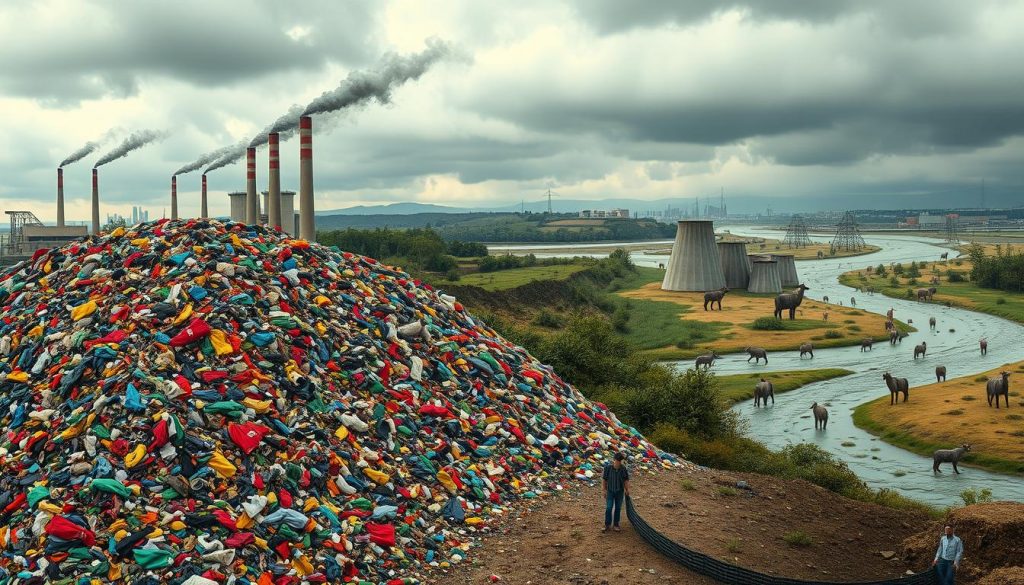
The challenge is exacerbated by the high use of chemical substances. Between 20,000 and 40,000 Various chemicals, including formaldehyde, are used in the dyeing and treatment of textiles, which in addition to Water pollution This contributes to the problem. Current practices in the fashion industry therefore not only have an impact on the environment, but also on the health of people involved in production and processing.
Impact of textile production on soils and biodiversity
The Textile production has significant effects on soils and the biodiversityCotton cultivation requires intensive agricultural practices that use large quantities of chemicals such as pesticides and fertilizers. These substances not only damage the soil but also endanger the lives of numerous species in the affected areas.
Statistics show that approximately 16 percent of global insecticide use is concentrated on cotton fields. This high level of use leads to a dramatic decline in biodiversity, as important pollinators and other insects are destroyed. Habitat loss is another major problem, since textile cultivation often encroaches on valuable land that previously served as natural habitats.
The biodiversity is also affected by the use of synthetic materials, which are affected during washing. microplastics release. These microfibers enter our water sources and can have harmful effects on the organisms living there. The connection between Soil damage and the way clothing is produced underlines the urgency of rethinking manufacturing processes and sustainable practices in the Textile production to promote.
A conscious decision and the use of sustainable materials can help to reduce the negative effects on soils and the environment. biodiversity to significantly reduce it. The responsibility lies with both producers and consumers to shrink the fashion industry's ecological footprint and preserve the Earth for future generations. More information on the challenges of Textile production do you think ...? Find here.
How the EU is tackling the environmental impact of the fashion industry
The EU has taken concrete measures to... Environmental impacts of the fashion industry to reduce. A central element of this EU strategy is the promotion of sustainable textiles and the realization of a Circular economy by 2050. The goal is to revolutionize the handling of textile waste and significantly increase the recycling rate.
An increasingly important aspect of this strategy is the introduction of ecodesign requirements, which aim to make products more environmentally friendly. These regulations apply particularly to manufacturers, who must take responsibility for the entire life cycle of their products. The pressure on companies is increasing, as from 2025 all EU member states will be obliged to Textile waste to be collected separately.
Furthermore, a draft law for a digital product passport is being discussed, which would make it easier for consumers to trace the sustainable origin of their textiles. EU strategy It also provides for sanctions ranging from the return of goods to fines, in order to encourage a change of thinking in the fashion industry.
A key principle of these initiatives is the reduction of the pollution caused by Textile production CO2 emissions caused and the prevention of water resource pollution. | The fashion industry alone is responsible for approximately 10 percent of global CO2 emissions. The EU is determined to minimize resource consumption and waste while raising consumer awareness of the important issues surrounding sustainable textiles.
Human rights in the fashion industry and its environmental consequences
The fashion industry faces the challenge of social responsibility to take seriously and the Human rights to preserve. This issue is closely linked to the enormous Environmental impactsThe environmental impact of clothing production and consumption is significant. Every year, each person in Germany buys an average of 60 new items of clothing, resulting in a massive burden on the environment.
Producing a single T-shirt requires at least 2,000 liters of water. One kilogram of clothing requires approximately one kilogram of chemicals, many of which are highly toxic. These chemicals and the excessive water consumption not only strain natural resources but also lead to a deterioration of working conditions. The conditions under which seamstresses, often in countries like Bangladesh and China, work are alarming. The legal minimum wage in Bangladesh is the equivalent of only 85 euros per month, and many seamstresses work up to 90 hours per week.
These social injustices not only promote the exploitation of workers, but also have direct consequences. Environmental impactsFast fashion is one of the world's most polluting industries, responsible for 10 million tons of global carbon emissions. Workers in the garment industry often receive less than 1 million tons of the retail price of their products, which are manufactured under exploitative conditions.
The connection between human rights and the fashion industry is evident. Every T-shirt not purchased could save an average of up to 11 tons of CO2. Social pressure on companies necessitates new approaches to ensuring ethically sound practices. In this context, a critical examination of the fashion industry's practices is essential.
Strategies for reducing your personal carbon footprint
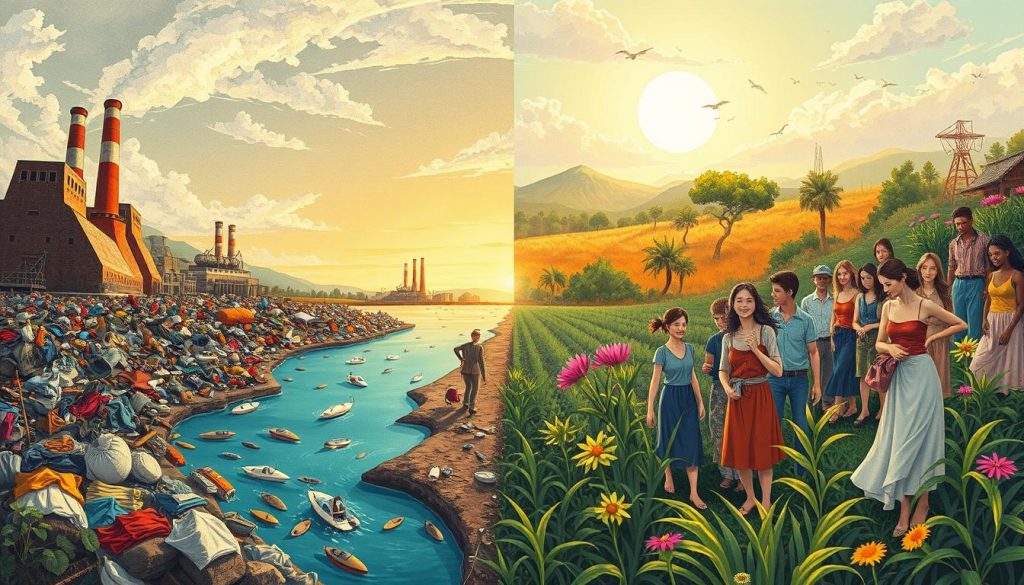
A more conscious one Consumer behavior This can significantly contribute to reducing one's personal carbon footprint. The choice is yours. sustainable fashion The focus is on fast fashion, which has doubled its clothing production since 2000 to meet increasing demand. This has led to alarmist warnings about the enormous carbon emissions, estimated to account for up to 101,000 tons of global emissions.
Targeted education about environmentally friendly materials, especially the advantages of organic cotton, is crucial. While conventional cotton costs between $225 and $345 per ton, organic cotton costs between $500 and $700. This price difference reflects not only the quality but also the lower environmental impact.
One of the most effective methods to CO2 footprint One way to reduce waste is to choose high-quality clothing items that have an average lifespan of 5-10 years, instead of fast fashion items that are only wearable for 1-2 years. Studies show that consumers discard approximately 92 million tons of clothing annually, most of which ends up in landfills. To address this problem, consumers can implement the following strategies:
- Focus on quality over quantity.
- To ensure that garments are durable all around.
- Alternatives such as upcycling and Second-hand-Consider clothing.
- Use the influence of social media consciously to sustainable fashion to promote.
- Support tailors and local designers who prioritize environmentally friendly practices.
The decision for sustainable fashion This is not just an individual choice. In the long term, it also increases the pressure on companies to adapt their offerings accordingly. The positive effects on our environment and the future Consumer behavior They should provide the motivation to act more consciously. By focusing specifically on the impact of the fashion industry, each of us can make a difference. CO2 footprint minimize and contribute to promoting responsible consumption.
Useful tips for reducing your own textile consumption
To reduce one's own textile consumption, numerous measures are recommended. sustainable tips Helpful. The first step is to make conscious purchasing decisions. Look for sustainable labels that stand for environmentally friendly materials and fair production conditions. Recommended seals such as GOTS or Fairtrade help ensure that producers receive fair wages and that better social standards are implemented.
Another effective way to reduce textile consumption is to buy Second-handClothing. Secondhand shopping significantly reduces CO2 emissions compared to buying new clothes. Upcycling workshops offer creative ways to personalize used clothing and extend its lifespan by up to three years. This protects the environment and conserves resources.
Furthermore, the importance of proper textile care should not be underestimated. Washing correctly at low temperatures of 30°C extends the lifespan of clothing and reduces water consumption. The production of a sweater made from 90% cotton requires up to 805 liters of water, illustrating the importance of optimizing the washing process.
Another point concerns considerations regarding one's own Consumer behaviorMany items of clothing end up in the trash after only a few wears. Approximately 1.3 million tons of clothing are disposed of in Germany every year. Sustainable tips They promote responsible clothing use and help reduce these negative statistics.
| Tip | Advantage |
|---|---|
| Purchase of Second-hand | Reduces CO2 emissions by up to 80% |
| Pay attention to sustainable labels | Improved working conditions and environmental protection |
| Wash at 30°C | Extends the lifespan of textiles |
| Upcycling and DIY workshops | Increases the use of clothing |
The environmental impact of the fashion industry is significant. With simple but effective measures, we can reduce ours. Reduce textile consumptionA responsible approach to fashion not only contributes to conserving our resources, but also supports a sustainable future.
Research and innovation in the fashion industry
Scientific Research plays a crucial role in the promotion of Fashion innovation and the development of sustainable technologies. The fashion industry faces the challenge of reducing its ecological footprint while simultaneously increasing the demand for new and creative products.
Fast fashion has led to the creation of enormous amounts of waste, as clothing is often made from low-quality materials that wear out quickly. Sustainably produced clothing can significantly reduce this waste. Brands that integrate sustainability principles are actively working to promote conscious consumer behavior.
We see that eco-friendly materials like organic cotton, recycled polyester, and lyocell have a significantly smaller ecological footprint than conventional textiles. Innovative production processes in sustainable fashion considerably reduce the use of water, energy, and chemicals. Companies like Patagonia, Eileen Fisher, and Stella McCartney are at the forefront of this development by emphasizing transparency and ethical working conditions.
Furthermore, the decision to opt for durable and timeless designs contributes to reduced consumption, which in turn conserves resources. Focusing on quality over quantity significantly minimizes the environmental and social impact of the fashion industry.
The topic of the circular economy played a central role at the Impact Festival 2024, which took place in Frankfurt on October 30th and 31st. This event brought together leading figures from business, science, and the sustainability sector to reflect on the need for a fundamental rethink.
The trend towards "slow fashion" reflects a shift in consumer preference for durable materials and waste reduction. Furthermore, the demand for transparency and certifications within the industry is growing. The use of recycled materials is increasing, which promotes the development of circular fashion.
The rise of the secondhand and resale market reflects a new consumer behavior. Digital fashion and AI-driven designs are emerging trends transforming the fashion industry. A shift in thinking is urgently needed to take concrete steps toward promoting sustainable practices within the sector.
| aspect | Traditional fashion | Sustainable fashion |
|---|---|---|
| Materials | Conventional textiles | Organic cotton, recycled polyester |
| Production processes | Water and energy intensive | Water and energy efficient |
| life cycle | Short lifespan | Long service life |
| Consumer behavior | Fast Fashion | Slow Fashion |
| transparency | Small amount | High |
Conclusion
In summary, it can be said that the fashion industry has undergone significant changes. Environmental impacts This situation requires urgent action. With annual purchases of 12 to 15 kilograms of textiles per person in Germany and an enormous CO2 emission of around 10 percent worldwide, it is clear that our Environmental awareness This urgently needs to be promoted in order to reduce the negative effects.
A collective approach involving consumers, businesses, and political institutions is essential to addressing the challenge of sustainable fashion. This approach should not only focus on the responsible use of resources but also promote innovative solutions and recycling options. Fashion production is not merely a fashion phenomenon; it directly impacts the environment and society.
Every individual can make a difference through conscious consumer behavior. By buying less and more selectively, and by supporting sustainable brands, we actively contribute to positive change. The pursuit of a sustainable fashion industry is not just a trend, but a necessity for our future.
FAQ
What are the main causes of pollution in the fashion industry?
The main causes are mass production through fast fashion, high CO2 emissions, microplastic pollution from textiles and excessive water consumption in textile production.
How can I reduce my carbon footprint through fashion?
To your CO2 footprint To reduce costs, opt for sustainably produced clothing, wear your clothes longer, and choose sustainable options. Second-hand-options.
What is fast fashion and why is it harmful to the environment?
Fast fashion refers to a rapid production cycle in which new trends are constantly being introduced to the market. This leads to overproduction, high levels of waste, and is one of the main causes of environmental pollution in the fashion industry.
How does the EU contribute to combating the environmental impact of the fashion industry?
The EU is funding a Circular economy, improves recycling initiatives and implements ecodesign requirements to support more environmentally friendly manufacturing processes.
What role do human rights play in the context of the fashion industry?
Human rights are closely linked to environmental problems. Many workers in the fashion industry work under dangerous conditions, which negatively impacts both their quality of life and the environment.
How does textile production affect biodiversity and soils?
Textile production, especially cotton cultivation, leads to Soil damage through the use of chemicals and contributes to the reduction of biodiversity.
What can I do to effectively reduce my textile consumption?
Look for sustainable labels, opt for durable clothing, and use second-hand markets and upcycling approaches to minimize your textile consumption.
What innovative approaches exist in the sustainable fashion industry?
Innovative approaches include research into environmentally friendly materials, sustainable production processes, and the development of bioplastics to counteract environmental pollution.