
How to pack environmentally friendly: The zero-waste travel bag
Advertisement
Travel broadens our horizons, but unfortunately, often also our ecological footprint. Conscious waste management, especially while traveling, is essential. The question, how to pack in an environmentally friendly way, is no longer optional, but a core element of responsible travel.
The switch to a Zero-waste travel bag Not only does it minimize your waste, it also simplifies your luggage. We demonstrate that sustainable travel luggage leads to less stress and more freedom.
This detailed guide highlights clever strategies and must-have products. We go beyond the bamboo toothbrush and delve into the logistics of a zero-waste vacation.
Prepare to radically simplify your suitcase while making a positive contribution.
The Logistics of Reduction: Why Less Really Is More
The concept of a zero-waste journey aims to prevent waste from being created in the first place. This requires strategic planning and the consistent elimination of single-use products.
The danger of “kits” and mini-packages
Small plastic bottles in hotel bathrooms or tiny travel sets are major waste producers. They suggest convenience, but are ecologically disastrous.
The production and disposal of these single-use plastic containers is extremely resource-intensive. The US hotel industry alone discards an estimated 5 billion of these miniature bottles annually. Travelers who know how to pack in an environmentally friendly way, consciously avoid these garbage traps.
Replacing these disposable products with durable, refillable containers is the simplest and most effective step toward a zero-waste journey. These small decisions quickly add up to a major environmental relief.
++ How do I recognize truly sustainable accommodation?
Multifunctional clothing and minimalism
Sustainability begins with the choice of clothes: Choose few, but high-quality, quick-drying and multifunctional garmentsThis reduces the overall weight and minimizes the need for laundry services.
A merino shirt can be worn for days without absorbing odors. This is the best answer to the question, how to pack in an environmentally friendly way, as it reduces energy and water consumption for laundry. The zero-waste philosophy promotes a minimalist lifestyle that's perfect for traveling.
Carrying only hand luggage reduces the flight's carbon footprint because the overall weight is lower. This proves that sustainable packing is directly linked to the carbon footprint.
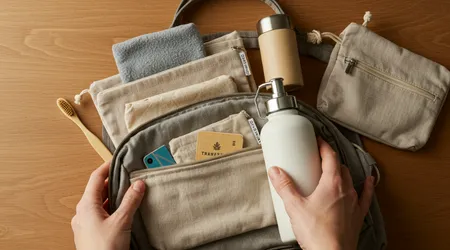
Body care without waste: The revolution in the toiletry bag
The toiletry bag has traditionally been a stronghold of plastic. Innovative products demonstrate how zero-waste hygiene can be achieved elegantly and practically.
Solid products and refill systems
Switching to solid hygiene products is key to avoiding liquid plastic waste.
See more: 10 sustainable travel destinations off the beaten track
Shampoo and soap in solid form
Solid shampoo and shower gel in soap form don't require plastic bottles. They're highly concentrated, lightweight, and can easily be carried in hand luggage.
In addition, these solid products often contain fewer preservatives. This change is a game changer for anyone who knows how to pack in an environmentally friendly waySolid skincare products save space and eliminate the risk of spills in your suitcase.
See also: Fair Trade on holiday: Buy souvenirs with a clear conscience
Refillable containers and toothpaste tablets
Even if you have to take your favorite cream with you, use durable travel containers made of glass or metal. We replace toothpaste with Toothpaste tablets or powder.
Unlike conventional toothpaste tubes, toothpaste tablets are packaged completely plastic-free and measure out the perfect amount. These little helpers are a must-have for your zero-waste travel bag.
Example: Instead of a plastic razor, use a durable metal safety razor with replaceable blades. The blades can be recycled locally. This substitution exemplifies the strategic mindset of the zero-waste journey.
Consumption on the go: Avoiding the disposable trap
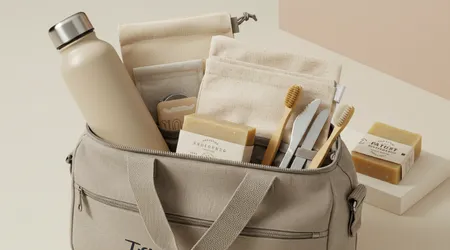
The greatest amount of waste often arises spontaneously from the purchase of snacks, drinks, and takeaway items. Preparation here is crucial to the success of a zero-waste journey.
The Indispensable Zero-Waste Trio
If you want to avoid waste, you need three essential items that are always at hand.
Drinking bottle, cup and cutlery
- Drinking bottle: A high-quality, reusable water bottle (ideally with a built-in filter) is essential. It saves hundreds of plastic bottles, especially in warm-weather countries.
- Reusable cup: For coffee or tea on the go. Many cafes offer discounts if you bring your own cup. This not only saves waste but also money.
- Cutlery set: A small, lightweight set made of bamboo or stainless steel eliminates the need for disposable plastic cutlery. A simple cloth bag keeps everything together.
According to a Survey by the German Environmental Aid (DUH) from 2024 On average, travelers spend 12 disposable cups or bottles per week. Avoiding these 12 units is a significant contribution.
Cloth bags and food boxes
Some foldable fabric bags in various sizes are indispensable for shopping. They replace plastic bags.
In addition, a small, light stainless steel lunch box It's ideal for taking leftovers from a restaurant or buying fresh food at the market without plastic packaging. This is a direct way to show how to pack in an environmentally friendly wayby replacing renunciation with preparation.
Analogies: The zero-waste travel bag is like a Swiss Army knife for the environment. It contains everything you need, is compact, and allows you to tackle almost any everyday situation sustainably.
The material foundation: The suitcase itself
Even the container in which we transport our sustainable treasures should be chosen carefully.
Environmentally friendly luggage choice
Suitcase made from recycled material
Many leading luggage manufacturers now offer suitcases made from recycled plastic (rPET) or materials from sustainable sources.
Consider the suitcase's durability and repairability. A high-quality, repairable product is more sustainable than a cheap one that quickly ends up in a landfill.
Optimization through packing cubes
packing cubes (Packing Cubes) made of recycled nylon or cotton are ideal for making the most of the space in your suitcase and compressing clothes.
They keep things organized, reduce wrinkles, and help you keep track of the contents. This organization prevents you from packing unnecessary items or having to buy new ones on the go, another essential step in the question of how to pack in an environmentally friendly way.
Summary of zero-waste travel gear
| category | Zero-waste solution | Direct environmental benefit |
| hygiene | Solid shampoos/soaps; Toothbrush tablets | Avoiding single-use plastic bottles; reducing water usage. |
| Catering | Reusable drinking bottle and coffee cup | Eliminates single-use plastic and paper cups; conserves resources. |
| Purchasing/Transport | Foldable fabric bags; stainless steel box | Avoid plastic bags and Styrofoam packaging. |
| Clothing | Multifunctional, quick-drying organic fibers | Reduces washing cycles (water/energy) and luggage weight. |
Conclusion: Travel responsibly
The question, how to pack in an environmentally friendly way, is deeply rooted in the conviction that our responsibility does not end at the front door.
The zero-waste travel bag is a powerful tool that allows us to explore the world without leaving behind a mountain of unnecessary trash.
Switching to solid personal care products, reusable containers, and minimalist clothing is a win-win for you and the planet.
We travel more consciously, lighter, and often even save money by making fewer spontaneous, unnecessary purchases. Make your next trip a statement for sustainability.
What essential zero-waste item do you always take with you? Share your tips in the comments!
Frequently Asked Questions (FAQ)
Q: Are solid shampoo bottles readily available abroad if they run out?
A: While solid shampoos are readily available in many European and North American cities, this can be more difficult in rural or less developed areas.
It is advisable sufficient stock for the entire trip. Since they're compact, this is usually not a problem.
Q: How do I hygienically clean my reusable coffee cup while traveling?
A: Simply use a small amount of solid soap (or shower soap) from your toiletry bag and hot water to quickly rinse the cup.
For a deeper clean, you can use a small, degradable cleaning brush or simply your hands. The important thing is that you promptly do.
Q: How do I deal with difficult-to-recycle waste that I produce abroad (e.g. medicine packaging)?
A: The approach is “Bring it back” (Pack it in, Pack it out)Collect difficult-to-recycle or problematic waste (medication blister packs, certain plastic wrappers) in a small, sealable bag and take it home.
There you can dispose of it in your local recycling system or for hazardous waste disposal. This is the ultimate step when it comes to how to pack in an environmentally friendly way.