
Sustainable underwear: Comfort meets environmental awareness

Advertisement
Sustainable underwearUnderwear is the most intimate layer of our clothing, often invisible, but essential for our well-being.
In the age of fast fashion, this sector was long neglected. It dominated, characterized by synthetic materials and opaque supply chains.
But conscious consumption does not stop at the wardrobe. The decision for Sustainable underwear Today, it's a clear statement about comfort, health, and environmental protection. It's about surrounding our bodies with materials that are both ethically responsible and skin-friendly.
This development isn't just a niche trend, but a response to global challenges in the textile industry. We explore why switching to organic cotton, Tencel, or recycled fabrics makes so much sense financially, ecologically, and in terms of health.
Discover how modern manufacturers are establishing transparency and quality in a sector that has long operated in the shadows. It's a necessary step, starting small, to achieve great things. The textile industry is currently undergoing a fundamental transformation that is now reaching even the basics.
The Toxic Balance Sheet: What We Carry Beneath the Surface
Before we discuss the benefits, we need to understand the problems of conventional underwear production. The shocking facts are often complex and profound.
The Burden of Conventional Cotton
Conventional cotton, the most widely used fabric, has a devastating ecological footprint. It requires vast amounts of water and is extremely pesticide-intensive, poisoning soils and local water sources.
Highly toxic pesticides are often used during cultivation, which are hazardous to the health of the workers. These chemicals can remain in the fibers even after processing, thus coming into direct contact with even the most sensitive skin. Sustainable underwear sets a clear counterpoint here.
According to estimates by the World Wide Fund for Nature (WWF), the production of just one kilogram of conventional cotton often requires over 10,000 liters of water. Given global water scarcity, this is an irresponsible use of resources. This massive water footprint is hardly ethically acceptable.
++ Slow Fashion vs Fast Fashion: Why quality is more important than ever
Synthetics and microplastics
Much of modern underwear is made of synthetic fibers such as polyester or nylon. These are derived from petroleum and are not biodegradable. Synthetic fabrics pose another major environmental challenge.
When washed, these synthetic materials Microplastic fibers that enter rivers and oceans via wastewater. These microparticles pose a serious threat to ecosystems. They find their way back to humans via the food chain.
The purchase of Sustainable underwear made from natural fibers or certified recycled materials actively helps to reduce this microplastic pollution.
In addition, many synthetic fabrics are less breathable than natural fibers, which can lead to skin irritations. Chemical dyes and finishes used in processing can also trigger allergies. Dermatologists are increasingly warning about the irritating effects of these materials on sensitive areas of the body.
The Material Revolution: Innovation for the Skin and the Environment
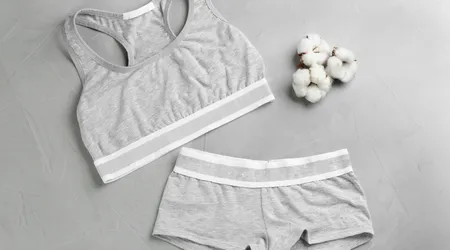
The manufacturers of Sustainable underwear rely on innovative, resource-saving fibers. These impress with their comfort and eco-friendliness.
See also: The best online shops for sustainable fashion
The New Heroes of the Fiber World
Organic cotton (GOTS certified)
Organic cotton is grown without synthetic chemical pesticides and fertilizers. Global Organic Textile Standard (GOTS) is the most important seal of quality here. This certificate defines the standard for organic clothing.
GOTS guarantees not only organic farming but also fair working conditions throughout the entire production chain. This protects the environment while ensuring the health of cotton farmers and textile workers. This is the gold standard for ethical and ecological Sustainable underwear.
Studies show that, depending on the growing area, organic cotton requires up to 91% less water than conventional cotton because soil health promotes natural water retention. The improved soil quality also binds more CO2, which has a positive effect on the climate.
See more: Fair fashion for the small budget: Affordable and sustainable
Lyocell (TENCEL™) and Modal
Lyocell, often known under the brand name TENCEL™, is made from sustainably grown wood (usually eucalyptus or beech). The manufacturing process takes place in a closed circuitin which almost 100% of the solvents are recovered and reused.
This fiber is not only environmentally friendly, but also extremely soft, breathable and moisture-regulating, ideal for direct skin contact.
Modal, a fiber made from beechwood, offers a similar softness and is also often used for Sustainable underwear These materials are biodegradable and represent an excellent alternative to synthetics.
Another advantage of TENCEL™ is its smooth fiber structure, which inhibits bacterial growth. This keeps laundry fresher longer and requires less frequent washing. This saves energy and water in the home—a double win.
The Ethical Dimension: Transparency and Fair Wages
Sustainable underwear encompasses not only the material but also the conditions under which the clothing is produced. Ethics and fairness are at the heart of it.
Fair Fashion as an investment in human dignity
In conventional textile production, low wages and unsafe working conditions are unfortunately the norm in factories in the Global South. Many Fair Fashion manufacturers are taking a pioneering role in this area.
They guarantee fair wages, safe workplaces and compliance with social standards, often confirmed by independent certificates such as the Fair Wear Foundation or GOTS.
Customers who Sustainable underwear By purchasing these products, you are investing directly in improving the living conditions of textile workers. This social responsibility is a crucial pillar of the modern sustainability movement.
Many brands go a step further and operate vertical integrationThis means they control the entire supply chain, from fiber to finished product. This transparency allows consumers to precisely trace the origin of each material, creating true trust.
Longevity as a sustainability strategy
High-quality, Sustainable underwear is often more durable than cheaper products. The higher purchase price is amortized through a longer service life. Less frequent purchases not only save money but also reduce the ecological footprint.
Opting for quality and durability is the most effective weapon against the throwaway mentality of fast fashion. It's a simple calculation: A product that lasts three times as long reduces resource consumption by two-thirds. The investment thus pays off twice: ethically and economically.
Analogy: The purchase of Sustainable underwear It's like switching to a green energy provider. You don't see the difference immediately, but you know that you've made a responsible and healthier decision that will have positive long-term effects. It's a "silent upgrade" for your life.
Practical decision-making aid: The sustainability audit
This will help you navigate the market and make informed decisions for your next laundry purchase.
The purchase checklist
When making a purchase, look for clear indicators that go beyond mere marketing promises:
| criterion | Description / Most important seals | Why relevant? |
| ecology | GOTS (Global Organic Textile Standard), IVN BEST | Guaranteed organic farming and environmentally friendly processing. |
| fairness | Fair Wear Foundation (FWF), GOTS (social standards) | Ensures that fair wages and safe working conditions are maintained. |
| Material innovation | TENCEL™ Lyocell, Recycled Polyester (Global Recycled Standard GRS) | Closed production cycles; reduction of primary raw material requirements. |
| transparency | Detailed information about the origin of the fiber and the production location. | Enables verification of the entire supply chain. |
Less is More The Capsule Wardrobe for Downstairs
Consider whether you really need a huge amount of underwear. A smaller, higher-quality selection that's durable and ethically produced is the most sustainable option. Reducing quantity maximizes quality and sustainability.
A minimalist approach reduces overall resource consumption and simplifies purchasing decisions. Focus on timeless cuts and colors that don't need to be constantly replaced by new trends. Less laundry also means less storage space and less effort.
Example: A brand that sources cotton from its own farms in Portugal and dyes it there using solar energy closes the regional cycle.
Such models show how Sustainable underwear becomes a pioneer in textile production. Another example is the use of hemp, an extremely robust and rapidly renewable fiber.
Conclusion: An intimate decision with global impact
The choice of Sustainable underwear is a small but fundamental act of responsible consumption. It protects our bodies from unnecessary chemicals and relieves our planet of water consumption, pesticides, and microplastics.
The available materials, from certified organic cotton to innovative TENCEL™, prove that comfort and the highest ethical standards go hand in hand. Anyone who Sustainable underwear is making a forward-looking decision that benefits people and the environment.
The development of textile technology now finally offers us the opportunity to meet our most basic needs sustainably.
Isn't it time to consciously design this most intimate layer of your wardrobe? Share your experiences with the best sustainable fabrics in the comments!
Frequently Asked Questions (FAQ)
Q: Is sustainable underwear automatically more expensive than conventional underwear?
A: The higher purchase price reflects the fair pay of the workers and the costs of environmentally friendly cultivation and production processes (e.g. GOTS certification).
Due to the above-average longevity of high-quality Sustainable underwear However, the purchase often pays for itself quickly. You buy less and enjoy it longer.
Q: How do I wash sustainable underwear properly to extend its lifespan?
A: To protect the delicate natural fibers, ideally wash underwear at a low temperature (30°C or 40°C) and use environmentally friendly detergents without optical brighteners. Avoid tumble drying, as the heat causes fibers and elastomers (rubber bands) to wear out faster, thus compromising their longevity.
Q: Does recycled plastic (rPET) really make sense in sustainable underwear?
A: Recycled polyester (rPET) is a useful bridging technology because it recycles plastic waste (e.g. PET bottles) and reduces the need for new petroleum.
It is more environmentally friendly than new polyester, but still requires caution: pay attention to GRS certification and use a laundry bag to minimize the release of microplastics during washing.