
Slow Travel vs. Mass Tourism: Why Less Is More
Advertisement
Slow Travel vs. Mass Tourism It's no longer a niche topic. More and more travelers are realizing that the classic package holiday is reaching its limits.
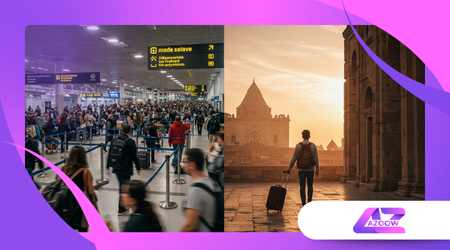
The crowded beach, the crush at the breakfast buffet, the endless queues in front of tourist attractions – all this leaves a feeling of superficiality and stress.
Travel is supposed to slow you down, connect you, and inspire you. But that's precisely what often seems to get lost in mass tourism.
Slow travel offers a counterpoint. It's not about visiting as many countries as possible in the shortest amount of time. It's about quality over quantity.
It's about encounters, not ticking things off a list. It's about experiencing, not consuming. Those who embrace slow travel often discover more – not less.
Because in this case, less means depth. Those who linger longer in a place open themselves up to details, to conversations with locals, to everyday rituals that remain hidden in a quick glance. This is precisely where the true journey begins.
The downsides of mass tourism
Mass tourism promises comfort. Everything is organized, timed, and secured. But this comfort comes at a price.
Overcrowded places suffer from waste, resource scarcity, and social inequality. The local population often feels marginalized, and their culture becomes a spectacle for cameras.
Cities like Venice or Barcelona are experiencing what it means to groan under the weight of tourism. Apartments are being converted into holiday apartments,
Neighborhoods are losing their identity, traditional structures are breaking down. And in the middle of it all are tourists who hardly notice any of this because the next item on their itinerary is already waiting.
The allure of the new fades into routine. What began as longing often ends in disappointment. A selfie replaces wonder. A souvenir replaces dialogue. Depth is lost.
+ Sustainable travel: 10 tips for environmentally friendly tourism
Why Slow Travel Has a Different Effect
Slow travel forces you to engage with the subject. Those who stay longer ask questions. Observe. Listen. Discover connections that remain hidden when passing by.
Instead of photographing tourist attractions every minute, the focus is sharpened on the essentials.
A stroll through the neighborhood, a visit to the market, a chat in the bakery – all these become travel experiences. Not spectacular. But lasting. Authentic. Unforgettable.
Slow travel isn't just for the elite. It's not about budget, but about attitude. Those who visit fewer places but experience them more intensely not only save money, but also gain time. Time for silence. For reflection. For genuine connection.
The role of responsibility
Travel changes things. Not only the traveler, but also the place. This interaction carries responsibility. Slow travel recognizes this responsibility. It means traveling with respect.
With mindfulness. With the awareness of being a guest – not a consumer.
The difference is evident in small gestures: choosing local providers, being willing to embrace different customs, and deciding not to judge everything immediately, but to observe first.
This attitude changes the experience. It opens doors that would otherwise remain closed. And it leaves traces – not on the ground, but in the heart.
Returning to the essence of travel
In the past, travel was associated with uncertainty, with the allure of the unknown, and with a willingness to let oneself drift. Today, much is plannable, calculable, and predictable. Slow travel brings back a piece of this ancient essence.
It's not about control. It's about trust. About surrendering to the rhythm of a place, and not having to experience everything, but rather the right thing at the right time; not consuming, but encountering.
This form of travel is quieter. But its effects linger longer. It fills not only the photo album, but also the soul. It bestows not only memories, but insights.
What slow travel really means
Traveling slowly doesn't mean traveling boringly. It means traveling differently. With open eyes, with an open heart, with a willingness to encounter yourself. Because those who leave the noise behind finally hear themselves again.
The daily schedule gives way to the moment. The need to experience something is replaced by the desire to feel something. It's a return to authenticity. To what travel should truly be about: curiosity, encounters, wonder.
In a world that's spinning ever faster, slowness is becoming a luxury. Not in a material sense, but in an emotional one. Those who take the time gain depth. And this depth lingers long after their return.
The impact on environment and culture
Slow travel protects. Places, people, nature. Those who take their time consume fewer resources. Fly less often. Use local infrastructure. Leave less of a trace.
This doesn't mean deprivation. It means awareness. Those who stay in family-run accommodation experience more than those in a hotel complex; those who eat regional food taste the soul of a place. Those who travel by train see more than those who look out of an airplane window.
These small decisions make a difference. They not only change the travel experience, but also the impact we have on the world.
A plea for less
In a time when "more" is often equated with "better," slow travel makes a statement. It says: Less is enough. Less is more intense. Less means truly being present.
This attitude is liberating. It allows you to miss things. It frees you from the pressure of having to see everything. And therein lies its power.
Because those who allow themselves to want less often discover more. Within themselves. In others. In the moment.
Questions about slow travel vs. mass tourism
What exactly is meant by Slow Travel?
Slow travel means traveling consciously, moving more slowly, staying longer in one place, and immersing yourself more deeply in the culture.
How does slow travel differ from classic mass tourism?
Mass tourism is often superficial, fast-paced, and focused on consumption. Slow travel emphasizes mindfulness and personal encounters.
Is slow travel more expensive than a classic package holiday?
Not necessarily. Those who visit fewer places and use local offers can actually save money and have more intense experiences.
How can travelers be more sustainable?
By choosing environmentally friendly means of transport, consuming locally, supporting smaller accommodations and behaving respectfully towards the culture.
For whom is slow travel particularly suitable?
For those who see travel as a personal enrichment and not just a way to tick places off a list. It requires openness and patience.
Which destinations are particularly well-suited for slow travel?
Places with authentic character, away from major tourist centers. Small towns, rural areas, or regions with a rich cultural heritage.
Is slow travel also possible with children?
Yes. Families in particular often benefit from slower-paced travel, because the focus is on experiencing rather than rushing.
How do you plan a trip in the spirit of slow travel?
By taking your time, planning flexible routes, booking accommodations directly on site, and relying on recommendations from locals.
What challenges does slow travel entail?
Patience, openness to the unexpected, and a willingness to relinquish control. In return, you will be rewarded with genuine experiences.
How does slow travel change one's thinking?
It strengthens mindfulness, promotes cultural understanding and raises awareness of the influence of one's own behavior on people and the environment.