
How you can save money and live sustainably with minimalism
Advertisement
The desire to save money is widespread. At the same time, the need to live more environmentally consciously is growing. At first glance, these two things seem difficult to reconcile.
But this is precisely where a path presents itself that is not only effective but also liberating: Minimalism saves moneyIt's not about giving up everything.
It's about making conscious choices. Owning less, consuming less – and thereby getting more out of life.
Many people live in abundance. Wardrobes are full, kitchen cupboards overflow, and appliances sit unused.
People buy things because they're on sale, or because they promise short-term happiness. But this happiness rarely lasts long. And frustration often follows when you realize you didn't actually need it. This is precisely where minimalism begins.
Buy less, keep more
Minimalism doesn't mean living in poverty. It means making smart choices. If you only buy what you really need, you'll have more money left over.
You suddenly realize that many expenses were unnecessary. Clothes are no longer bought spontaneously, but carefully selected. Household appliances are not purchased twice. Electronics are not replaced with the next version just because they are new.
Anyone who consciously examines their own spending habits quickly realizes how much money is wasted each month. It's the small expenses that add up.
The fifth pair of shoes. The kitchen appliance that's only used once. The decorations that quickly gather dust. Minimalism creates clarity – including in your budget.
Sustainability begins in everyday life
Many people want to live more sustainably but don't know where to start. Minimalism offers a clear answer. Because those who buy less automatically produce less waste.
Packaging is eliminated. Transportation is reduced. And many things don't need to be bought new, but can be repaired or found secondhand.
Living a minimalist lifestyle also means consuming more consciously. Food is not wasted, but purchased with a plan. Clothes are worn longer.
Technology is maintained, not replaced. This approach not only saves money, but also protects the environment.
Time instead of things
An often underestimated aspect of minimalism is the gain in time. Those who own less have less to tidy up, organize, and manage.
This not only saves energy, but also creates space for what really matters: family, friends, hobbies, and peace.
Money isn't the only benefit. Quality of life increases when your home isn't cluttered.
When you're not constantly searching, but know where everything is. When you don't let yourself be distracted by things, but concentrate on what's essential.
This clarity transfers to the mind. One becomes calmer. More content. And often more creative as well.
Minimalism and financial freedom
Those who begin living a minimalist lifestyle quickly realize that they not only spend less, but also think differently about money. It's no longer seen as a means of consumption, but as a tool for shaping one's life. One saves without depriving oneself. And suddenly, there's more freedom.
This financial flexibility can make many things possible. Savings. Debt reduction. Further education. A short vacation that really does you good. Or simply a quiet month without financial stress.
The path to financial freedom often begins with small, conscious decisions.
Conscious consumption instead of abstinence
Many believe minimalism means constant deprivation. But the opposite is true. It's not about forbidding yourself everything. It's about choosing the right things. Fewer things, but better ones. Less choice, but more contentment.
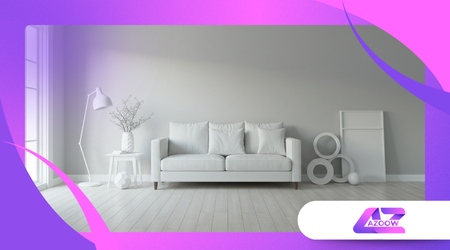
A minimalist home doesn't have to be empty. It can be stylish, warm, and individual.
What's important is that everything serves a purpose – functional or emotional. That nothing is superfluous. And that every object is a conscious part of life.
Quality replaces quantity. And over time, a lifestyle emerges that is not only simpler but also more fulfilling.
The first step begins in the mind.
Minimalism It doesn't start with decluttering. It starts with a decision.
The decision to live differently. More consciously. More simply. More clearly. Those who embrace it quickly realize: It's not just about money. It's about attitude. About values. About freedom. And about the willingness to question ingrained patterns.
Many people try to first create external order – tidying up rooms, selling or giving away things.
But as long as inner thinking remains unchanged, chaos often returns. True change begins in the mind. It requires a shift in thinking, a willingness to honestly examine one's own consumption habits.
The first step can be small. A closet. A drawer. A day without a shopping app. A week without impulse purchases. And from this one step, a new way of thinking often emerges.
A new outlook on life. The realization that possessions don't equal security. That true contentment comes not from things, but from clarity.
Those who have experienced how liberating it is to get rid of baggage – not just material, but also mental – often don't want to go back.
Because anyone who realizes that less is enough eventually asks themselves: What did I need all of this for before? And what can I do without today to live more easily tomorrow?
Questions about minimalism and saving money
Is minimalism just a trend?
Many see it as a trend. But for many, it becomes a permanent lifestyle – because it brings relief.
Is it possible to live a minimalist lifestyle with children?
Yes. It requires different decisions, but even with a family, a conscious approach to consumption is possible.
Do I really save money through minimalism?
In the long run, yes. Fewer impulse purchases, more focus on quality, and more control over spending lead to real savings.
Isn't minimalism boring?
On the contrary. It makes room for what's truly enjoyable – experiences, relationships, time.
How do I actually begin?
Focus on one area that bothers you. Reduce it. Observe how you feel. And then proceed step by step.
How do I find out what I really need?
Ask yourself about every item: Do I use this regularly? Does it make my life easier? If not, it might be unnecessary.
What do I do with things I don't want to throw away?
Donating, swapping, or passing things on are good alternatives. Not everything has to go in the trash.
Can minimalism also work in the city?
Especially in cities, less possessions can create more freedom. Small apartments benefit particularly from this.
What about gifts and keepsakes?
Keep only what truly means something to you. The rest can go – the memory will remain even without the object.
How can I avoid relapsing into old consumption patterns?
Regular reflection helps. Ask yourself: Am I buying this out of genuine need or out of habit? Conscious decision-making makes all the difference.