
Permaculture shade utilization: Yield despite little sun
Advertisement
Permaculture shade utilization The art is to transform dark garden areas into productive oases, instead of viewing them as lost space.
In 2026, with increasing urban density and heat islands, gardening in the shade will become a strategic necessity for self-sufficient individuals.
Shade does not mean stagnation, but often provides a more stable microclimate for sensitive crops that would burn in the blazing midday sun.
Those who precisely analyze the light conditions can achieve remarkable harvests even without direct sunlight and simultaneously promote biodiversity.
Strategic Overview
- Light analysis: Differentiation between light partial shade, building shade and deep shade under old trees for optimal plant selection.
- Cultures for the shade: Focus on leafy greens, berry bushes and mushrooms, which actually thrive better in cooler, wetter conditions.
- Vertical structures: Using walls and fences to capture reflected light and efficiently utilize the limited space in cities.
- Soil management: Adapting mulching strategies in shady areas to avoid waterlogging while actively supporting healthy soil life.
Why is shade an underestimated resource in urban areas?
Efficient Permaculture shade utilization It solves the problem of limited sunlight in backyards or on narrow north-facing balconies through clever species selection and reflection techniques.
Many gardeners give up when walls block the light, but it is precisely here that the most aromatic herbs often grow.
Shaded areas retain moisture in the soil for longer, drastically reducing water consumption and protecting plants from extreme heat waves.
In permaculture, we do not see shade as an obstacle, but as a specific ecological niche with its own potential.
How does the microclimate affect growth?
In the shade, temperatures fluctuate significantly less than in full sun, which reduces stress for many leafy vegetables such as spinach or rocket.
These plants are less prone to premature bolting in cool partial shade, which massively extends the harvest period beyond midsummer.
The moister environment also promotes the settlement of beneficial insects and amphibians, which would no longer find a habitat in dried-out rock gardens.
A shady garden thus acts as a natural cooling system for the entire house and noticeably improves the quality of life for the residents.
++ Edible micro-areas in the city: Maximum harvest on 2 m²
Which plants benefit from low light?
Forest edge plants such as woodruff, wild garlic or various types of berries have adapted perfectly over millennia to life under the canopy of large trees.
These species form the backbone of a successful Permaculture shade utilization, because they require little energy for photosynthesis and yet are rich in nutrients.
Many brassicas also tolerate partial shade better than previously thought, as their large leaves can capture a lot of diffuse light to gain energy.
Those who integrate edible ferns or special mushroom cultures can even use the darkest corners of the garden for a high-quality, culinary enrichment.
How can you maximize yield in low sunlight conditions?
Targeted reflection through white walls or strategically placed water surfaces can increase the amount of light in dark corners by up to 30 percent.
The Permaculture shade utilization It uses such physical tricks to direct the available residual light to where the plants need it most.
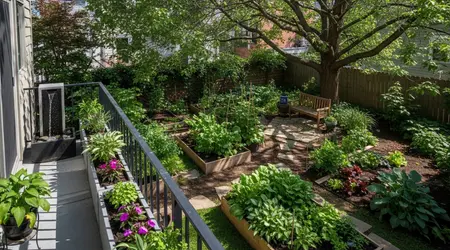
In addition, a vertical structure helps, in which climbing shade-loving plants grow on lighter upper edges, while moisture-loving plants colonize the cool space at the bottom.
This layering maximizes the photosynthetic area in a very small space and stabilizes the entire ecosystem against external influences.
See more: How to find or start a community gardening group
What role do soil organisms play in the shade?
Healthy, loose soil is essential in the shade, as evaporation is lower and harmful waterlogging must be avoided.
Compost worms and beneficial fungi work particularly efficiently in cooler soils when they find sufficient oxygen and organic material to decompose.
By using leaf mulch, we simulate the natural forest floor, which significantly strengthens the immune system of shade plants against slug damage and powdery mildew.
A living soil compensates for the lack of sunlight by making all the necessary nutrients readily available to the plants.
See also: Zero waste in the garden: Gardening without waste
Why are mushrooms the perfect inhabitants of the shade?
Mushroom cultures such as oyster mushrooms or shiitake require almost no light and transform dead wood or straw bales into protein-rich food for humans.
They fit perfectly into the concept of Permaculture shade utilization, as they occupy spaces where conventional vegetables would fail miserably.
This symbiosis between fungus and plant also improves water transport in the soil and closes nutrient cycles that would otherwise remain unused.
Mushrooms in the garden are like an underground internet that distributes resources and increases the garden's stability against drought.
What are the long-term advantages of designing shady gardens?
A well-planned shade garden requires significantly less maintenance and intervention after the establishment phase than a classic, sun-exposed vegetable bed.
The Permaculture shade utilization reduces weed pressure, as many aggressive weeds prefer full sun and lose out to specialized crops in the shade.
In the long term, these systems build up valuable humus, which stores CO2 and acts as a sponge for rare but intense heavy rainfall events.
You invest once in the right structure and harvest healthy food for decades with minimal time investment.
How do you integrate water resources in the shade?
Small ponds or marshy areas in the shade hardly evaporate any water and offer ideal conditions for edible aquatic plants such as watercress.
The water also acts as a thermal storage medium, releasing heat at night and thus protecting sensitive plants from late spring frosts.
These damp areas attract birds and hedgehogs, which act as natural pest controllers and ensure the ecological balance in the garden.
In times of climate change, water in the shade is a valuable insurance against the total drying out of urban landscapes.
Can shade improve crop quality?
Interestingly, many herbs develop a more delicate aroma in partial shade, as their essential oils do not oxidize due to excessive heat.
Salads remain more tender and taste less bitter if they are not exposed to the intense midday sun, which enriches the cuisine.
Studies of University of Hohenheim Studies show that partial shade reduces nitrate accumulation in some leafy vegetables, provided the soil is adequately fertilized.
Shade is therefore not a deficiency, but an opportunity for a particularly high-quality and flavorful harvest from one's own garden.
Yield potential by light zone (2026 data)
| Light zone | Light hours | Suitable crops | Expected yield |
| Light shadows | 3 – 5 hours | Berries, salads, cabbage | High (Aromatic) |
| Part shade | 2-3 hours | Herbs, root vegetables | Medium |
| Deep shadow | < 1 hour | Mushrooms, ferns, wild garlic | Specialized |
| Reflected light | Variable | Climbing plants, peas | Good (Seasonal) |
| Swamp shadow | < 2 hours | Watercress, mint | Stable |
Resilience through adaptation
The strategic Permaculture shade utilization This proves that in horticulture we should work with the conditions, not against them.
We have seen how shade conserves water, stabilizes the microclimate, and makes spaces productive that were previously considered worthless.
Those who understand their garden as a forest ecosystem do not see shade as a loss of energy, but rather as an invitation to diversity.
A garden is like an orchestra; not every instrument has to play the loudest melody to create a harmonious whole.
Utilize the cool potential of your dark corners and start transforming your greenery today.
Have you ever tried growing mushrooms or wild berries in your darkest corner of the garden? Share your experiences in the comments!
Frequently Asked Questions (FAQ)
Do tomatoes also grow in the shade?
True shade is unsuitable for tomatoes, as they need a lot of energy for fruit production.
However, small-fruited wild tomatoes can thrive in light partial shade, provided they receive at least three hours of direct light or strong reflection.
How do I prevent snails in damp, shady areas?
Snails love shade, but a clever selection of plants such as garlic or strongly scented herbs can deter them.
Furthermore, a natural garden promotes natural enemies such as toads, which effectively and without poison regulate the snail population.
Which mulch is best suited for shady flower beds?
Leaf mulch is ideal because it mimics the natural forest cycle and decomposes slowly without acidifying the soil too much.
Avoid thick layers of fresh grass clippings, as these could begin to rot in the shade.
Can fruit trees be planted in the shade?
Most classic fruit trees need sun, but sour cherries, elderberries or certain plum varieties cope surprisingly well with partial shade.
Look for planting materials that have been specifically bred for locations with less light.
Does white wall paint really help with a lack of light?
Absolutely, a light-colored wall can reflect the available light so efficiently that plants in the shade will grow almost as if in a sunny location.
This is one of the simplest and cheapest methods to massively increase the light output in narrow courtyards.