
Permaculture for children: Learn gardening through play
Advertisement
Permaculture for children It's more than just gardening; it's a journey of discovery into nature! Children learn how plants, animals, and people can live together in harmony.
This concept combines playful learning with sustainable thinking and promotes a deep understanding of ecological relationships.
In a world increasingly characterized by climate crisis and resource scarcity, permaculture offers a way to inspire young generations to take a responsible approach to the environment.
According to a study by the Federal Environment Agency (2023), 68% of children in Germany are curious about environmental topics when they are presented in a playful way.
This article shows how Permaculture for children making nature tangible, with practical examples, a touch of creativity and sound approaches that inspire both parents and educators.
Why is it so important to introduce children to sustainable practices at an early age? The answer lies in the future: those who learn to work with nature today will shape a livable world tomorrow.
Permaculture is not just a gardening concept, but a philosophy of life that celebrates cycles and diversity.
In this article you will discover how to Permaculture for children integrate into everyday life, from simple gardening projects to creative games that awaken curiosity and impart knowledge.
Let's immerse ourselves together in a world where gardening becomes an adventure!
What is permaculture? A child-friendly concept
Permaculture is a sustainable design system inspired by natural ecosystems. It promotes cycles in which plants, animals, and humans live in harmony.
For children, this is made tangible through simple explanations: "Imagine your garden is a team where everyone helps!"
One example is a raised bed where carrots and marigolds grow together. Marigolds keep pests away, while carrots loosen the soil. Children learn how plants support each other without complicated terminology.
++ Urban greening: Why every square meter counts
The principles of permaculture, such as resource use and biodiversity, can be taught in a playful way. Children can, for example, collect rainwater and learn why it's good for plants. Such activities foster a connection to nature.
Permaculture is like a puzzle: every piece – plants, insects, soil – fits together. Children discover these connections through observation and practical tasks in the garden.
Playful approaches for getting started
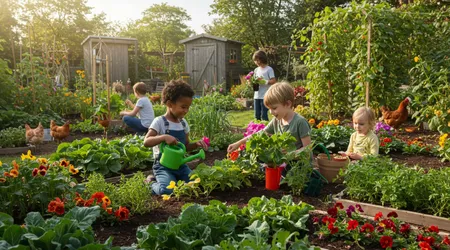
A garden can be an adventure playground! Permaculture for children It begins with activities that spark curiosity, such as a "treasure hunt" for insects or seeds.
A practical example: Children build a small insect hotel from scrap wood and bamboo. In doing so, they learn how beneficial insects protect the garden and develop their manual skills.
Another game is "Plant Memory." Children draw plant cards, for example for tomatoes and basil, and learn which plants go well together. This way, knowledge is reinforced in a playful way.
Creative projects like creating a mini herb garden promote teamwork. Children plant oregano or thyme and discover how fragrances enrich nature.
See more: Growing your own seeds: Sustainability from the start
Practical gardening projects for children
A child-friendly permaculture project is creating a "magic garden." Children design a small bed with edible plants such as strawberries and chives. Fun guaranteed!
Another example: Children build a compost bin. They collect kitchen scraps and observe how they turn into fertile soil. This vividly illustrates the concept of a circular economy.
Rainwater harvesting is an exciting project. Children set up a small barrel and use it to water their plants. This teaches them to appreciate resources.
See also: Circular economy in the garden: Use everything, waste nothing
A herb spiral made of stones is ideal for small gardens. Children can plant rosemary in the dry zone and mint in the moist one, thus learning about growing conditions.
The role of parents and teachers
Parents and teachers are key to Permaculture for children to bring them to life. They convey values such as sustainability through role modeling and gardening together.
A teacher could initiate a school garden where children plant weekly. Such projects promote responsibility and strengthen the sense of community within the class.
Parents can share simple tasks like sowing seeds with their children at home. This fosters bonding and demonstrates how small actions can have a big impact.
Workshops, such as those offered by the association "Children in Permaculture", provide teachers with ideas for integrating permaculture into their lessons, for example through nature observation.
Learning sustainability through play
Sustainability becomes tangible for children when they actively participate. Permaculture for children shows how to conserve resources, for example by mulching with grass clippings.
A game: Children create a "cycle map" on which they draw how waste becomes compost. This illustrates how nothing is wasted.
Another example is planting wildflowers. Children see how bees are attracted and learn why biodiversity is important for nature.
Sustainability is like a dance with nature: every step counts. Children who learn to use resources today will shape a better world tomorrow.
Promoting creativity and responsibility
Permaculture fosters creativity when children contribute their own ideas, such as painting colorful garden labels. This strengthens their self-confidence and their enjoyment of creating.
Responsibility develops when children care for "their" plants. They learn that regular watering and observation are crucial for a bountiful harvest.
A creative project: Children design a "nature trail" using stones and plants. They decide where everything grows and take responsibility for their work.
Such tasks help children develop problem-solving skills. They learn how to deal with challenges like pests, for example with the help of natural helpers such as ladybugs.
Challenges and solutions
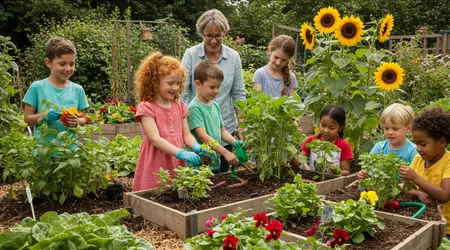
A challenge in the Permaculture for children The problem is a lack of patience. Children want quick results, but plants need time. Solution: fast-growing plants like cress.
Lack of space in urban gardens is an obstacle. Raised beds or vertical gardens on balconies still make permaculture possible, even in small spaces.
Knowledge gaps among adults can be off-putting. Online resources, such as those from Permakultur-Kids.de, offer simple instructions for beginners that will inspire children.
Parents or teachers might be unsure how to teach permaculture in a child-friendly way. Workshops or books like "Handbook for Children in Permaculture" can help.
Advantages for the future
Permaculture for children It lays the foundation for environmentally conscious behavior. Children who garden today develop an understanding of sustainable lifestyles that shapes them.
In the long term, permaculture promotes critical thinking. Children learn to question systems and find solutions to environmental problems, for example through resource conservation.
For example, a child who learns about composting understands how to reduce waste. This knowledge can later be applied to broader contexts such as the circular economy.
Permaculture strengthens social skills. Children work in teams, share harvests, and learn to take responsibility for their environment and community.
Table: Examples of child-friendly permaculture projects
| project | Description | Learning objective |
|---|---|---|
| Insect hotel | Structure made of wood and bamboo for beneficial insects | Understanding biodiversity |
| herb spiral | Creating a spiral-shaped bed | Site conditions of plants |
| Compost bin | Collecting kitchen waste for humus | Circular thinking and waste reduction |
| Rainwater harvesting | Setting up a barrel for watering | Resource conservation |
Conclusion: The seeds for a sustainable future
Permaculture for children It is a gift for the future. It combines fun, learning, and responsibility as children discover nature as a partner.
Through playful projects such as herb spirals or insect hotels, they develop a deep understanding of ecological cycles.
Parents and teachers play a key role by encouraging children to take action themselves. In a time when sustainability is crucial, permaculture offers a bridge between present actions and a future worth living in.
Whether in schools, gardens, or on balconies, permaculture is accessible to everyone. It demands creativity, patience, and curiosity—qualities that children naturally possess.
So why not start today? Let children discover the world through the lens of nature – it could be the first step towards a greener world.
Frequently Asked Questions (FAQs)
How can I explain permaculture in a way that is appropriate for children?
Explain it as teamwork in nature, where plants, animals and humans work together, like in a great garden adventure.
Which plants are suitable for children?
Fast-growing plants such as cress, radishes or sunflowers are ideal, as children see results quickly and remain motivated.
Do I need a lot of space for permaculture?
No, permaculture also works on balconies or in raised beds. Vertical gardens or herb spirals are space-saving options.
Where can I find child-friendly resources?
Websites like Permakultur-Kids.de or the book "Handbuch Kinder in der Permakultur" offer playful ideas and instructions.