
Urban greening: Why every square meter counts
Advertisement
Urban greening Urban gardens are not a luxury, but a necessity for the future of our cities. In a time when concrete dominates the landscape and climate change is having a noticeable impact, urban gardens and permaculture are gaining in importance.
They are not only aesthetically pleasing, but also solutions to ecological and social challenges.
Why is every square meter of green so crucial? This article delves deep into the world of urban greening, showcases practical approaches, and illuminates how permaculture makes cities more livable.
From rooftop gardens to community plots, every space counts. Imagine your city as a green carpet that breathes, cools, and connects. Ready to discover the urban oases of tomorrow?
The importance of green spaces in cities goes far beyond decoration. It's about resilience, health, and community.
This text shows how Urban greening It improves quality of life, protects the climate and promotes social bonds.
With creative approaches, sound data and inspiring examples, we invite you to help shape the green revolution.
So why wait? Every square meter can be a step towards a more sustainable future.
The challenges of urban spaces
Cities are growing rapidly, but green spaces are shrinking. Concrete surfaces store heat and exacerbate the urban heat island effect. Less green space means higher temperatures.
Air pollution is detrimental to health. Studies show that particulate matter in cities promotes respiratory illnesses. Green spaces filter pollutants and improve air quality.
Social isolation is increasing. Urban greening Community gardens create spaces for neighbors to meet and get to know each other. They foster cohesion and strengthen community spirit.
++ Circular economy in the garden: Use everything, waste nothing
Water management is a problem. Sealed soils prevent rainwater absorption, leading to flooding. Green spaces regulate water and reduce risks.
Biodiversity suffers in cities. Monocultures and asphalt offer little habitat. Urban gardens promote biodiversity, from insects to birds, and stabilize ecosystems.
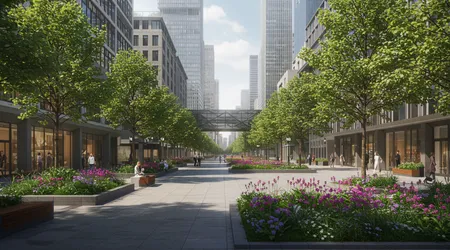
The power of urban greening
Urban greening It cools cities effectively. A study by TUM (2022) shows that 40 % green spaces reduce summer heat by up to 5 °C.
Plants filter pollutants. Trees and shrubs bind particulate matter, improve air quality, and promote health. A tree can store 100 kg of CO₂ annually.
Urban gardens strengthen communities. In Berlin, the community garden "Hortiphonie" transformed a vacant plot of land into a meeting place for all generations.
Green roofs regulate water. They store rainwater, reduce wastewater pollution, and prevent flooding. In Copenhagen, roof gardens are part of the climate strategy.
See more: Gardening without a garden: Indoor permaculture for the home
Permaculture in cities saves resources. Composting and rainwater harvesting create sustainable cycles that promote local food security and minimize waste.
Permaculture: Sustainability meets the city
Permaculture is not a trend, but a philosophy. It uses natural cycles to make cities more sustainable. Urban greening This makes it more efficient.
For example, in Almere, Netherlands, residents of Oosterwold cultivate 50 % of their land themselves. This promotes food independence and strengthens the community.
Composting in urban gardens closes nutrient cycles. Kitchen waste becomes fertilizer, reduces waste, and promotes fertile soil for vegetable cultivation.
Rainwater harvesting is crucial. Permaculture gardens collect water in barrels to irrigate plants. This saves drinking water and protects the environment.
See also: Growing your own seeds: Sustainability from the start
Biodiversity is promoted. Mixed cropping and wildflowers create habitats for insects. One garden in Munich attracted 30 bee species.
Practical examples from real life
In Lisbon, a parking lot was transformed by Urban greening into a Tiny Forest. 600 trees cool the surroundings and provide habitat for birds.
Munich's "Urban Gardens" initiative supports community gardens. The "Grünstreifen" garden unites 50 neighbors who grow vegetables and hold workshops.
Rooftop gardens are booming in Hamburg. One supermarket has planted herbs on its roof, which customers can buy. This saves on transport and CO₂ emissions.
In Freiburg, the city promotes greening of building facades. Climbing plants cool buildings, save energy and beautify gray walls – a win-win for everyone.
A community project in Cologne planted fruit trees along streets. Passersby harvest the fruit for free, which strengthens the community and local food supply.
How everyone can participate
Every square meter counts! Plant flowers on your balcony. Bee-friendly perennials like lavender attract insects and brighten up your everyday life.
Get involved in community gardens. Many cities offer plots. In Berlin, there are over 100 such projects that connect neighbors.
Use rainwater. Set out a barrel to water plants. This saves water and supports sustainability. Urban greening in your environment.
Share knowledge. Organize workshops on permaculture. In Leipzig, citizens learn in courses how to design their gardens ecologically.
Support local initiatives. Donate time or money to projects like Tiny Forests. Every little bit helps make cities greener and more livable.
The role of urban planning
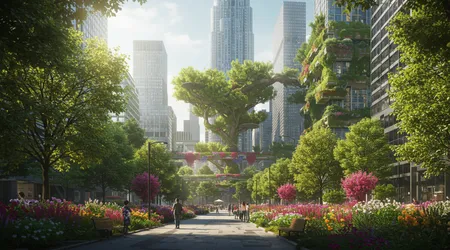
Cities must prioritize green spaces. Copenhagen plans to create 20 million additional green spaces by 2030 to achieve climate neutrality – a model for others.
Building regulations should promote green spaces. In Singapore, roof gardens are mandatory for new buildings. This cools cities and saves energy on air conditioning.
Public spaces offer potential. Traffic islands can be transformed into wildflower meadows. In London, 50 such areas were planted with greenery in 2024.
Participation is crucial. Citizen involvement in the planning process strengthens acceptance. Hamburg's "St. Pauli Hafenkante" was developed through citizen workshops.
Data-driven planning helps. Sensors measure urban heat islands to create targeted green spaces. Stuttgart uses such technologies for more effective greening.
The future of urban greening
Technology supported Urban greeningAI-supported landscape planning optimizes plant selection and water use, as a project in Zurich demonstrates.
Vertical gardens are gaining in importance. In Milan, greened skyscrapers cool the city and offer space for 20,000 plants – a green wonder.
Citizen initiatives are growing. Platforms like "Urbane Praxis" in Berlin connect stakeholders who create green spaces and promote knowledge transfer.
Schools are integrating green spaces. In Vienna, children learn permaculture in school gardens, which promotes environmental awareness and practical skills.
Regional food production is increasing. Urban farms, like the one in Detroit, supply neighborhoods with fresh vegetables and reduce transportation emissions.
A green metaphor for the city
Imagine a city as a human body. Urban greening It is the heart that pumps oxygen, cleans the air, and makes life pulsate.
Without greenery, cities suffocate. Every tree, every flowerbed is a breath that keeps the city alive. So why not release more of this life-giving energy?
Green is not an accessory, but the pulse of a future worth living in.
Statistics and table
A study by TUM (2022) shows: Cities with 40 % green space are up to 5 °C cooler in summer.
| City | Green area share (%) | Temperature reduction (°C) | CO₂ sequestration (t/year) |
|---|---|---|---|
| Copenhagen | 42 | 5 | 12.000 |
| Munich | 38 | 4 | 9.500 |
| Berlin | 35 | 3,5 | 8.200 |
| Lisbon | 30 | 3 | 7.000 |
Conclusion: Green is the future
Urban greening is not merely a concept, but a tool for resilience, health and community.
Every square meter we green is a step towards a more livable city. From community gardens to green facades, the possibilities are diverse, the impact enormous.
The TUM study shows that 40 square meters of green space can cool cities by up to 5°C. This isn't a dream, it's achievable. Whether it's a balcony, roof, or park, everyone can participate.
Let's transform cities into green oases that breathe, connect, and inspire. Which square meter near you could be the next one?
The challenge lies not in theory, but in practice. Cities like Copenhagen or Singapore demonstrate how urban planning and citizen initiatives can go hand in hand.
Permaculture offers concrete solutions: sustainable cycles that conserve resources and promote biodiversity.
It's time to take responsibility for ourselves, our children, and the planet. Get involved, plant, connect. The green revolution starts with you.
Frequently Asked Questions (FAQ)
1. What is the difference between urban greening and urban gardening?
Urban greening encompasses all measures for creating green spaces, such as parks or roof gardens. Urban gardening focuses on the cultivation of food by citizens.
2. How can I participate in urban greening in my city?
Join community gardens, plant on balconies, or support local initiatives. Many cities offer workshops or plots for citizens.
3. Are roof gardens expensive?
Costs vary, but funding programs, like the one in Hamburg, lower the barriers. Simple roof gardens start at 50 euros per square meter.
4. How does permaculture promote biodiversity?
Permaculture uses mixed crops and wild plants to create habitats for insects and birds, as in the Munich “green strip” garden.
5. Can urban greening really improve the climate?
Yes, green spaces cool cities, bind CO₂, and filter pollutants. A green space ratio of 40% (%) can lower temperatures by up to 5°C.