
Zero Waste Kitchen: How to Avoid Food Waste
Advertisement
Food waste is no longer a fringe issue. Over a third of the world's food production ends up in the trash – and a large proportion of that comes from private households.
Every piece of bread thrown away, every forgotten carrot and every expired yogurt not only means lost money, but also wasted resources: water, energy, labor, space.
The good news: By planning carefully, shopping consciously, and using food cleverly, you can achieve a lot with simple means. This is precisely where the Zero Waste Kitchen on – not as a rigid method, but as a lived everyday life.
It helps reduce waste, make better use of supplies, and encourages reflection on one's own food consumption habits. And it shows that sustainable behavior doesn't have to be complicated or expensive – it often starts simply: with a look in the refrigerator.
What exactly is a zero waste kitchen?
The idea of Zero Waste Kitchen This stems from the zero-waste principle, which aims to produce as little waste as possible. In the kitchen, this means specifically: avoiding food waste, reducing packaging, and creatively using leftovers.
But it's about more than just waste reduction. It's about a more conscious approach to food – from planning and shopping to preparation.
Those who know their supplies, buy seasonally and use their leftovers not only save money, but also actively protect the climate and environment.
A zero-waste kitchen doesn't need perfect organization. It thrives on ideas, curiosity, and the desire to take responsibility – for one's own consumption, for the origin of products, and for what otherwise ends up in the trash.
++ Zero Waste Wedding: How to Celebrate Sustainably
Practical tips for your everyday life in the zero waste kitchen
You don't need a radical overhaul to start with a zero-waste kitchen. Often, small, concrete steps are enough.
Shop with purpose. Make a list before you go shopping, plan your meals, and only buy what you really need. Impulse buys often lead to excess and later waste.
Use what you have. A quick look in the fridge before cooking is often enough to discover a completely new dish. Vegetables with soft spots can be used to make soup, and stale bread can be turned into croutons or breadcrumbs.
Store properly. Many foods spoil because they are stored incorrectly. Potatoes don't belong in the refrigerator, and tomatoes lose their flavor there. If you know your supplies and store them correctly, you'll have to throw things away less often.
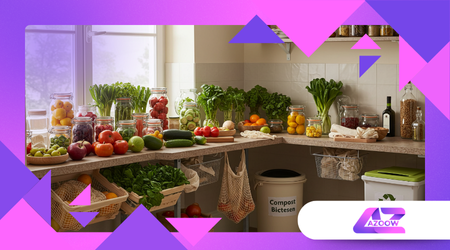
Use glass jars, cloth bags, and containers instead of plastic packaging. This is also part of a zero-waste kitchen: avoiding packaging wherever possible. Many cities have zero-waste shops – and you can often shop without plastic at markets as well.
Get creative with leftovers. A bowl of roasted vegetables, a casserole, or a stir-fry: the best ideas often come from what's left over. The more often you consciously use leftovers, the more natural circular thinking becomes.
Why zero waste doesn't end on the plate
The zero-waste kitchen doesn't end with cooking. It's also about rethinking waste disposal. Compost what you can't use – peels, coffee grounds, vegetable scraps. If you don't have a garden, many cities now offer organic waste collection systems or even urban composting projects.
Planning also plays a role. Knowing how much you cook, store, or freeze means less waste. Many people get used to portions that are actually too large – and learn to practice moderation through zero waste.
Even sharing can be part of the solution. Whether with neighbors, friends, or via food-sharing platforms – food that you no longer need often quickly finds new takers.
Conclusion: The zero-waste kitchen is changing how we think about food.
The Zero Waste Kitchen It's more than a trend. It's an attitude. A new relationship with food that combines respect, creativity, and mindfulness.
Those who cook, buy and store more consciously not only discover how much food has been wasted so far – but also how much joy there is in making it better.
This kitchen needs no special appliances, no radical ideology. It begins with an open mind. With the decision to take responsibility – not perfectly, but honestly.
Everyday life shows how simple zero waste can be: a weekly meal plan, a well-organized pantry, a compost heap on the balcony. No dogma, no pressure. Just clarity about what makes sense.
And in the end, it's not just less waste – but more flavor, more awareness, and often more community. Sharing what's left over, swapping what's too much, brings people together.
The zero-waste kitchen doesn't just change the contents of the refrigerator. It changes our thinking – and perhaps the world as well.
FAQ: Zero Waste Kitchen – Frequently Asked Questions
1. Isn't a zero-waste kitchen more complicated?
Initially, it may require more planning, but with a little routine, many things become easier. Shopping lists, inventory management, and creative use of leftovers save time and money in the long run.
2. Do I need special equipment for zero-waste cooking?
No. Many people simply use existing jars, cans, or cloth bags. New purchases are not necessary; only the way things are done changes.
3. What do I do with food that is about to go bad?
Use immediately or freeze. Fermenting or canning are also good options. Often, a quick soup or snack made from leftovers is all you need.
4. How can I live a zero-waste lifestyle if I live alone?
Individuals especially benefit from structure: cook smaller portions, freeze more often, regularly check what's left. Planning is key.
5. Is there a way to buy unpackaged goods if there is no zero-waste shop nearby?
Weekly markets, farm shops, or well-stocked supermarkets often offer loose goods. Barter groups or community-supported agriculture are also alternatives.
6. What do I do with vegetable peels or coffee grounds?
Compost or reuse – e.g., for broth, fertilizer, or as a kitchen cleaner. Many leftovers can be used creatively instead of being thrown away.
7. How can I avoid creating waste while shopping?
Cloth bags, your own containers, reusable nets – with a little preparation you can shop almost everywhere without packaging or at least avoid plastic.
8. What if others in the household don't cooperate?
Patience helps. Start yourself, show how easy it is – and inspire instead of lecturing. Often, setting a good example leads to long-term changes in thinking.