
How to attract wild bees and beneficial insects to your garden
Advertisement
Attract wild bees and beneficial insects to your garden a goal that combines nature, aesthetics and sustainability.
In a time when biodiversity is declining worldwide, gardens are more than just decoration: they are refuges for threatened species such as wild bees, ladybugs and other beneficial insects.
These little helpers are indispensable for pollination and pest control, but their habitats are shrinking due to intensive agriculture and urbanization.
A natural garden can change that. According to a study by the University of Bristol, private gardens in cities provide up to 85% of the nectar in urban areas – an opportunity you can take advantage of!
However, achieving this goal requires knowledge, planning, and creativity. How can you transform your garden into a paradise for insects?
This article shows you practical, current and sustainable ways to Attract wild bees and beneficial insects to your garden, without compromising on beauty or functionality.
From plant selection and nesting aids to small design tricks, here you will find everything you need to take action.
A natural garden is like a living work of art: every plant, every corner tells a story of coexistence.
This guide is your brush to create this work of art. It combines scientific insights with practical tips that work even in the smallest spaces.
Whether you have a large garden or just a balcony, the possibilities are endless. Let's discover together how you can achieve great things with small changes.
The importance of wild bees and beneficial insects
Wild bees pollinate around 80% of our crops; without them there would be hardly any fruit or vegetables.
Their diversity is impressive: Over 560 species live in Germany. But monocultures and pesticides threaten them. Gardens offer a solution.
++ Sustainable pest control in the city garden
Beneficial insects like ladybugs eat pests, such as aphids, and reduce the need for chemicals. A natural garden effectively promotes these helpers.
A garden without insects is like an orchestra without musicians – silent and lifeless. Attract wild bees and beneficial insects to your garden, by creating diversity.
Plant selection: Food for wild bees
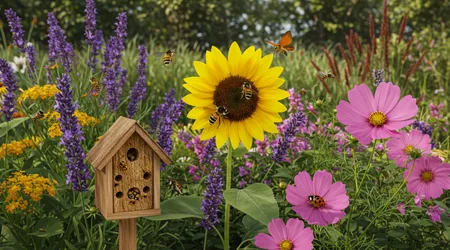
Native plants are key: members of the daisy, mint, or umbellifer families provide nectar and pollen. Crocuses and willows bloom early, asters late.
Avoid double-flowered varieties; they are useless to bees. Plant dandelions, sage, or viper's bugloss instead. Diversity ensures food from spring to autumn.
See more: Plant combinations according to permaculture: What goes well together
For example: A balcony with lavender and thyme attracts mason bees. Attract wild bees and beneficial insects to your garden, if you sow regional wildflowers.
A lawn of herbs like clover or yarrow is a feast for insects. Mowing less often promotes a diversity of flowers and saves you work.
Tabel: Bee-friendly plants according to flowering time
| Flowering time | Plant examples | Advantages |
|---|---|---|
| Spring (March–May) | Crocus, willow, lungwort | Early food for wild bees |
| Summer (June–August) | Lavender, sage, viper's bugloss | Diversity for many species |
| Autumn (September–October) | Aster, sedum, ivy | Late-season food for bumblebees |
This selection guarantees a continuous supply of food. Attract wild bees and beneficial insects to your garden, by cleverly combining flowering times.
Nesting aids: A home for wild bees
Approximately 75% of wild bee species nest in the ground, others in dead wood or stems. Sandy, sunny areas are ideal for ground-nesting bees such as sand bees.
Build nesting boxes from untreated wood or bamboo. Drill holes (8–12 mm) in hardwood and place them in a sunny and rain-protected spot.
For example: A balcony box filled with sand and clay attracts ground bees. Attract wild bees and beneficial insects to your garden, by creating natural nesting sites.
See also: Permaculture in everyday life: More than just gardening
Vertical blackberry canes or piles of dead wood offer nesting sites. Cleaning is unnecessary, but you should renew nesting aids after three years.
A sunny clay hill with a dry stone wall is a paradise for mason bees. Small measures can turn your garden into a nesting hotspot.
Natural design: Less is more
Less order, more life: Leave wild corners with deadwood or leaves. They provide shelter for hedgehogs and insect larvae.
Avoid using pesticides; they harm bees and beneficial insects. Biological pest control, for example with ladybugs, is more sustainable and effective.
Imagine your garden is a buffet: Attract wild bees and beneficial insects to your garden, if you allow diversity and chaos.
A pile of brushwood in a corner attracts butterflies and beetles. Untidy gardens are ecological treasure troves for beneficial insects.
Mowing less frequently encourages clover and dandelions in the lawn. This saves time and creates habitats for insects without much effort.
Water and protection: The extras for beneficial insects
Wild bees need water, especially in summer. A shallow dish filled with pebbles provides safe access to drinking water.
Protect nesting boxes from birds with chicken wire. In winter, store them in a cool, but not heated, place to protect larvae.
A garden pond with a shallow bank is ideal: bees collect clay there for their nests. Attract wild bees and beneficial insects to your garden with such details.
Avoid exotic plants like geraniums; they offer no benefit. Opt for native species such as wallflowers or nasturtiums.
A small pile of sand on the balcony becomes an oasis for ground-nesting bees. Creative solutions make even small areas bee-friendly.
Long-term strategies: Focus on sustainability
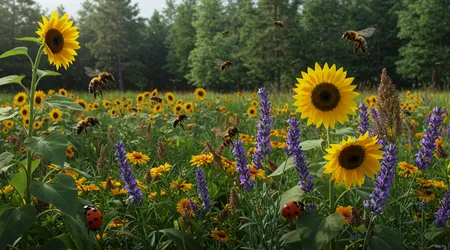
A bee-friendly garden takes time. Start with regional organic seeds and gradually build up biodiversity.
Observe which bees visit your garden. Platforms like wildbienen-kataster.de help identify species and adapt plants accordingly.
Why not become part of a movement? Attract wild bees and beneficial insects to your garden, by networking with local beekeepers.
Share surplus seeds on seed exchange platforms. This strengthens regional biodiversity and inspires others to participate.
For example, a wildflower meadow in an allotment garden promotes community projects. Sustainability begins with small, local actions.
Conclusion: Your garden as a biodiversity hotspot
Attract wild bees and beneficial insects to your garden, by combining diversity, naturalness and sustainability.
Every little bit counts: a wildflower meadow, a pile of deadwood, or a sand bed. Your garden will become a habitat for endangered species and, at the same time, a source of bountiful harvests.
The journey begins with a single plant, a nesting aid, a wild corner. Become part of the solution, create a paradise for insects, and enjoy the buzzing diversity. What's stopping you from starting today?
Frequently Asked Questions: Your doubts answered
How quickly do wild bees settle in an area?
It can take two to three years for nesting aids to be accepted. Patience and variety are crucial.
Are wild bees dangerous?
No, they are peaceful and rarely sting. Their role as pollinators outweighs any risk.
Can I help on the balcony?
Yes, with wildflowers, sandboxes and nesting aids you can attract bees even in a small space.
Which plants are best?
Native species such as crocuses, lavender and viper's bugloss provide food and are readily available.