
How to choose solar panels for your home in Germany.
Advertisement
Over the last two decades, prices for Photovoltaics significantly decreased, which Solar panels in Germany increasingly attractive.
This guide will help you choose the best solar systems for your home. You will gain insights into how they work, their advantages, current market trends, and legal frameworks that are important for making an informed decision.
With a well-planned solar system You can not only reduce your electricity costs by up to 89 %, but also significantly decrease your dependence on the energy market.
Installation times are also shorter than ever before: providers like LichtBlick install your solar system Typically within 8 weeks of purchase. Attractive financing options are also available to help you switch to... renewable energy to make it easier.
Introduction: Why solar panels for your home?
The use of Solar energy has gained considerable importance in recent years. Given the increasing Energy costs Many homeowners are looking for ways to reduce their expenses while also contributing to… climate protection to afford. Solar panels represent an excellent solution for reducing one's own energy costs and generating sustainable energy.
In Germany, households pay an average of approximately... 48 cents per kilowatt hour for electricity. These costs can be covered with your own solar system This can be significantly minimized. By installing solar panels on your roof, you convert solar radiation into clean electricity and are therefore less dependent on rising grid electricity prices. More than 2 million Homeowners in Germany have already taken this step.
The lifespan of modern solar panels is approximately... 25 yearsThis makes the investment particularly attractive. Furthermore, the choice of different modules, such as monocrystalline or polycrystalline solar panels, is another advantage. While monocrystalline panels offer higher efficiency, polycrystalline panels are often more cost-effective. This allows households to make the right choice depending on their budget and energy needs.
Solar energy is not only a cost-effective alternative, but also actively contributes to climate protection By generating your own electricity, you reduce your CO2 emissions and protect the environment. Ultimately, choosing solar panels is an investment in a greener future that also creates financial flexibility.
What are solar panels and how do they work?
Solar panels, also known as photovoltaic systems, play a central role in the Energy conversion from sunlight into electrical current. A typical solar panel consists of about 120 solar cellsThese technologies convert sunlight through chemical processes. They are crucial for generating clean energy.
The generated energy is transmitted as direct current (DC), which is then converted into alternating current (AC) by an inverter. This allows for household use or feeding into the public power grid. Modern solar modules achieve a peak power output of between 350 and 450 watts (Wp) under standard conditions. Therefore, maximum power output is an important criterion when evaluating solar panels. Photovoltaics-systems.
For optimal use of the Solar energy Factors such as the orientation and tilt angle of solar panels are of great importance. A south-facing orientation can maximize the yield, while slightly off-center positions can achieve up to 951% of the maximum yield. The recommended tilt angle for installation is approximately 30°. Even locations with steeper angles can still deliver up to 90% of the yield.
The selection of different solar cells is also essential. Monocrystalline solar cells They achieve efficiencies of up to 22.5%, while polycrystalline models range between 17% and 20%. These differences in efficiency affect production costs. The development of new materials such as hybrid-reactive perovskites shows promising approaches for further increasing efficiency.
A significant advantage of PhotovoltaicsThe advantage of these systems lies in their long-term sustainability and the possibility of becoming independent of rising energy prices. For more information about solar panel technologies and the associated benefits, please see [link/reference]. How photovoltaics work It is worth visiting additional information pages.
The advantages of using solar panels
The use of solar panels offers numerous advantages. Advantages of solar panels, which take both financial and environmental aspects into account. One of the most important features is the ability to Reduce energy costs To be able to do so. In Germany, the current electricity price is just under 32 cents per kilowatt-hour, while the levelized cost of electricity for private solar systems is around 11 to 13 cents per kilowatt-hour. This means that consumers can benefit considerably from generating their own solar power, with savings of up to 21 cents per kilowatt-hour.
The Environmental friendliness Solar energy offers another crucial advantage. Its CO2 footprint is a mere 56 g/kWh. This stands in stark contrast to conventional energy sources, which produce far higher emissions. Furthermore, solar installations must be registered as both commercial and hobby projects, providing many users with greater financial flexibility.
A key feature is the feed-in tariff, which remains constant for up to 20 years, even though it decreases gradually. This regulation allows operators to generate a more stable source of income while simultaneously contributing to the reduction of CO2 emissions. Over 100,000 homeowners in Germany have already invested in solar power systems, reinforcing the trend toward decentralized energy supply.
The following table provides an overview of the financial benefits and savings that can be achieved through the use of solar panels:
| criterion | Value |
|---|---|
| Current electricity price | 32 cents/kWh |
| Levelized cost of electricity for solar power plants | 11 – 13 cents/kWh |
| Maximum savings through in-house production | 21 cents/kWh |
| CO2 balance of solar energy | 56 g/kWh |
| Feed-in tariff for PV systems | 8.11 cents/kWh |
| Payback period | 8-9 years |
Solar panels in Germany: Market development and trends
The solar panel market in Germany is showing impressive growth, driven by a combination of technology, sustainability, and environmental considerations. The installation statistics for recent years point to a remarkable trend. The highest installation volume was recorded in 2012. Photovoltaics-Plants with over 8,000 MWp were recorded. However, this growth did not continue unabated, as the market fell to just over 1,000 MW in 2014 due to various factors.
However, times have changed again. By 2022, the German PV market had reached approximately 7,300 MW and is projected to increase to around 15,400 MW by 2023. These figures illustrate the growing acceptance and innovative strength in the field of photovoltaics. In 2024, the installation of more than 1 million new solar power systems is expected, achieving a total capacity of approximately 16,200 MW.
Trends in the photovoltaic industry are evident not only in the number of installations but also in the types of systems being installed. According to the latest data, 430,000 balcony power plants (up to 2 kW capacity) will have been installed by 2024, representing a significant increase compared to 305,000 in 2023. These innovations are key to unlocking new market segments.
The total installed capacity of the PV market in Germany is projected to reach an impressive 99.3 GW by 2024. Trend research in the photovoltaic sector indicates that solar energy will account for approximately 12% of the German electricity mix. This positive development is also reflected in the attractive pricing of self-generated solar power, which costs around 7 cents/kWh, and the investment volume for photovoltaic systems, which typically ranges between €5,000 and €20,000.
How to determine the correct size of your solar system
The Solar system size plays a crucial role in the efficiency and cost-effectiveness of your photovoltaic system. To determine the optimal size of your solar system To determine this, several factors should be taken into account, including your household's electricity consumption, the available roof area, and the geographical location.
A useful method for Solar power calculation The rule of thumb is: electricity demand multiplied by 2.5, divided by 1,000 kWh/kWp. Assuming an annual electricity demand of 4,000 kWh, this results in a recommended system size of approximately 10 kWp.
| Electricity consumption (kWh/year) | Solar system size (kWp) | Required roof area (m²) | System output (kWh) |
|---|---|---|---|
| 3.000 | 7,5 | 38 | 7.500 |
| 4.000 | 10 | 50 | 10.000 |
| 5.000 | 12,5 | 62 | 12.500 |
| 6.000 | 15 | 75 | 15.000 |
In Germany, solar radiation varies depending on the region. Northern Germany often has less than 1,110 kWh/m², while in the south, such as in Bavaria, values above 1,300 kWh/m² can be measured. These values also influence the Needs assessment For the correct system size. Pay attention to the orientation and tilt of your solar panels, as these factors significantly influence the yield.
The different types of solar power systems
When choosing a solar power system, it is important to understand the different types of solar power systems. Rooftop solar systems These are the most widespread option in private households. They make optimal use of the roof area and offer high energy efficiency thanks to their monocrystalline or polycrystalline modules. Monocrystalline PV modules are characterized by their high efficiency, which makes them particularly suitable for limited areas.
Alternative options such as Balcony solar systems These mini-PV systems offer a practical solution for renters or people with limited space. They allow energy to be generated directly at home, provided the landlord gives their consent. Their flexibility and ease of installation make them particularly attractive.
Additionally, there are Thin-film modulesThese modules, which lose less power in low light conditions and high temperatures compared to crystalline modules, are lightweight and offer good performance even under less than ideal conditions, particularly CIGS and cadmium telluride variants.
| Type of solar system | Advantages | Disadvantages |
|---|---|---|
| Rooftop solar systems | High efficiency, optimal use of space | Limited flexibility during installation |
| Balcony solar systems | Flexible installation, good for tenants | Limited energy production |
| Thin-film modules | Improved performance in low light, flexible use | Generally lower efficiency compared to crystalline options |
Choosing the right solar system depends crucially on individual needs and local conditions. Consider which application best suits your lifestyle and which type offers you the desired benefits.
Important factors when choosing solar panels
The selection of solar panels is a crucial step for investing in renewable energyPotential buyers should consider several factors when making this selection. Quality criteria Consider the following factors: module efficiency, materials used, and warranty services. Manufacturer.
A key aspect is the efficiency of the solar modules. Monocrystalline solar panels have efficiencies between 20 and 22.5 %, making them ideal for many households. Snow load, another crucial factor, should be at least 2,400 Pa, while some advanced modules have even been tested up to 5,400 Pa. In Germany, there are five snow load zones according to DIN EN 1991-1-3, which should be considered when making a selection.
The Manufacturer Other factors also play a key role. Premium solar modules often offer longer warranties and higher snow and wind load ratings. The warranty period for solar modules is typically between 20 and 25 years. Performance guarantees, which ensure 90% nominal power output after ten years, are also important.
Furthermore, buyers must pay attention to certification standards such as IEC 61215 and IEC 61646, which guarantee the safety and efficiency of the solar panels. TÜV conducts IEC certification in Germany, which offers additional assurance.
To maximize the performance of solar modules, it is recommended to use power-optimizing technologies. These can reduce signal strength by between 15 and 30 %. In the Selection of solar panels Financial aspects should also be taken into account, as the initial costs depend on the technical quality of the modules.
Financing options and subsidies in Germany
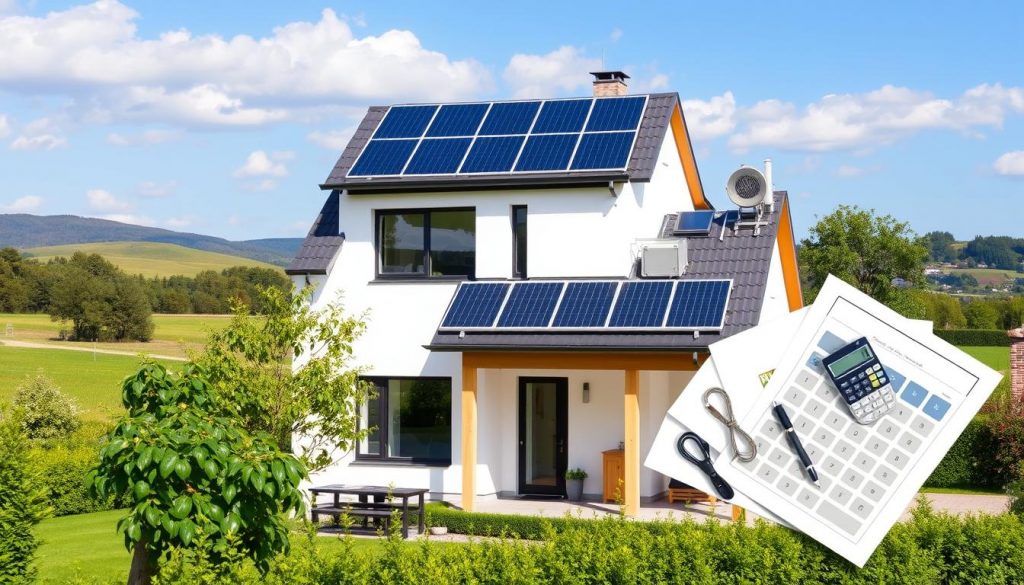
Purchasing a photovoltaic system requires a significant investment, often amounting to several thousand euros. To assist potential buyers, various options are available. Financing solar systems Possibilities. One of the best-known options is the KfW funding, which offer low-interest loans for the installation of solar systems. These loans often allow for initial grace periods without repayments, which reduces the financial pressure in the early stages.
Although non-repayable subsidies are now scarce, the increase in feed-in tariffs resulting from the suspension of degression in July 2022 has enhanced the attractiveness of investments in solar technology. However, a smaller reduction in the feed-in tariff will apply from February 1, 2024, posing new challenges for current investors. Nevertheless, the feed-in tariff for solar power, legally regulated by the Renewable Energy Sources Act (EEG), remains guaranteed for 20 years, thus providing a reliable source of income.
Current Funding in Germany These subsidies are primarily available at the state and municipal levels. Many German states have implemented programs that cover up to 401,000 of the investment costs for photovoltaic systems. The advantages of a solar power system are numerous: By using the generated electricity themselves, households can significantly reduce their electricity costs, while additional solar storage can increase efficiency by up to 801,000.
| Financing option | Details |
|---|---|
| KfW funding | Low-interest loans with initial grace periods. |
| State funding | Funding of up to 40% of the investment costs is possible |
| feed-in tariff | Varies between 0.07 and 0.13 euros per kWh |
| Private solar loans | Interest rates based on creditworthiness and market development |
| Funding for solar storage systems | Can significantly increase self-consumption of solar power |
The installation process: What you can expect
The Process flow The installation of a solar power system is comprehensive and well-structured. From the initial consultation to the final installation, this process comprises several essential steps. First, an individual assessment is carried out. Solar system installation, taking into account the specific requirements and conditions of the location. Experts analyze the roofs, the amount of sunlight, and other relevant factors.
The timeframe for the entire planning process varies, but usually one to two weeks should be expected.
The actual installation of the solar system can usually be completed within two to four days. During this time, experienced professionals install the necessary components and commission the system. A thorough system test ensures that everything is functioning correctly.
Finally, user training is provided to ensure you are fully familiar with your new solar system. The company also offers support regarding maintenance and any future adjustments. For detailed information on the entire process, please contact [contact information missing]. Process flow During installation, you can do this Page visit.
Maintenance and care of solar systems
The Solar system maintenance is essential to their life to maximize and maintain efficiency. Regular Care It protects against unexpected malfunctions and ensures optimal yields. A good maintenance strategy encompasses various aspects.
Photovoltaic systems have on average a life of over 20 to 30 years. To ensure that these life Once this point is reached, you should consider various maintenance tasks. These include, among other things:
- Annual visual inspection of the solar collectors for dirt and damage
- Checking the inverter's meter readings
- Thorough maintenance every two to four years by specialist companies
The maintenance costs for a typical photovoltaic system for a single-family home range between €150 and €300 per year, usually excluding cleaning. A maintenance contract can help with this regular expense. Care to organize and ensure that all necessary measures are taken. This is particularly important because many Manufacturer Regular maintenance is required to maintain warranty coverage.
Contamination on solar modules is generally rare, but damage to the modules can significantly impact energy yield. Automatic monitoring with a data logger can be helpful in detecting power losses due to malfunctions at an early stage. These devices cost between 300 and 1,000 euros and make a valuable contribution to... Solar system maintenance.
The following table shows the recommended maintenance frequency and estimated costs for various maintenance measures:
| Maintenance measure | Recommended frequency | Cost (€) |
|---|---|---|
| Visual inspection of the collectors | yearly | 80 – 120 |
| Thorough maintenance by a specialist company | every 2-4 years | 150 – 300 |
| Checking the meter readings | monthly | for free |
| Inverter replacement | every 10-15 years | from 1,500 |
Photovoltaic insurance is recommended, especially if the system is financed through loans. Such insurance covers damage from vandalism or business interruption, depending on the policy terms. Through conscious management of the Solar system maintenance Not only can costs be saved, but the lifespan can also be significantly extended.
Digitalization in the solar industry: Smart Home and apps
The Digitization has revolutionized the solar industry, particularly through innovative Solar apps and the integration of Smart HomeThese advances enable users to monitor and control their solar power systems more efficiently. Thanks to a wide range of features, consumers now have the opportunity to optimize their energy use sustainably.
The Enpal Energy Cloud Platform connects over 10,000 households in a virtual community for renewable energyWith the Enpal app, which is outstanding 4.5 stars Having received over 1,000 reviews on Apple, users can enjoy more than 1,000 ratings, highlighting its user-friendliness. Intelligent power management allows consumers to… 500 € to save annually, while additional savings are achieved through cheaper electric vehicle charging. 750 € Savings are possible. Overall, Enpal users can expect approximately... 1.500 € save per year.
By using Smart Home-Solutions can increase the self-consumption of self-generated energy from photovoltaic systems by up to 60% can be increased. Energy-efficient temperature control can even reduce heating costs by up to... 25% reduce. The integration with Smart HomeSystems like Amazon Alexa and Google Home make control even easier.
Here is an overview of some advantages and possibilities:
- Real-time monitoring of energy consumption
- Avoidance of additional cabling costs by using the existing 230V cabling.
- Digital Strom installation in just half a day
- Increasing returns through intelligent control of the solar power system
Overall, the Digitization Not only does it significantly increase the potential for efficiency and profitability of solar power plants, but it also promotes sustainable practices among consumers.
| Advantage | Savings per year |
|---|---|
| Intelligent energy management | 500 € |
| Cheaper electric vehicle charging | 750 € |
| Total savings with Enpal | 1.500 € |
Legal framework and EEG 2023
The Renewable Energy Sources Act (EEG) 2023 forms a central basis for the legal framework for solar energy in Germany. The legal provisions determine the requirements that solar installations must meet and what funding opportunities are available for them. There are particularly important regulations for installations with an installed capacity of up to 25 kW.
From January 1, 2023, some requirements were eased. For example, solar power systems commissioned from this date onwards are exempt from certain requirements under Section 9 until a smart metering system is installed. EEG 2023 exempt. These requirements also no longer apply to existing systems under 7 kW, making the use of solar energy more attractive.
A crucial point is the so-called 70 percent rule, which operators must observe. This rule requires advance notification to the grid operator if the regulation is to be discontinued. Technical specifications for the systems remain in effect. In particular, plug-in solar devices will no longer be subject to special technical requirements under Section 9 from May 16, 2024. EEG 2023 more requirements, which further improves market access.
These adjustments and legal provisions are part of a larger goal to increase the share of electricity from renewable energies in Germany to 65% by 2030, as stipulated in Section 4 of the Renewable Energy Sources Act (EEG). In this context, the Solar subsidies It is in tune with the times and offers new opportunities for private households and companies to invest in sustainable energy technologies.
Conclusion
The decision to install solar panels in Germany represents a significant step towards sustainable energy production. With 11.9 percent of total electricity generated from photovoltaic systems in 2023, the indispensable role this technology plays in the energy future is evident. Households benefit from the opportunity to significantly reduce their energy costs, especially if they are able to optimize their self-consumption by feeding solar power into the public grid.
The selection and installation of solar panels are important decisions. Factors such as roof orientation, purchase costs, and payback period significantly influence how profitable a PV system is for a household. It's worthwhile to use the available decision-making tools to find the best options that meet individual needs and possibilities. The lifespan and low operating costs of a solar system make it a long-term investment that often pays for itself within 5 to 10 years.
In summary, solar panels in Germany offer not only a way to reduce energy costs, but also a valuable contribution to environmental protection. The combination of falling prices for high-efficiency solar modules and an increasingly positive societal attitude towards sustainable energy suggests that solar energy will continue to grow in importance in the coming years.
FAQ
What are the main advantages of solar panels for German households?
The use of solar panels offers numerous advantages, such as reduced energy costs, increased energy independence, and a positive impact on the climate protection. In addition, you benefit from the possibility of receiving feed-in tariffs and using self-produced solar power.
How does the conversion of sunlight into electricity work?
Solar panels, also known as photovoltaic systems, convert sunlight into electricity. solar cells into electrical current. This conversion occurs through chemical processes that take place in the cells, allowing the generated electricity to be used in the household or fed into the public power grid.
What do I need to consider when choosing solar panels?
When choosing solar panels, you should consider factors such as material quality, manufacturer warranties, and the efficiency of the solar modules. Thorough research is essential to selecting the right solar products for your needs.
What funding opportunities are available for solar power systems in Germany?
In Germany, there are various financing options and funding programs, including grants from KfW programs and regional subsidies, which can help you reduce the financial burden of purchasing a solar system.
How long does it take to install a solar power system?
The installation process for a solar power system can vary depending on its size and complexity, but generally, it can be expected to take about one to three days once all permits and planning are complete.
What are the different types of solar power systems?
There are different types of solar power systems, including Rooftop solar systems and Balcony solar systems. Each type has specific advantages and uses that can influence your decisions.
How can I determine the correct size for my solar power system?
The correct sizing of your solar system depends on various factors, such as your household's electricity consumption, the available roof area, and the roof's orientation. A thorough Needs assessment This is crucial.
How often should I service my solar panels?
To maximize the lifespan and efficiency of your solar system, regular maintenance is essential. This should generally take place annually and includes various inspections and any necessary repairs.
What role does digitalization play in the solar industry?
The Digitization has significantly shaped the solar industry, particularly through innovation Smart Home-solutions and Solar apps, which help you to efficiently monitor and control your solar power system.
What are the most important legal frameworks for solar panels in Germany?
The legal framework, including the Renewable Energy Sources Act (EEG) 2023, has a major impact on the use of solar panels in Germany, including regulations on subsidies and application procedures.