
Why 'Made in Europe' does not automatically mean fairly produced

Advertisement
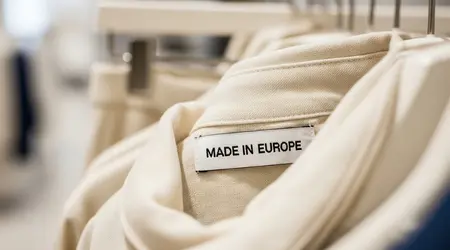
Made in Europe For many consumers in 2026, it is still considered the ultimate seal of quality for fair working conditions and ecological responsibility.
But behind this prestigious label often lies a bitter reality that we as conscious consumers urgently need to critically examine.
Unfortunately, geographical origin does not automatically guarantee that seamstresses in Eastern or Southern Europe receive living wages or work under safe conditions.
It is time to break through the shiny facade of European production and boldly expose the true supply chains of our clothing.
Important insights into textile production
- Wage gap: Why statutory minimum wages in some EU countries are often far below the actual subsistence level.
- Grey areas: The problem of subcontractors and working from home, which often prevents any control and transparency in the system.
- Legislation: How the EU Supply Chain Directive (CSDDD) will attempt to finally enshrine the responsibility of major fashion brands in law in 2026.
- Consumer protection: Strategies for consumers to effectively distinguish genuine craftsmanship from clever greenwashing through vague origin claims.
Why is geographical origin not a guarantee of fairness?
The label Made in Europe This suggests a level of security that is regularly and systematically undermined by the reality in many Eastern European production facilities.
In countries like Bulgaria or Romania, textile workers often earn less than their colleagues in some Asian production countries, measured against the cost of living.
Brands use the good reputation of Europe as a business location to justify higher prices, while simultaneously exploiting the region's lowest wage standards.
This discrepancy between image and everyday work leads to the concept of "fair fashion" becoming a mere marketing slogan.
What do the labels conceal from us?
Often, only the last essential processing step is carried out in Europe in order to be legally allowed to print the coveted origin label on the garment.
Fabric production or dyeing often takes place under precarious conditions in third countries, without the end consumer ever being aware of it.
A T-shirt can therefore be considered Made in Europe to be declared, even though all the preliminary work took place under inhumane conditions outside the EU.
This lack of transparency harms those companies that are truly committed to fair wages and genuine sustainability throughout the entire supply chain.
++ Fair Fashion for Men 2026: Why the Market Is Still Lagging Behind
How do subcontractors affect transparency?
Large fashion houses often outsource orders to certified factories, which then secretly pass this work on to smaller, uncontrolled subcontractors or even to home-based work.
In these dark corners of the supply chain, social standards and occupational safety measures almost completely disappear behind a curtain of complex contracts.
If a brand doesn't know exactly in which backyard its collection was sewn, it can never guarantee fair conditions.
This loss of control is often intentional, in order to conveniently evade legal responsibility for human rights violations.
What role do minimum wages play in the European fashion industry?
A key problem with products bearing the seal Made in Europe is the massive difference between the statutory minimum wage and the living wage.
In many European countries, the minimum wage does not even cover the most basic costs of rent, food and medical care for a small family.
According to data from the organization Clean Clothes Campaign In some EU countries, the real living wage is two to three times higher than the legally prescribed amount.
Therefore, anyone who only pays the minimum wage may produce legally, but morally speaking, they are far from producing under fair and just conditions.
See also: How you can shop sustainably, regardless of the season
Why is the legal standard insufficient?
Laws often lag behind economic reality, especially in regions desperately trying to remain attractive as low-wage locations for the global fashion market.
Governments fear that if brands demand higher wages, they will immediately relocate to even cheaper neighboring countries, resulting in job losses.
This „race to the bottom“ is taking place in the heart of Europe and affects millions of mostly female employees in the garment industry.
Without consumer pressure on brands to voluntarily pay more than the minimum, this fatal vicious cycle will never end.
See more: Sustainable swimwear: Swimming in an environmentally friendly way
What does this mean for pricing?
When a luxury item is considered Made in Europe When a product is sold, the high selling price usually goes into marketing and high store rents instead of wages.
Unfortunately, the price of a garment is not a reliable indicator of the fair treatment of the people who created it with their own hands.
We must understand that fairness is a conscious decision by company management that must go far beyond simply complying with local minimum standards.
Only brands that disclose their payroll calculations will earn our trust and our hard-earned money in 2026.
How do we recognize genuinely fair production in Europe?
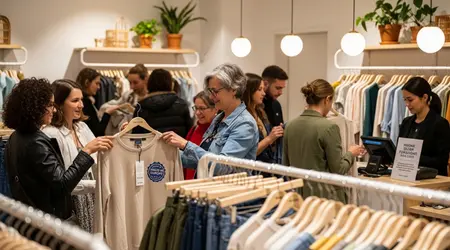
The mere statement Made in Europe That is no longer sufficient; we need to look for certified standards such as GOTS or Fair Wear Foundation.
These organizations conduct independent inspections that go far beyond the superficial legal requirements of the respective production countries and offer genuine security.
Transparent brands also often publish lists of their factories and provide insights into local working conditions through photos or detailed sustainability reports.
True fairness requires no secrets, but rather an open dialogue with producers and customers about the challenges of the modern textile industry.
Why are certifications so important?
Certificates act like a compass in a sea of greenwashing promises by establishing objective criteria for ecological and social justice.
They force companies to disclose their entire supply chain, right back to the fiber source, and to have it regularly and critically assessed by external auditors.
Without this independent validation, the statement remains Made in Europe a mere assertion intended, in the worst case, to distract from grievances.
Look for labels that not only protect the environment, but also explicitly protect the social rights of workers.
What can we do as consumers?
Actively question where the materials come from and how much the seamstresses actually receive for their valuable work at the end of the process.
Use apps or platforms that rate fashion brands according to their social responsibility, thus clearing away the jungle of marketing promises for us.
Every purchase is a vote about the world we want to live in tomorrow and about the conditions under which other people work.
Don't we all have a responsibility to look closely before we hang a new item in our wardrobe and thus support the system?
Comparison of wage standards in the European textile industry (2026)
| country | Statutory minimum wage (net) | Estimated living wage (needs) | Difference (gap) |
| Bulgaria | approx. €450 | approx. €1,100 | – 59% |
| Romania | approx. €510 | approx. €1,250 | – 59% |
| Portugal | approx. €850 | approx. €1,400 | – 39% |
| Italy | approx. €1,100 (according to the collective agreement) | approx. €1,800 | – 39% |
| Germany | approx. €1,450 | approx. €2,100 | – 31% |
An appeal for conscious consumption
The realization that Made in Europe The fact that this is not an automatic license for ethical behavior marks a turning point for the sustainable fashion movement.
We have seen how wage gaps and subcontracting chains can threaten the moral integrity of European labels.
But through knowledge, targeted inquiries, and trust in independent certifications, we regain the power to change the system for the better.
Fairness is not a geographical location, but a lived attitude that we actively shape through our daily purchasing decisions.
Let us choose fashion that not only looks beautiful, but also respects the dignity of those who created it for us.
Have you ever had bad experiences with supposedly fair fashion from Europe, or do you still blindly trust the label? Share your experiences in the comments!
Frequently Asked Questions (FAQ)
Is clothing from Europe always better than from Asia?
Not necessarily. A well-controlled factory in Vietnam can offer better conditions than an exploitative workshop in Italy.
It always depends on the specific factory and the control mechanisms of the respective brand, not just the continent.
Why does fair trade clothing from Europe cost so much more?
True fair production includes living wages, safe workplaces and often higher quality materials.
If we pay the true price of labor, the artificially low prices of the fast fashion industry, which are based on exploitation, will disappear.
Does the supply chain law protect against false 'Made in Europe' labeling?
The law is a big step, as it obliges companies to identify and address risks in their supply chains.
It makes companies liable, but implementation and seamless monitoring remain a huge challenge for the coming years.
Can I trust the 'Made in Italy' label?
Italy has a wonderful tradition of craftsmanship, but also suffers from illegal workshops often employing migrant workers.
Look for brands that name their partners and provide information about the factories that goes beyond simply stating the origin.
What is the best strategy for sustainable shopping?
Buy less, but of higher quality, and support small labels that embrace radical transparency.
The seal Made in Europe This should only be the beginning of your research, never the sole reason for a purchase.