
Heat pumps vs. gas heating: Costs, subsidies & environmental impact
Advertisement
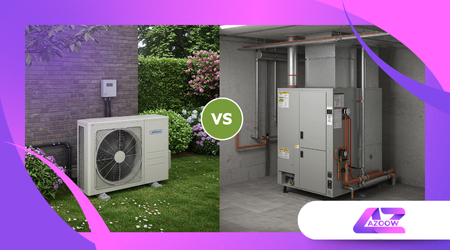
Heat pumps vs. gas heating, which is better?
Choosing a heating system is one of the most long-term and impactful investments a household can make.
While gas heating systems were the standard for decades, heat pumps are becoming increasingly important in times of rising energy prices and climate policy requirements.
But which technology is truly more efficient? How do acquisition and operating costs differ? And what about environmental aspects and subsidies?
This article highlights the most important aspects of these two heating systems and helps to make an informed decision – both economically and ecologically.
Technology comparison: How do the systems work?
Before comparing costs or emissions, it's worth taking a brief look at how they work. Gas heating systems burn fossil natural gas to generate heat. The resulting hot water is distributed throughout the house via a pipe system to heat rooms or provide hot water.
Heat pumps, on the other hand, utilize the environmental energy stored in the ambient air, the ground or the groundwater.
A technical process extracts energy from this natural heat source, converts it into usable heating energy and transfers it to the heating system.
Electricity is required for this – but to a much lesser extent than with purely electrically operated heating systems.
The differences in functionality have a major impact on energy consumption, efficiency and climate footprint – especially in the long term.
+ The advantages of solar energy: Why the investment is worthwhile
Acquisition costs and economic efficiency
A frequently cited argument against heat pumps is the higher investment cost. In fact, this is usually higher than that of a gas heating system, especially if excavation work or a new electrical connection is required.
However, this first impression is misleading when one considers the total costs over a period of ten to twenty years.
Gas heating systems are cheaper to purchase and easier to install. However, they incur ongoing costs due to gas consumption, which is subject to price fluctuations. Furthermore, the additional costs for fossil fuels are steadily increasing due to CO₂ pricing.
Heat pumps, on the other hand, benefit from low operating costs – especially in well-insulated buildings. They require no fuel, produce no combustion emissions, and are becoming increasingly efficient thanks to technological advancements.
Another important point: subsidy programs. In Germany, heat pumps have been subsidized much more heavily than fossil fuel heating systems since 2023. This significantly reduces the initial price difference.
Subsidies and government support
Promoting climate-friendly heating systems is part of German energy policy. While gas heating systems are hardly subsidized anymore and are even to be gradually banned in new buildings, considerable government funds are flowing into heat pumps.
The Federal Funding for Efficient Buildings (BEG) enables subsidies of up to 40% of the investment costs for heat pumps – depending on the chosen type, the seasonal performance factor and the share of renewable energies.
Regional funding programs and subsidized loans through the KfW bank also lower the barrier to entry. Therefore, anyone installing a heat pump today receives not only technological but also financial support – a factor that improves long-term cost-effectiveness.
Environmental impact and CO₂ emissions compared
Perhaps the most crucial question for many households: Which technology is better for the climate? The difference between Heat pumps vs. gas heating This is particularly evident here.
Gas heating systems cause direct CO₂ emissions through the combustion of natural gas – on average about 250 grams of CO₂ per kilowatt hour of heat.
Heat pumps, on the other hand, operate emission-free on-site. While they do require electricity, this can be sourced in a climate-neutral manner – especially with green electricity or a private photovoltaic system. Even with the current German electricity mix, a modern heat pump produces less than half the emissions of a gas heating system.
Furthermore, CO₂ emissions decrease further as the electricity becomes greener. This makes heat pumps significantly more climate-friendly in the long term – and better equipped to meet future environmental regulations.
Durability and maintenance: What can owners expect?
An often underestimated factor when choosing a heating system is the long-term maintenance effort. While gas heating systems require regular maintenance – including burner inspection, exhaust gas monitoring, and cleaning – heat pumps require significantly less technical support.
Since no combustion takes place, many wear parts are eliminated, which has a positive impact on lifespan and operating costs. High-quality heat pumps achieve an operating life of 20 to 25 years with minimal maintenance.
Gas heating systems typically have a shorter lifespan and require more frequent repairs, especially older units. For those prioritizing long-term stability, heat pumps offer a robust and reliable system – also from a maintenance perspective.
Comparison at a glance: Heat pumps vs. gas heating
The following table shows the most important differences between the two heating systems in direct comparison:
| criterion | heat pump | Gas heating |
|---|---|---|
| Acquisition costs | High (10,000–25,000 €) | Lower (7,000–12,000 €) |
| Operating costs | Low (depending on the electricity tariff) | Medium to high (depending on gas price) |
| maintenance | Low (no combustion) | Regular maintenance required |
| CO₂ emissions | Low (almost zero with green electricity) | High (approx. 250g CO₂/kWh) |
| Financial support | High (up to 40 % grant) | Little or no funding |
| life | High (approx. 20–25 years) | Medium (approx. 15–20 years) |
| Future security | Very high | Decreasing (increasing restrictions) |
This overview illustrates how much the two systems differ from each other – also economically.
Conclusion: Which heating system is suitable for which household?
The choice between a heat pump and a gas heating system should always be considered in the context of one's own life situation and future plans. While gas heating systems may appear more cost-effective at first glance, they entail higher operating costs, increased taxes, and a poorer environmental footprint in the long run.
Heat pumps, on the other hand, offer a sustainable, government-subsidized solution that is particularly worthwhile in new buildings and renovated older buildings. While they require a higher initial investment, they pay for themselves through low operating costs, their long lifespan, and independence from fossil fuels.
Anyone planning to modernize their home in the coming years will find that choosing a heat pump is not only a future-proof but also a climate-friendly decision. It represents a shift towards more efficient, clean, and intelligent energy systems that meet the demands of sustainable building and living.
Furthermore, you actively contribute to reducing emissions, increase the value of your property, and benefit from political frameworks that clearly favor renewable technologies. Acting today saves money and resources tomorrow.
FAQ: Frequently asked questions about heat pumps vs. gas heating
1. Can a heat pump also work efficiently in an old building?
Yes, if the insulation is improved and a surface heating system (e.g., underfloor heating) is present or retrofitted. Special high-temperature heat pumps are also now available.
2. How much does the electricity consumption of a heat pump cost per year?
This depends on the size of the house, its insulation, and the type of appliance. On average, electricity costs range between 500 and 1,200 euros per year.
3. Will a gas heating system need to be removed soon?
For existing buildings, there are currently still transitional periods. However, the installation of fossil fuel heating systems in new buildings is being increasingly restricted.
4. Is a combination of heat pump and photovoltaics worthwhile?
Yes. Using your own solar power significantly reduces the operating costs of the heat pump and makes you more independent from the electricity market.
5. How loud is a heat pump?
Modern appliances are relatively quiet, especially with good planning and soundproofing measures. The noise level is usually between 30 and 50 dB.