
Urban Gardening for Beginners: How to Start Your City Garden
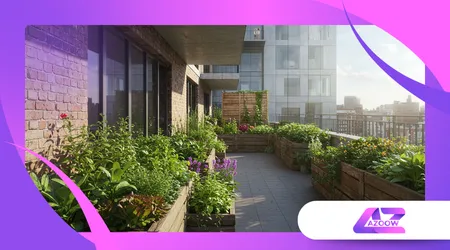
Advertisement
Between asphalt, glass and steel, a quiet dream grows: the desire for more greenery, for vibrant nature, for homegrown food.
Urban gardening offers an answer to this longing – and shows that even small spaces can bring about big changes. It's especially suitable for beginners. Urban Gardening for Beginners the perfect way to bring nature back into everyday life.
It's not about achieving a perfect harvest or becoming a gardening expert. Rather, the focus is on connection – to plants, to the city, and ultimately to oneself. And the best part: anyone can start immediately, regardless of space, experience, or age.
Why urban gardening is so important right now
Cities are growing. According to a UN study, by 2050 almost 70% of the world's population will live in urban areas.
This not only increases the need for living space, but also the distance of many people from natural cycles.
Urban gardening fills this gap in a creative way: It brings fresh food, clean air, biodiversity and community directly into the urban landscape.
One example shows how strong the effect can be: In Munich, a group of local residents transformed an abandoned wasteland into a vibrant community garden.
Today, tomatoes, pumpkins and herbs grow there – and at the same time, a meeting place was created where neighbors became friends.
Anyone who starts gardening in the city quickly realizes: it's about much more than just plants. It's about becoming part of a natural process again, one that is often lost in the hectic pace of everyday life.
++ The use of aquaponics in urban gardens.
The first step: Observe instead of rushing.
Many beginners make the mistake of sowing seeds immediately without knowing the conditions. But urban gardening begins with observation.
How much light reaches the balcony? Are there any windbreaks? Where does water collect? What plants already grow naturally in the area?
A young student from Cologne reported that she initially wanted to grow all kinds of plants on her north-facing balcony.
Only after several failures did she realize that shade-tolerant varieties like chard or lamb's lettuce thrived better. Today, she calls her small, lush garden her personal refuge in the middle of the city.
Urban gardening is like reading a book in a foreign language. Those who take the time to understand the signs will be richly rewarded.
Make the most of small spaces
Space constraints are a reality in cities. But therein lies the creative power of urban gardening. Vertical gardens, hanging pots, raised beds on wheels – there are countless ways to make the best possible use of available space.
A rooftop garden project in Berlin demonstrates how efficiently urban spaces can be used. On just 20 square meters, residents grow lettuce, strawberries, herbs, and beans – thanks to clever trellises and careful planting planning.
Choosing the right plants is crucial: tomatoes love sunny balconies, while herbs thrive even on partially shaded windowsills. And combining different growth habits maximizes the harvest in a small space.
Which plants are suitable for which locations?
| Location | Suitable plants | Special features |
|---|---|---|
| Sunny balcony | Tomatoes, peppers, zucchini | Need for regular irrigation and stabilization |
| Semi-shaded courtyard | Swiss chard, lamb's lettuce, mint | Robust varieties, ideal for lower light conditions |
| Inside windowsill | Basil, cress, sprouts | Year-round use possible, even in winter |
| roof terrace | Berry bushes, pumpkin, beans | Protection from wind is needed; ensure good water supply. |
Easy-care tips for beginners
Gardening means learning. And learning takes time. Especially in the beginning, it's worthwhile to focus on robust plants that forgive minor care mistakes. Lettuce, radishes, chard, or marigolds are considered reliable companions on the path to becoming a successful urban gardener.
Regular, but not excessive, care is also important. Waterlogging is just as harmful as drought stress. Mulching can help retain moisture in the soil and reduce weeds.
And: Patience pays off. Plants don't grow faster if you observe them every day – but they thrive better when they are cared for with attention rather than impatience.
Isn't it fascinating how something as small as a seed can bring so much joy?
The social side of urban gardening
A city garden is rarely just a place for growing things. It quickly becomes a meeting place, a learning space, a field for experimentation. Anyone who joins a community garden or shares a small plot with friends experiences how much exchange and cohesion can arise from gardening together.
In Frankfurt, an urban gardening project evolved into a network that organizes workshops, harvest festivals, and educational programs for schools. What began with a few raised beds has grown into a movement that actively improves the urban climate and revitalizes neighborhoods.
Urban gardening is therefore not only a personal enrichment – but also a political act. For more greenery, more community spirit and a more livable city.
Conclusion: Your garden, your city, your beginning
Urban Gardening for Beginners It's a way back to nature – and at the same time a step towards a new form of urban living. It doesn't require a perfect plan, a huge area, or a large budget. It only requires the willingness to begin.
A few pots on the windowsill, a raised bed in the courtyard or a small corner on the roof terrace are enough to change one's surroundings and one's own awareness.
Ultimately, it's not just about tomatoes or lettuce. It's about the feeling of being part of a living system again. About the joy of growth. About the courage to create something wonderful from very little.
And who knows – maybe now is the perfect moment to plant the first seed.
FAQ: Frequently asked questions about urban gardening for beginners
1. Do I need special soil for urban gardening?
Good potting soil is sufficient for beginners. Those who garden for longer can use special mixes for vegetables or herbs to achieve optimal results.
2. How much time should I plan for care?
Just 10 to 15 minutes a day is enough. Watering, observing, and occasional deadheading will keep the plants healthy.
3. Can I grow things in winter too?
Yes. Microgreens, sprouts and some hardy herbs can be cultivated on windowsills all year round.
4. Is a raised bed worthwhile on small balconies?
Absolutely. Raised beds offer greater planting depth, better protection against pests, and can be designed to save space, even in very small areas.
5. How can I garden sustainably without spending a lot of money?
Many materials, such as crates, buckets, or old pots, can be upcycled. Swapping seeds and seedlings with neighbors also saves money and strengthens the community.