
The use of aquaponics in urban gardens.
Advertisement
Aquaponics has emerged as an outstanding method for sustainable food production, especially in urban gardens.
This innovative system combines Aquaculture, that is, the breeding of fish, with Hydroponics, the cultivation of plants without soil. This makes it possible to efficiently combine fish and plants while conserving resources.
Since 2013, a remarkable Aquaponics-A garden in the Union district of Dortmund, which produces fresh food on an area of approximately 20 square meters.
In recent years, awareness of the benefits of Aquaponics urban gardens increasing, as they not only provide fresh products but also contribute to the greening of the urban environment.
The AquaponicsA workshop at the Gustav-Heinemann-Comprehensive School has shown how practical and educational this system is, and offers students the opportunity to gain direct knowledge about how aquaponics works.
Furthermore, the proGIreg project has proven that aquaponics can play a key role in the regeneration of post-industrialized areas.
It is clear that aquaponics is not just a trend, but an important element of future urban agriculture strategies that are looking for solutions to food supply in cities.
What is aquaponics?
Aquaponics is a sustainable agricultural system that Aquaculture and Hydroponics connects them. This method is based on a closed system. Nutrient cycle, in which fish waste serves as a nutrient source for plants. In return, the plants help to purify the water before it is returned to the aquaculture process. Aquaponics Definition This describes a symbiotic relationship that supports both fishing and plant cultivation.
This technique has been practiced in many cultures for thousands of years. However, the idea of combining the two systems is relatively new. In the USA, communities of so-called "hip bioponics" farms are flourishing, while in Australia, smaller "backyard aquaponics" farms are gaining popularity. In Europe and North America, however, there are challenges, as conventional agriculture often relies on almost dead soil is based on.
The Chinese "rice fish" system and a few tropical aquaponics farms in Hawaii are the only economically successful examples in the industry. Nevertheless, aquaponics continues to develop worldwide, with projects like INAPRO being researched in temperate to subtropical climates. In Germany, there are only a few experimental facilities, but initiatives and educational institutions like the Smartfish Academy In Eberswalde, they make important contributions to the training of future aquaponics enthusiasts.
The profession of Aquaponics Aquaponics is not currently officially recognized, but a dedicated community of biologists, farmers, and self-sufficient growers has formed around it. In Berlin, companies like Topfarmers are working on developing nitrogen balance criteria based on regional hydroponic systems from the GDR era. To improve the sustainability of aquaponics, it is crucial that techniques and interrelationships continue to evolve and be learned.
| category | Details |
|---|---|
| Aquaculture | Fish farming as part of the aquaponics system |
| Hydroponics | Growing plants in water without soil |
| Nutrient cycle | Recycling of nutrients between fish and plants |
| Sustainable agriculture | Environmentally friendly and resource-saving cultivation system |
| Education | Initiatives for the training of future aquaponics enthusiasts |
The advantages of aquaponics
Aquaponics technology combines hydroponics and aquaculture and offers numerous advantages. Advantages of aquaponicsThese systems enable a significant increase in yield compared to conventional farming methods. In urban areas, available space is used more efficiently, allowing more food to be produced in a smaller area. Urban gardens benefit from vertical farming, which optimizes land use.
A key feature of this method is the strong Water savingEstimates show that aquaponics systems require up to 901 TP3T less water than traditional agriculture. This impressive resource conservation results from the closed-loop system, in which fish waste serves as natural fertilizer for the plants. This eliminates the need for additional synthetic fertilizers.
The Advantages of aquaponics Furthermore, these measures extend to reducing CO2 emissions. Local production of fresh food in urban areas can shorten transport routes. This not only contributes to reducing emissions but also promotes sustainability in food production.
The switch to aquaponic systems offers not only ecological but also economic advantages. The ability to grow fresh produce year-round, regardless of weather conditions, strengthens local food security. Aquaponics has the potential to make a significant contribution to the development of sustainable urban food production and thus improve the quality of life in cities.
| Advantage | Description |
|---|---|
| Increase in yield | High food yield on a small area |
| Conserve resources | Reduced water consumption compared to traditional agriculture |
| Water saving | Up to 90% less water requirement |
| Sustainable production | Zero use of synthetic fertilizers |
| Food security | Continuous supply of fresh fish and vegetables |
Aquaponics urban gardens
Aquaponics urban gardens represent an innovative approach to the urban agriculture and promote a conscious urban food productionThey combine vegetable cultivation with fish farming in a closed system that efficiently uses natural resources and thus makes a sustainable contribution to food security in cities.
In cities like Dortmund and Berlin, there are numerous examples of how aquaponics can be successfully integrated into existing urban structures. The Helle Oase project in Berlin-Hellersdorf demonstrates how these gardens foster social cohesion and, above all, bring people together in disadvantaged areas.
The benefits of such initiatives are manifold. Children and young people benefit from practical experiences in food culture, which enhances their understanding of urban food production This fosters their development. Through direct interaction with nature, they experience the connections between cultivation and nutrition firsthand. This not only supports their individual development but also their awareness of sustainable practices.
The introduction of aquaponics in urban gardens can help shorten transport routes and maximize food freshness. The Efficient City Farming (ECF) project is working on developing sustainable systems that can be operated in urban areas to efficiently grow vegetables and fish. This significantly contributes to reducing dependence on external food sources.
Major challenges for Aquaponics urban gardens These problems arise from the pressure on urban green spaces. Often, these areas are threatened with being sacrificed to investment projects, which is why political and administrative support is needed to guarantee the sustainability of such projects. Initiatives like Incredible Edible have already shown how involving the community in urban planning can have a positive impact on urban life.
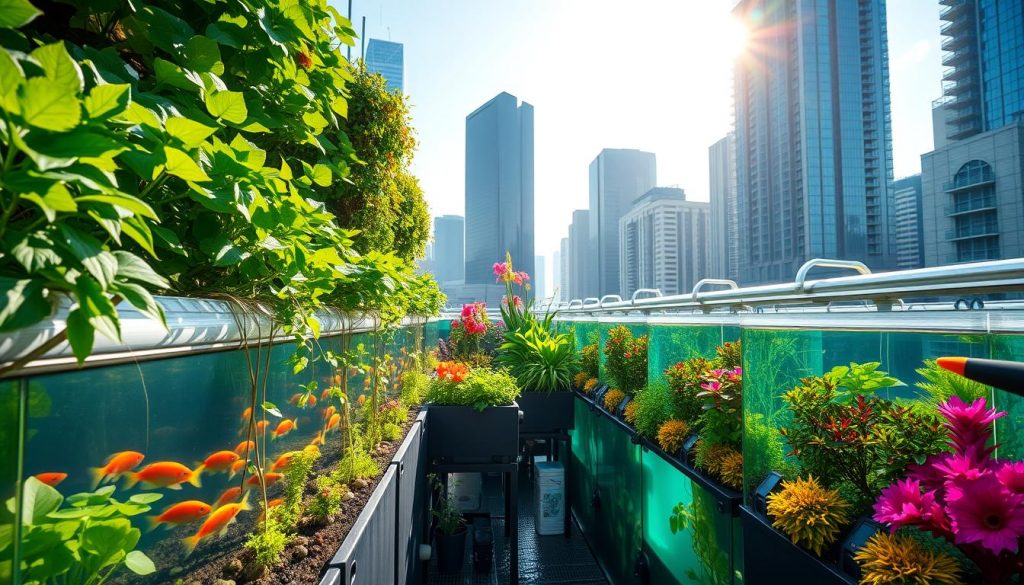
- Strengthening social bonds within the community.
- Improving the quality of life in urban areas.
- Promoting education through sustainable food production.
- Reduced environmental impact due to short transport routes.
Aquaponics technology and systems
Aquaponics systems They combine elements of aquaculture and hydroponics to create a sustainable cultivation method. This innovative technology makes it possible to raise fish and plants in a closed-loop system. Nutrient film technology (NFT) and Deep Water Culture (DWC) are two widely used approaches that help to optimally meet the nutrient requirements of plants.
The Nutrient film technology It works by circulating a thin layer of nutrient solution over the roots of the plants. This method requires less water compared to conventional growing systems. Deep Water Culture In contrast, plants offer roots that are immersed in a nutrient-rich water solution, which promotes rapid growth.
A crucial element for the efficiency of aquaponics systems is the use of pumps and solar panels that provide the necessary energy and maintain circulation. These systems offer significant advantages, such as substantial savings. Increase in yield compared to traditional cultivation systems. Furthermore, this method does not produce any organic wastewater, which represents a significant ecological advantage.
The philosophy behind aquaponics promotes sustainable practices and supports the idea of urban gardening. These vegetable and herb gardens utilize vertical gardening to make efficient use of space and improve the carbon footprint by shortening transport routes for food. The exchange of knowledge and experience in community gardens strengthens biodiversity and fosters social interaction among residents.
| technology | Advantages | Disadvantages |
|---|---|---|
| Nutrient film technology | Water and fertilizer savings | Sensitive to temperature fluctuations |
| Deep Water Culture | Rapid plant growth, high yields | Risk of root rot |
| Vertical gardening | Space optimization, CO2 reduction | High initial investments |
The implementation of these systems represents a promising solution for resource-efficient and environmentally friendly agriculture. Exchange and cooperation between different urban gardening projects not only promote the effectiveness of the technologies but also foster a sense of community in urban areas.
The importance of aquaponics for sustainable cities
Urbanization has resulted in over 501,000 of the world's population living in urban areas. Aquaponics plays a crucial role in addressing the challenges of food security in light of the growing global population and climate change. This innovative method of organic food production It combines fish farming and hydroponic plant cultivation, enabling efficient use of water while providing fresh food in urban environments.
Projects like the urban farming project in Paris, covering an area of 14,000 square meters, demonstrate how Aquaponics Sustainability This can promote urban development. Such projects reduce the need for long transport routes, which significantly lowers CO2 emissions and is one of the main factors in creating sustainable cities. In Germany, there are already over 100 "edible cities" that follow this approach and strengthen local food sovereignty through innovative urban gardens.
Future developments in urban farming both support the trend towards regional food supply and offer solutions for space constraints and lighting limitations, often through the use of artificial light sources. Aquaponics systems thus not only contribute to ecological food production but also raise awareness of the importance of food sources located close to consumers.
Setting up an aquaponics system in an urban area
Successfully setting up an aquaponics system in an urban area requires careful planning. First, the space requirements must be considered. Existing areas must be used efficiently to successfully cultivate both plants and fish. urban gardening It benefits considerably from models that utilize vertical structures to optimally illuminate the available space.
The selection of suitable plants and fish species is another crucial factor. Commonly recommended fish species include tilapia or pike-perch, while plants such as basil or lettuce are particularly well-suited for this combination. To operate these systems effectively, energy supply and water quality should be continuously monitored. In this context, the use of DIY Aquaponics Instructions are ideal. They give home gardeners the opportunity to design and adapt their systems themselves.
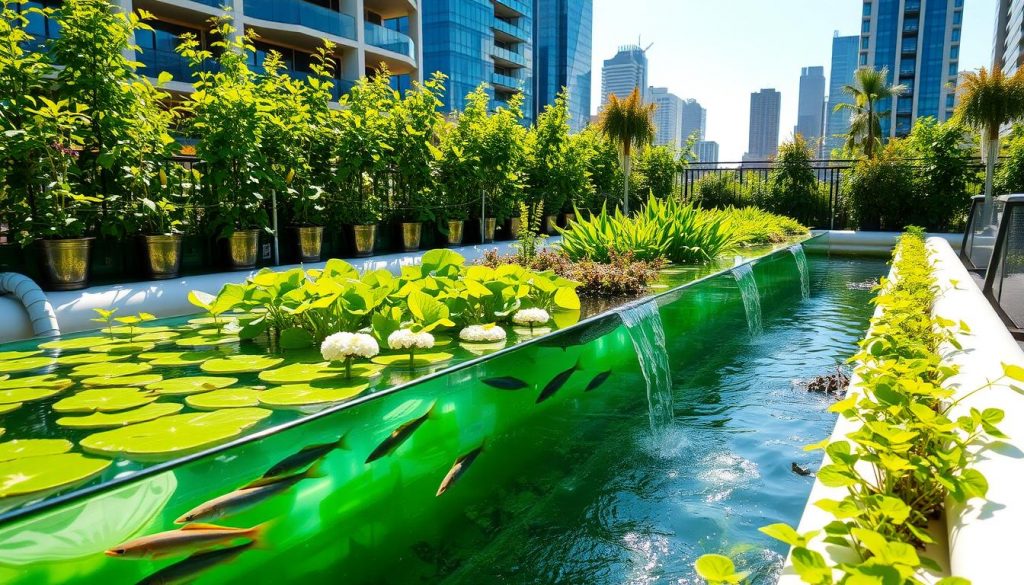
One example of innovative approaches is the FOODCUBE project, which offers modular and scalable solutions to lower the barriers to entry for interested gardeners. Using such systems, water consumption can be reduced by up to 901 TP3T compared to traditional agriculture. Furthermore, urban farming systems often experience yield increases of up to 301 TP3T through precise control of nutrients and lighting.
Here is an overview of important aspects to consider when Setting up aquaponics systems Please note:
| factor | Description |
|---|---|
| Space requirements | Optimal use of available space, ideally vertically |
| Water quality | Continuous monitoring and adjustment are necessary. |
| Fish species | Tilapia or zander are common choices |
| Plant selection | Basil, lettuce, and other fast-growing plants |
| DIY approaches | DIY instructions for individual systems |
| Projects | FOODCUBE provides modular solutions |
Academic and practical approaches
The Aquaponics Research plays a crucial role in the development of sustainable solutions for urban gardening. Academic institutions and non-profit organizations are increasingly involved in this. educational projects, which explore the potential of aquaponics for integration into school curricula. Such projects allow students to learn about innovative cultivation methods and develop an awareness of sustainable agriculture to develop.
Community gardening Aquaponics is a rich source of social learning. Workshops and training programs offer valuable insights that not only impart technical skills but also strengthen the sense of community. Through such initiatives, participants benefit from an experiential approach that promotes the practical application of aquaponics in urban environments.
Collaboration between research institutions and urban gardeners opens up new perspectives for the practical applications of aquaponics. Projects focusing on community gardening Focusing on creating not only food, but also an awareness of ecological connections and the importance of regional food production.
Economic perspectives of aquaponics
The economic aspects of aquaponics offer a promising basis for innovative business strategies in urban agriculture. In urban areas, the implementation of aquaponics demonstrates not only the potential for creating local jobs but also opportunities for developing sustainable business models. These models contribute to improved social integration and living standards.
An example of successful urban agriculture These are community gardens and intercultural gardens. These initiatives not only promote food production but also offer educational and integration opportunities for socially disadvantaged groups. Through practical experience working with nature, interest in sustainable nutrition is fostered, and a change in behavior is encouraged.
The increasing demand for local food, driven by the growing urban population, provides an additional incentive. Projects show that urban gardens These initiatives can significantly improve the quality of life for local residents while simultaneously conserving resources through resource-efficient farming practices. Such initiatives not only support the economy but also contribute to ecological balance.
| aspect | Meaning |
|---|---|
| jobs | Creating local jobs in urban agriculture |
| Education | Educational and integration opportunities through community gardens |
| Environment | Resource-saving cultivation practices and positive ecological impacts |
| quality of life | Improving living standards through urban horticulture |
The potential for economic development in urban agriculture is enormous. Through increased community building and access to environmentally conscious business models, cities can become more vibrant and sustainable.
Challenges in implementation
The implementation of aquaponics systems in urban environments brings various advantages. Challenges of Aquaponics with itself. Among the most common problems are high start-up costs, which often strain the financial planning of the initiators. Technical difficulties Problems often arise during the setup and operation of these systems, as they require both precise control of water quality and a deep understanding of the biological interactions between fish and plants.
Successful aquaponics projects require expertise to manage the complex interdependencies within the system. Furthermore, site selection presents a significant challenge. Some cities offer limited space for implementing these sustainable solutions, which can restrict the realization of the technology's full potential.
The financial aspects Aquaponics also requires careful consideration. In addition to initial investments, operators must also factor in ongoing costs for maintenance, electricity, and water. These factors can be a barrier for many potential entrepreneurs, especially in urban areas where the cost of living is high.
Conclusion
The Future of aquaponics shows promising perspectives for the urban agricultureAquaponics is a technology that combines innovative techniques with healthy food production. By using aquaponics, cities can not only improve the efficiency of food production but also save water and create space for biodiversity. For example, hydroponic systems enable a significant reduction in water consumption, which is particularly important in urban areas.
Furthermore, the implementation of aquaponics systems represents an important step towards sustainable nutrition In light of the challenges facing conventional agriculture – such as climate change and resource depletion – aquaponics offers a solution that helps build resilient food communities in cities. These systems not only provide fresh and locally produced food, but also foster a sense of community through their integration into the social fabric of the city.
Given the significant benefits that aquaponics offers for sustainable urban areas, it is clear that these technologies can play a crucial role in developing effective and environmentally friendly food systems. Future policy strategies should therefore focus on promoting such systems to strengthen urban food networks and improve the quality of life in our cities.
FAQ
What are the basic components of an aquaponics system?
An aquaponics system consists of a fish tank, planting beds, a water pump, and a filter. The symbiotic relationship between fish and plants is crucial for the... Nutrient cycle.
Can aquaponics be implemented in small urban gardens?
Yes, aquaponics is ideal for small urban gardens, Because it requires little space and allows for efficient use of resources. It brings fresh food directly to city dwellers.
Which plants are best suited for aquaponics systems?
Suitable plants for aquaponics are generally leafy greens such as lettuce and herbs, which grow quickly and have low nutrient requirements. Tomatoes and peppers can also be successfully cultivated.
How much water is needed in an aquaponics system?
Aquaponics systems require significantly less water than traditional agriculture. Thanks to the closed-loop system, the water is constantly recycled and only minimally replenished.
Which fish species are suitable for aquaponics?
Among the most common fish species kept in aquaponics systems are tilapia, catfish, and trout. It is important to choose fish species that are compatible with the plants in the system.
How can people promote aquaponics in their community?
People can support aquaponics by participating in workshops, initiating community gardens, or sharing resources and knowledge. Joint projects strengthen the sense of community.
What challenges might arise when operating an aquaponics system?
The challenges include technical difficulties, High initial investments and the need for specific expertise are key factors to consider when planning a system.
How can aquaponics contribute to local food sovereignty?
By producing food directly in urban areas, aquaponics reduces transportation needs and supports the local supply of fresh food, thus strengthening food sovereignty.