
The importance of community gardens in sustainable urban development.
Introduction
Advertisement
Community gardens play a crucial role in sustainability Urban development and contribute to the creation of vibrant urban spaces.
This Urban gardeningThese initiatives not only promote environmental awareness, but also strengthen the social dimension of life in cities.
In view of the rising average annual temperature in Berlin and the increase in hot days, Community gardens More than just green oases; they are essential components in the fight against climate change.
By adapting soil care, gardening activities contribute to increasing the humus content, which supports carbon storage in the soil.
In a time when the frequency of precipitation is increasing in the long term and at the same time the probability of dry periods in summer is decreasing, unsealed surfaces are of particular importance.
Community gardens They promote the infiltration and water storage capacity of the soil, which is beneficial for the urban microclimate.
Children, young people and people with a migration background find safe and natural places to stay in these gardens, which contribute to their social integration.
Introduction
The Introduction into the topic of Community gardens opens up new perspectives on the concept of urban sustainabilityIn Germany, there is an impressive variety of Community gardens, which differ considerably in goals and concepts. These gardens offer a solution for the challenges, which are associated with the rapid growth of urban areas.
The size, location, and condition of community gardens vary considerably. Some community gardens spark interest among citizens and foster participation and social engagement. Diverse usage and design options offer participants the chance to be active individually or collectively. Raised beds, traditional gardens, and other innovative planting systems enable successful gardening even in urban environments.
The number of gardens and the socio-cultural composition of their users are heterogeneous. This leads to a wealth of experience in establishing and developing these projects. Official contact persons in cities such as Stuttgart, Cologne, Berlin, Dresden, and Dortmund can assist in the search for suitable plots. It is advisable to contact them as early as the initial planning stages. Introduction The project aims to identify local conditions and plan the necessary resources.
The role of community gardens in urban spaces
Community gardens play a crucial role in urban spaces, not only by providing a habitat for children but also by serving as a natural environment for children and young people. biodiversity These gardens not only contribute to the environment but also serve as meeting places for social interaction. They reflect a growing interest in community gardening and the positive perception of such initiatives in society. The history of community gardens dates back to the mid-1990s, when the first garden of this new type was created in Göttingen.
Between 2012 and 2015, a study was conducted that examined the importance of community gardening projects in the Urban development from German metropolitan areas. At that time, community gardens were still relatively rare. In the following years, however, their number increased significantly, especially in cities like Berlin and Stuttgart, where more than 500 urban community gardens exist.
The launch of an action guide in July 2015 indicated that the need for structured support had been recognized. Municipal gardening coordinators and roundtables have proven effective in promoting such projects. One example is the Himmelbeet community garden in Berlin, which impresses with its size and social value. Around 1,700 kg of vegetables are produced here annually, and the estimated social benefits for the surrounding community amount to approximately €1.5 million.
Community gardens also offer a platform for intercultural exchange by bringing together people from diverse backgrounds. This interactive dimension is particularly valuable in densely populated urban areas, as it creates opportunities for environmental education and cultural events. The positive influence of community gardens on the Urban development This is evident not only in social aspects, but also in ecological benefits, such as the reduction of CO2 emissions and the improvement of water retention in urban areas.
| aspect | Community garden Himmelbeet |
|---|---|
| Area | 1,700 m² |
| Annual vegetable production | 1,700 kg |
| Market value of the harvest | at least €2,200 |
| CO2 reduction | 200 kg/year |
| Social value | approximately €1.5 million |
The connection between community gardens and sustainable urban development
Community gardens play a crucial role in sustainable urban development. These urban gardens not only promote the greening of urban landscapes but also actively contribute to improving the quality of life in cities. Urban gardening represents a tool that links different aspects of urban development.
Studies show that community gardens can have positive effects on the social, economic, and ecological dimensions of urban development. Transforming unused spaces into active gardening projects allows citizens to get involved and actively shape their environment. Such engagement fosters social cohesion and strengthens neighborhood ties.
Another important aspect is the contribution of community gardens to promoting a sustainable lifestyle. By offering fresh food right on people's doorsteps, not only is dependence on industrially produced food reduced, but also the carbon footprint. At a time when it is predicted that by 2050 almost 70 percent of the world's population will live in cities, the creation of sustainable urban spaces is essential.
Integrating community gardens into municipal strategies offers a cost-effective way to revitalize urban spaces. With minimal financial investment, unattractive plots of land can be transformed into supportive and productive green spaces. These initiatives demonstrate the potential of urban gardening as an essential component of sustainable planning.
Ecological benefits of community gardens
Community gardens offer a multitude of ecological benefits that are of great importance in urban areas. They contribute to increasing the biodiversity They contribute by creating valuable habitats for insects, birds, and small mammals. These gardens act as green oases that not only increase biodiversity but also improve the microclimate.
A significant advantage of these gardens is their ability to store carbon. Growing plants in community gardens creates a natural carbon sink, contributing to climate change mitigation. Furthermore, they help reduce urban heat islands by lowering ambient temperatures through their vegetation.
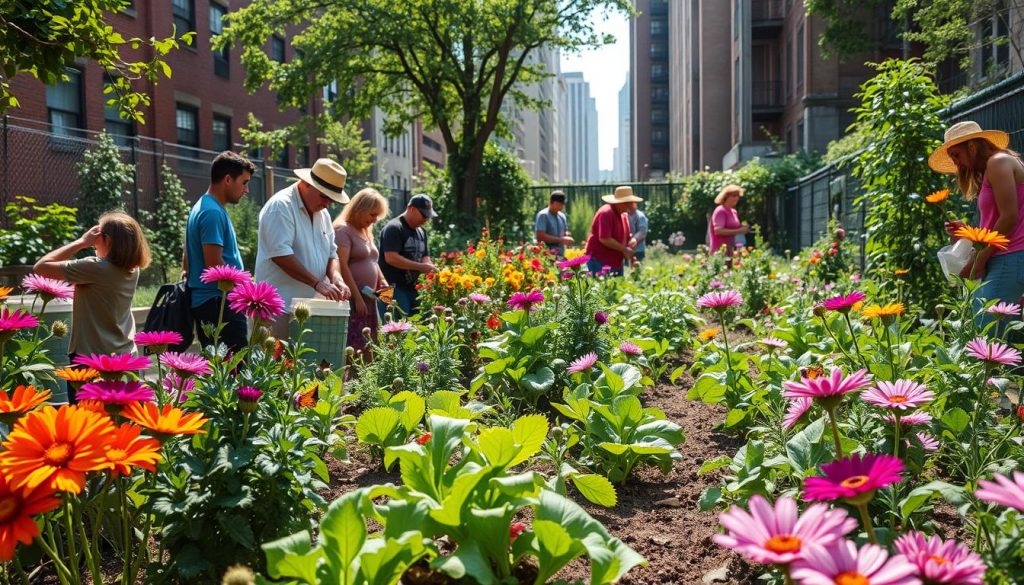
Community gardens also make a valuable contribution to flood control. They act as buffer zones that can absorb heavy rainfall events, thus reducing flooding in urban areas. By collecting and storing water in these gardens, local water quality is improved and the water demand in the surrounding area is reduced.
The benefits extend beyond the plants themselves. Growing your own food in community gardens significantly reduces transportation emissions, which has a positive impact on the environment. The harvest remains more nutrient-rich because it is consumed immediately, resulting in less vitamin loss. This not only promotes health but also fosters an appreciation for natural foods.
In summary, community gardens not only offer valuable recreational space in urban areas, but also essential ecological advantages, which improve the biodiversity and contribute to the quality of life.
Social dimension of community gardens
Community gardens play a significant role in the social dimension of urban spaces. They not only provide a space for growing plants, but also foster interaction between neighbors. Through various activities and events, these gardens strengthen community spirit and facilitate cultural encounters.
In cities like Frankfurt and Offenbach, community gardens enjoy a high level of acceptance among residents, reflected in low rates of vandalism and theft. Neighbors experience the opportunity to share produce with others as a positive aspect, where gardening together fosters social interaction. Such initiatives not only promote community self-sufficiency but also strengthen social cohesion.
One example is intercultural gardens, which function as integration projects. These community gardens contribute to the realization of the United Nations' Agenda 21 by bringing together people from different cultures. In cities like Göttingen, the first "International Gardens" were established to help refugees integrate into society.
Economic aspects of community gardens
Community gardens offer significant advantages. economic advantages, which have a positive effect on the local economy These green oases contribute to the provision of organic products and reduce dependence on industrial food producers. Growing food in community gardens reduces transportation costs. This is both environmentally friendly and cost-saving for consumers.
Since 2013, the number of registered community garden projects in the Ruhr region has increased from 10 to 50 by 2019. This demonstrates the growing interest in urban gardening and the economic boost that community gardens provide. Such projects create jobs in the region. neighborhood and thus promote the local economy.
Real estate companies like GEBAG actively support community gardens to promote social cohesion in rental communities. This collaboration between the companies and the community gardens demonstrates the importance of these initiatives for strengthening the local economy. More information about the benefits which illustrate this important connection.
In addition, community gardens contribute to the revitalization of neglected areas. These measures not only offer an improved quality of life for residents but also create economic opportunities for local businesses. The increase in community garden projects demonstrates how citizen initiatives can positively transform the economic landscape in structurally weak urban areas.
| Economic aspects | Description |
|---|---|
| Organic products | Availability of local and fresh fruit and vegetables |
| Reduced transport costs | Minimizing logistics costs through localization of production |
| Job creation | Creating jobs in neighborhoods through garden projects |
| Strengthening the local economy | Support and activation of local businesses and supply chains created through community gardens |
The different forms of community gardens
Community gardens are characterized by their diversity and can be offered in various forms. Types of community gardens are numerous and range from intercultural gardens to special initiatives such as Guerrilla gardening. Each type of garden has its own objective and approach, which takes into account the needs of the respective community.
One particularly interesting model is the intercultural community garden, which brings together people from different cultural backgrounds. These gardens not only promote social cohesion but also take long-term responsibility for integration and exchange between cultures. Urban gardening In Germany, it has gained popularity since the late 1990s, with many initiatives emerging in cities such as Munich and Berlin.
One example of this is the Himmelbeet community garden in Berlin, which has established itself in a socially disadvantaged urban area to unite neighbors and people from different social classes. The mobile gardening initiative Kölner Neuland e. V. is another example of this. Urban gardening, which is supported by local foundations.
| type | Goals | Examples |
|---|---|---|
| Intercultural gardens | Integration, exchange of cultures | Himmelbeet (Berlin) |
| Guerrilla gardening | Poaching and improvement of fallow land | Private initiatives in urban areas |
| vegetable gardens | Support from Urban gardening | Munich (21 herb gardens since 1999) |
| Therapy gardens | Therapeutic work | Psychosocial institutions |
In addition, we offer Guerrilla gardening These projects offer an exciting perspective for actively utilizing unused spaces in urban areas. Through creative and often unconventional measures, these initiatives transform neglected places into flourishing gardens. The success of such projects contributes to improving the quality of life in cities.
Overall, the diversity of Types of community gardens It not only promotes biodiversity but also contributes to ecological sustainability and the strengthening of communities in urban areas. Each model has its own significance and plays an essential role in the development of vibrant, interactive neighborhoods.
Importance for climate protection and climate adaptation
Community gardens make a valuable contribution to climate protection and to Climate adaptation in urban areas. These gardens not only promote biodiversity but also actively contribute to soil conservation. They store more carbon in cultivated soils, which helps reduce greenhouse gas emissions. By using compost instead of peat-based soils and harmful chemical fertilizers, community gardens support sustainable farming practices that reduce environmental impact.
Community gardens function as urban cool islands in densely populated inner-city neighborhoods. They help mitigate the effects of heat waves by providing shade and generating cool air. Furthermore, they reduce damage from heavy rainfall events through rainwater infiltration. This represents an important form of adaptation to changing weather patterns, which are exacerbated by climate change.
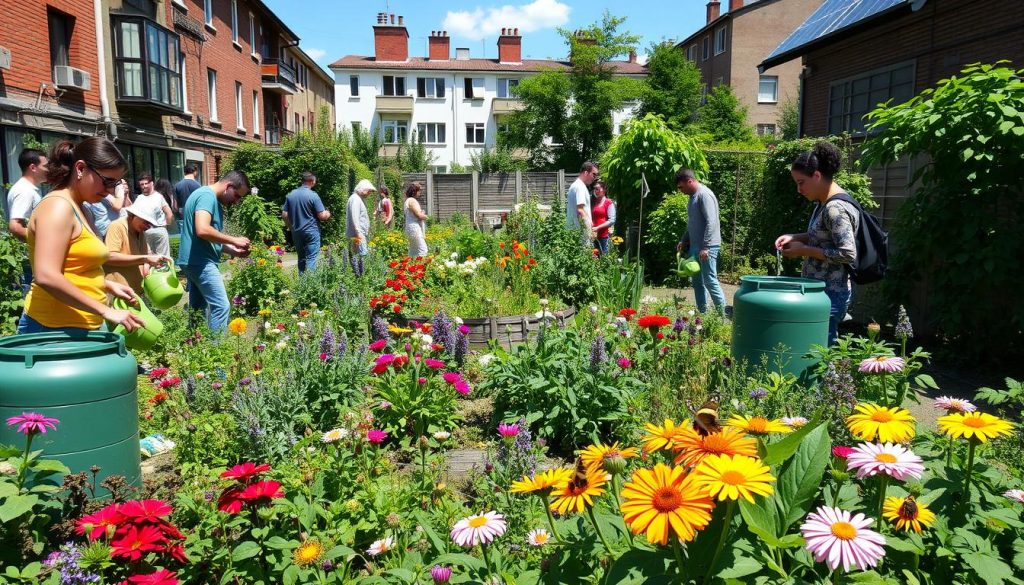
Furthermore, many community gardens utilize rainwater harvesting to minimize water consumption for irrigation. This targeted use helps conserve valuable drinking water while simultaneously providing access to healthy, locally produced food. Networking edible urban projects not only improves the quality of life for city residents but also strengthens their resilience to climate change.
Attention is also paid to the numerous activities on the topic. climate protection, which have been organized in recent years. The diversity of activities – from the maintenance of gardens in semi-public spaces to environmental education – demonstrates the potential of community gardens to play a significant role in the urban environment. Berlin, as the “capital of community gardens,” sets standards in this area and shows how local initiatives can contribute to the global climate goal.
Successful examples from various cities
Community gardens in cities like London, Berlin, and New York offer numerous Examples for the positive effects of urban gardening. London, with the highest concentration of community gardens in the UK, demonstrates how such initiatives can strengthen local communities and contribute to improving the quality of life.
The organization Social Farms & Gardens has been supporting numerous community projects in London since 1980. One particularly successful initiative is the "Network for Food Production" (Capital Growth). This initiative set itself the goal of creating or strengthening a total of 2,000 new community gardens in London by 2012. This goal was achieved within four years, demonstrating the great need for and acceptance of such projects.
A prime example is the Skip Garden, built on a 27-hectare site in the King's Cross development area in London. It was constructed in collaboration with students from the Bartlett School of Architecture and local volunteers. Here, entirely recycled materials are used to create raised beds and benches, highlighting the importance of circular construction.
The food produced at Skip Garden is organically grown and processed directly on-site in a café. This strategy promotes local food production and raises awareness, especially among children and young people, about healthy eating and the connection to the origins of food.
In Germany, numerous studies show that community gardens can foster a strong sense of community and strengthen civic engagement in their local environment. The integration of people from diverse backgrounds into community gardens plays a crucial role, especially for refugees and newcomers. Children and young people also benefit from the environmental education offered in these garden projects.
| City | Example | Special features |
|---|---|---|
| London | Skip Garden | Use of recycled materials, local food processing |
| Berlin | Various community gardens | Strong integration of neighbors and different cultures |
| new York | Community garden on Staten Island | Involvement of schools and educational institutions |
Challenges in implementing community gardens
Community gardens offer numerous advantages, but face significant challenges. challenges during their ImplementationFunding problems pose a major hurdle, as financial stability often depends on grants, donations, or municipal support. Many community gardens must find creative solutions to cover their operating costs and remain successful in the long term.
Land is a fundamental requirement for any community garden. Unfortunately, community gardens worldwide are under pressure from urban development and land loss. This loss of space limits the possibilities for creating new gardens and puts existing gardens at risk.
Another important aspect is the resources needed to maintain the gardens. Around 301,000 community gardens report insufficient access to water, soil, and compost, which limits their viability. To develop sustainable solutions, new approaches to resource use must be integrated.
Maintaining an active volunteer base is crucial for the longevity of these projects. Approximately 401,000 community gardens experience volunteer burnout within the first three years. Strategies for recruiting and motivating volunteers are essential to ensure continued engagement.
Pests and diseases pose a further risk. Studies show that 60% of the community gardens are affected by such problems at least once per season. Active pest control and well-planned garden design are necessary to mitigate these risks. challenges to cope with.
A clear understanding of the challenges can be fostered through the exchange of experiences within the community. Peer learning through mentoring programs offers a success rate of 751,000 in improving the gardening experience. Communities that regularly host workshops show 501,000 higher participant retention, highlighting the need for proactive educational opportunities.
| challenges | percentage |
|---|---|
| Community gardens under pressure from urban development | 50% |
| Insufficient access to resources | 30% |
| Experiencing volunteer burnout | 40% |
| Community gardens affected by pests/diseases | 60% |
| Success rate in peer learning | 75% |
| Participant retention in workshops | 50% |
The future of community gardens in urban planning
The Future Community gardens play a crucial role in the urban planningAround 1,000 urban community garden initiatives have sprung up in the past two decades. These initiatives demonstrate how community gardens can fundamentally influence the cityscape and social life. Cities like Stuttgart actively support the creation and maintenance of these gardens through special funding programs.
Research projects, such as GartenLeistungen II, empirically demonstrate the value of community gardens. These gardens not only serve as sites of biodiversity but also contribute to food sovereignty. In cities like Bogotá, this topic is being intensively researched to illuminate the transformative role of urban gardens in the context of social and ecological change.
The importance of communication and participation is evident in the collaboration between community garden initiatives and urban planners. Studies show that the monetary value of community gardens for the urban population is considerable. Over 100 community gardens in Berlin produce an annual harvest of approximately 740 tons of food, underscoring the cultural value of these spaces. Many city residents would like to see new community gardens in their neighborhoods.
| aspect | Details |
|---|---|
| Number of initiatives | Around 1000 in the last 20 years |
| Annual food harvest in Berlin | Approximately 740 tons from over 100 gardens |
| Desire for new gardens | 73% of the respondents |
| Cultural value of an urban garden | Values exceeding 1.5 million euros, e.g. Himmelbeet |
| Supporting municipalities | Stuttgart, Karlsruhe, Dresden, Recklinghausen |
The agenda for the Future The social and ecological dimensions of community gardens must be clearly considered. Support from municipalities and active citizen participation make this possible. Implementation of popular ideas such as summer festivals or workshops in these shared spaces.
Conclusion
The importance of community gardens in sustainable urban development cannot be overstated. They not only strengthen social cohesion but also promote ecological stability in urban areas. The results of the conference in Munich, attended by over 200 representatives from initiatives, research institutions, and city administrations, clearly demonstrate that community gardens are integral components of urban living spaces, fostering communal values and environmental awareness.
To advance the concrete implementation and long-term sustainability of these projects, support from policymakers, administrators, and local stakeholders is essential. Successful models such as the community gardens "Capital Growth" in London and "Prinzessinnengarten" in Berlin illustrate how innovative ideas can lead to cooperation between community projects and city administrations, which has a positive impact on... sustainable urban development has an effect.
In conclusion, it can be stated that community gardens are not only worthwhile initiatives, but also strategic elements for promoting an inclusive and sustainable society. urban planningBy contributing to the progress of open space and urban planning Once integrated, they can make a valuable contribution to the quality of life in cities.
FAQ
What are community gardens?
Community gardens are shared spaces in urban areas where people work together to grow plants, especially food, and improve the environment. They promote social interaction, environmental awareness, and local food security.
What ecological benefits do community gardens offer?
Community gardens contribute to increased biodiversity in urban areas, help with carbon sequestration, and can reduce urban heat islands. They act as buffer zones during floods and promote the sustainable use of land.
How do community gardens support the social dimension in urban communities?
Community gardens offer a space for neighbors to meet, exchange ideas, and participate in food safety projects. They foster a sense of community and provide opportunities for cultural exchange.
What economic advantages result from community gardens?
Community gardens offer access to organic produce and reduce dependence on large industrial food producers. They minimize transportation costs and create local jobs.
What different forms of community gardens are there?
The various forms of community gardens include intercultural gardens, Guerrilla gardening and organized community gardens. Each form has its own goals and approaches to meet the specific needs of the community.
How do community gardens contribute to climate adaptation?
Community gardens promote a moderate microclimate and help cities adapt to extreme weather conditions. They also support the reduction of carbon emissions by encouraging the cultivation of local food without long transport routes.
What challenges are involved in implementing community gardens?
Community gardens face challenges such as legal issues, limited access to suitable land, and funding. Overcoming these challenges requires targeted policy measures and community support.
How can community gardens be integrated into urban planning?
Urban planners should give greater consideration to the added value of community gardens for urban life and integrate them into their concepts and strategies in order to create a sustainable urban development to promote.