
Tips on using organic waste as fertilizer in the garden.
Advertisement
The use of organic waste as Fertilizer in the garden It is gaining increasing importance. With the growing interest in sustainable fertilizers, more and more consumers are showing that they appreciate the benefits of organic fertilizer.
This article will highlight various aspects of how to organic waste can effectively transform from his household into fertilizer to Soil fertility to increase and promote healthy plant development.
Through the Application methods such as Composting You can not only reduce waste, but also recover valuable nutrients for the garden.
Organic fertilizers release nutrients over a long period, thus contributing to long-term soil health. Let's explore the various benefits and techniques for using organic waste as an effective fertilizer!
Introduction to the topic of organic waste in the garden
Organic waste play a crucial role in horticulture and contribute significantly to a sustainable agriculture This waste, generated in every household, offers a valuable resource for improving the Soil quality and nutrient supply. By implementing appropriate practices, gardeners can organic waste Use them effectively to increase their garden yields.
Integrating organic waste into the garden's nutrient cycle not only promotes plant growth but also supports the health of the ecosystem. Gardeners can achieve this by... Composting These materials create a natural source of fertilizer that revitalizes the soil while simultaneously reducing the amount of waste that ends up in landfills.
The composting process typically takes about 6-12 months, depending on factors such as the type of material and weather conditions. An ideal compost heap should consist of a balanced mixture of "brown" (carbon-rich) and "green" (nitrogen-rich) materials.
These practices not only support the horticulture, but also promote a sustainable agriculture By reducing methane emissions and maintaining healthy soils. It's time to recognize the benefits of organic waste and start using it in your own garden.
Advantages of using organic waste as fertilizer
The Advantages of organic fertilizers They are diverse and contribute to the development of healthy plants. Organic waste improves the Soil qualityby improving the structure and water retention capacity of the soil. These factors are crucial for plant growth and vitality.
A key advantage is the slow release of nutrients. Organic fertilizers supply plants with nutrients over weeks, months, and even years. Unlike mineral fertilizers, which are readily soluble salts, organic fertilizers provide nutrients in natural structures. This sustained release of nutrients prevents over-fertilization and protects the plants.
The use of materials such as horn shavings, cow or horse manure not only promotes the Soil quality, but also humus formation. Applying fertilizer such as manure once every three years can help keep the soil fertile. The following is particularly valuable: Application from nettle manure, which is diluted with water in a ratio of 1:20 to 1:50.
Additionally, organic fertilizers support the microorganisms in the soil that are crucial for healthy soil biology. This leads to stronger plants and improved harvest quality. Promoting these microbes contributes to the long-term preservation of the soil. Soil quality and biodiversity.
Finally, the use of organic waste is not only environmentally friendly but also ecologically sustainable. Returning nutrients to the soil supports a regenerative system that is both economically advantageous and promotes healthy plant development. Overall, the use of organic fertilizer ensures a harmonious balance in agriculture.
What is organic waste?
The Definition of organic waste This describes materials that are biodegradable and originate from plant or animal sources. This includes kitchen waste such as fruit and vegetable peels, coffee grounds, and eggshells. Garden waste, such as grass clippings or leaves, also falls into this category. This waste offers great potential for fertilizer production.
When using organic waste in the garden, one often looks at its conversion into compost. The Types of organic waste Organic waste is diverse and ranges from kitchen scraps to garden waste. These raw materials play a key role in creating nutrient-rich soil that promotes plant growth. Organic waste contains essential nutrients such as nitrogen, phosphorus, and potassium, which are vital for plant development.
One example of the use of this waste is the CompostingThis not only reduces waste but also produces valuable fertilizer for the garden. Proper handling of these resources can improve the soil, promote biodiversity, and support a healthy garden.
| Type of organic waste | Examples | use |
|---|---|---|
| Kitchen waste | Fruit and vegetable peels, coffee grounds, eggshells | Composting, mulching |
| Garden waste | Green waste, leaves, clippings | Composting, soil improvement |
| Animal waste | Manure, worm compost | Fertilizer production, soil regeneration |
Tips for collecting organic waste
To collect organic waste, a targeted approach is necessary. Waste separation essential. Proper structuring of the process helps to secure valuable insights. Recyclable materials To use waste efficiently, it's recommended to create special containers for kitchen waste. These containers can be used both in the kitchen and in the garden. Another important point is the use of compostable bags, which significantly reduces the effort involved in collecting waste.
A good collection should primarily include common kitchen waste. This includes:
- banana peels
- eggshells
- coffee grounds
These waste materials are particularly nutrient-rich and provide optimal support for the garden. Garden waste should also be collected regularly. A well-maintained compost heap can be a valuable source of fertilizer. If the goal is to collect organic waste, care should also be taken to ensure a balanced ratio of 'green' and 'brown' materials.
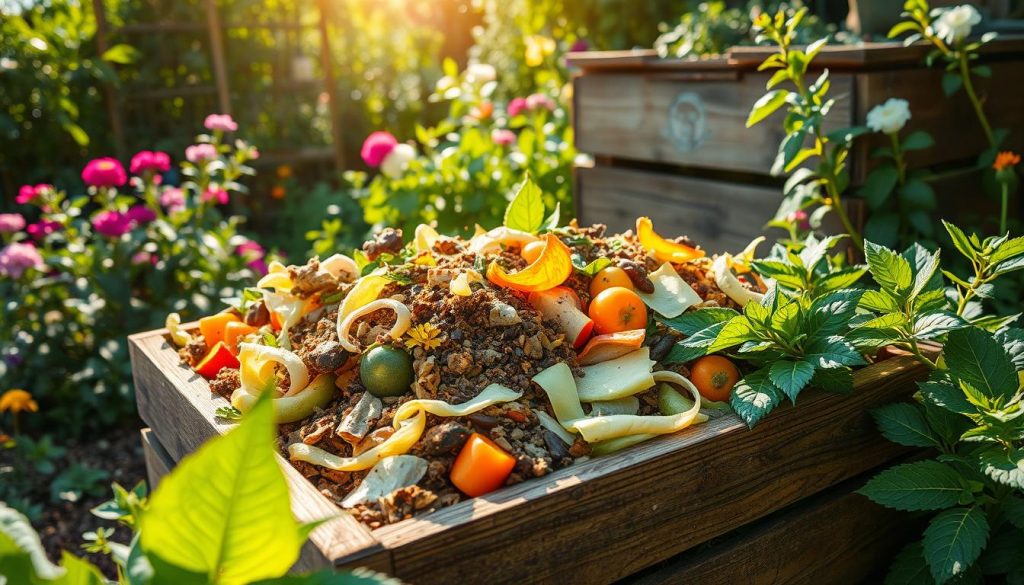
The Waste separation This also offers the advantage that waste can be composted more easily and in a more targeted manner. Over time, this allows for the creation of a nutrient-rich compost. compost This process creates a soil that improves quality and supports plant growth. It also reduces the environmental impact and the amount of waste.
| Waste type | Advantages for compost | Tips for the collection |
|---|---|---|
| banana peels | Rich in humus, promotes roses | Place directly into a compostable container |
| eggshells | They provide lime and improve the soil. | Chop well and scatter over the bed |
| coffee grounds | Contains nitrogen, potassium, and phosphorus | Distribute in a layer on the earth |
Collecting organic waste requires a certain level of organization, but offers numerous benefits for the garden as well as for the environment in general.
Composting as a method for fertilizer production
The Composting is an excellent way to transform organic waste into valuable products organic fertilizer to transform. This sustainable process transforms kitchen and garden waste into nutrient-rich compost um, who the Soil fertility significantly increases. To make compost, different materials should be used, in particular a mixture of brown and green waste, aiming for a ratio of approximately 2:1 or 3:1.
The spontaneous composting process can take up to seven months. During the first three months, it is recommended to turn the compost regularly to promote decomposition. Temperatures of 60-70°C should be reached during this time, which is ideal for killing pathogens. The compost is ready when it has a dark color and resembles forest soil.
The Worm composting This represents a particularly efficient method for decomposing organic waste. The use of worms can accelerate this decomposition. Worm castings are especially valuable, as they are rich in calcium and promote strong cell wall formation in plants.
Another approach is the Bokashi method, which requires a fermentation period of two to three weeks. The resulting compost has a crumbly consistency and a slightly sweet and sour smell. Incorporating wood ash and animal manure such as chicken or horse manure can further increase nutrient uptake and fertilizer value.
Tips for using organic waste as fertilizer in the garden
Using organic waste in the garden not only promotes plant health but also contributes to sustainability. Garden maintenance Here are some practical tips to help you fertilize your garden bed effectively.
- coffee groundsIdeal for plants that require acidic soil, such as hydrangeas and strawberries. Sprinkle it directly around the roots or mix it into the compost.
- banana peelsThese are rich in potassium. Crushed peels can be worked into the soil to promote the growth of tomatoes and other fruit plants.
- eggshellsThey provide valuable lime, which supports the growth of herbs such as thyme and lavender. Crush the peels and add them to the planting hole or compost.
- Plant liquid manureMix approximately 1 kilogram of plant clippings with 10 liters of water and let this mixture ferment for two weeks. The resulting liquid fertilizer is a nutrient-rich fertilizer for many plants.
- Fish wasteThese can be buried about 10 centimeters below the young plants and provide a slow, even release of nutrients.
Proper fertilization is crucial for the growth of your plants. Heavy feeders like potatoes need about 5 to 6 liters of compost per square meter, while medium feeders like spinach only need 3 to 4 liters. Light feeders require just 2 liters per square meter. By using organic waste, you can reduce the need for additional fertilization and improve the nutrient supply to your plants.
| plant | Required amount of compost fertilizer (liters per m²) |
|---|---|
| Heavy feeders (e.g. potatoes, tomatoes) | 5 to 6 |
| Medium feeders (e.g., spinach) | 3 to 4 |
| Low feeders (e.g. ornamental plants) | 2 |
These tips for using organic waste will help you effectively fertilize your garden and ensure its sustainability. Garden maintenance contribute.
Organic fertilizer: types and methods
Organic fertilizer includes various Types of fertilizer, which naturally the Soil fertility increase and support plant growth. Among the most common Types of organic fertilizers These include compost, manure, and green manure. These not only help to improve the nitrogen and phosphorus content in the soil, but also contribute to the long-term health of the soil.
Compost is an excellent method for utilizing organic waste in gardening. Transforming kitchen and garden waste into nutrient-rich compost increases soil humus content and promotes soil life. There you can learn more about the different composting techniques and their properties.
Liquid fertilizers, often made from manure or plant extracts, offer plants a rapid uptake of nutrients. This type of fertilization is primarily used in combination with sustainable fertilization methods as applied in fertigation, where fertilizers are combined with irrigation, significantly increasing efficiency.
Another popular type of organic fertilizer is seaweed fertilizer, which is rich in micronutrients. Types of fertilizer They promote plant growth by providing essential minerals and improve resistance to disease.
| Type of organic fertilizer | Main components | Advantages | Application method |
|---|---|---|---|
| compost | Kitchen waste, garden waste | Increased soil fertility, improved soil structure | Spread on the ground and work in |
| cow dung | Animal excrement | Rich in nitrogen, improves nutrient absorption | Direct application or as liquid fertilizer |
| Green manure | Fast-growing plants (e.g. clover) | Nitrogen fixation, erosion control | Incorporate into the soil after flowering. |
| algae fertilizer | seaweed | Rich in micronutrients, it promotes plant growth | Spray treatment or soil mixture |
The Application this sustainable fertilization methods Organic fertilizers not only improve the nutrient supply to plants but also contribute to environmental protection by reducing the use of synthetic fertilizers. They are more environmentally friendly and promote biodiversity in the soil.
Liquid organic fertilizers
Liquid organic fertilizers offer a simple and effective method of supplying plants with essential nutrients. Their application is straightforward, as they can be mixed directly with water and applied to the plants. These fertilizers consist of 100% organic materials and promote not only plant growth but also soil health.
Compost, for example, can be used in the production of liquid fertilizers. Diluting it with water creates a nutrient solution that is particularly beneficial for many plant species. The most important nutrients in organic liquid fertilizers are usually specified in the NPK ratio. For example, an NPK ratio of 3:4:3 indicates that the fertilizer contains 3 parts nitrogen (N), 4 parts phosphorus (P), and 3 parts potassium (K).
- Nitrogen (N) supports the growth of leaves and branches.
- Phosphorus (P) It promotes root development and accelerates photosynthesis.
- Potassium (K) supports the regulation of water pressure in plants.
- Calcium (Ca) is important for the formation of cell walls.
- Magnesium (Mg) is crucial for the formation of chlorophyll.
The application of these liquid organic fertilizers improves the soil's water retention capacity and reduces irrigation needs. They also exhibit both short-term and long-term effects, making them attractive for home gardens as well as larger cultivated areas. The high solubility of these fertilizers ensures that the nutrients are available within 24 hours of application.
Another advantage is the ecological certification of most organic liquid fertilizers, such as those from HomeOgarden. These fertilizers contain no chemical additives and are safe to use. Regular use promotes the formation of beneficial microorganisms in the soil and sustainably increases soil fertility.
Green manure: Another method for soil health
Green manure represents an effective method for improving the Soil fertility This practice significantly contributes to maintaining soil health. It involves cultivating specific crops. Plants as fertilizerwhich are incorporated into the soil after growth. The use of legumes, such as clover and lupins, makes it possible to fix up to 801 T/T of the required nitrogen from the air. This not only leads to an increase in organic matter in the soil, but also reduces the cost of chemical fertilizers.
Growing green manure crops offers numerous additional benefits. Dense planting can reduce weed growth by up to 701 TP3T. At the same time, a dense plant cover protects the soil from erosion and improves water retention. Phacelia, mustard, and buckwheat are excellent options because they are fast-growing plants that produce abundant biomass.
The correct selection and combination of green manure plants is crucial. Mixed cropping improves soil structure by up to 301 TP3T compared to monocultures and promotes the diversity of soil organisms. These practices not only make the soil more fertile, but also contribute to the long-term improvement of Soil quality A combination of winter rye and crimson clover can increase soil fertility by up to 401 TP3T in the next season, clearly demonstrating its value. Green manure may be.
For a successful Green manure Ideally, green manure plants should be sown 2–3 months before the main crop is harvested. Typical sowing times vary depending on the plant species, with summer sowing from June to August and autumn sowing from August to September being optimal. The benefits of green manure are numerous and range from improving soil structure and increasing humus content to enhancing soil biodiversity.
For detailed information and further tips on green manure, visit [website address]. this page.
Compost tea: A nutrient-rich liquid fertilizer alternative
Compost tea is considered valuable liquid fertilizers, which is produced from the fermentation of compost. This nutrient-rich tea is rich in liquid nutrients and promotes the health of plants and soil. In the Fertilizer production Not only are valuable nutrients obtained, but also beneficial microorganisms that support the growth and vitality of the plants.
To Compost tea To make it, mature compost is mixed with water and left to stand for a few days. This process allows the microorganisms to release the nutrients. The result is a concentrated solution that promotes the growth of healthy plants.
The advantages of Compost tea Its benefits lie in its ability to improve soil structure and increase soil fertility. Regular application can... Soil health parameters It supports this by promoting the lifespan of microorganisms. This contributes to a healthier and more resilient garden.
- Easy to use and manufacture
- Improved nutrient uptake by plants
- Minimal effort and environmentally friendly
The use of compost tea therefore represents an efficient method to utilize the benefits of organic fertilizers. Furthermore, this liquid fertilizers They can be easily used in various garden areas to sustainably supply the plants.
Various organic fertilizers are available commercially.
The Selection of organic fertilizers The range of products available on the market is becoming increasingly diverse, offering gardeners a wide array of options. These organic ready-to-use fertilizers consist of natural raw materials of both animal and plant origin. Here are some of the most common types available commercially:
| Type of fertilizer | composition | Nutrients | Special features |
|---|---|---|---|
| compost | Household waste, garden material | Nitrogen, phosphorus, potassium | Improves soil structure |
| Animal manure | Cow, horse or chicken manure | Varied nutrient composition | Depending on feeding and stable conditions |
| Horn shavings | Crushed horn of animals | 14% Nitrogen | Slow nutrient release |
| Sheep wool fertilizer | Processed sheep's wool | Nitrogen, potassium, phosphorus, magnesium | Long-term effect |
| Liquid organic fertilizers | Plant-based raw materials | Nitrogen, trace elements | Fast effect |
The use of commercial fertilizer This is important for the nutrient supply of your plants. Plants need essential nutrients such as nitrogen, phosphate, and potassium for healthy growth. By using these fertilizers correctly, you can ensure long-term soil fertility.
Particular attention should be paid to the differences between certified organic and natural fertilizers. Certified organic fertilizers guarantee that they contain no harmful substances and are produced in a controlled process. Natural fertilizers, on the other hand, are often made from raw materials that are not strictly regulated, which poses potential risks.
Conclusion
Using organic waste as fertilizer is an excellent way to sustainable fertilization to practice in the garden. By composting and applying natural fertilizers made from plant or animal remains, gardeners can significantly improve soil quality and promote soil life. Unlike mineral fertilizers, organic fertilizer It is slower, but its long-term effect and low risk of leaching make it a more environmentally friendly choice.
The integration of organic waste into the Garden maintenance It not only contributes to the nutrient supply of plants but also maintains the natural soil structure. With a wide variety of organic fertilizer options available commercially, including products from Hack and Solabiol, it's easier than ever to integrate sustainable practices into everyday life. These fertilizers promote humus formation and help to virtually eliminate the need for over-fertilization.
Furthermore, it is important to determine the specific nutrient requirements through soil analysis in order to further optimize the effectiveness of sustainable fertilization. With these practices, gardeners can not only strengthen and nourish their plants but also actively contribute to the environment and reduce their ecological footprint. Switching to organic waste as fertilizer is a step towards a healthier and more sustainable garden.
FAQ
What are the advantages of using organic waste as fertilizer?
The use of organic waste as fertilizer improves soil structure, increases water retention capacity and promotes microorganisms in the soil, leading to healthy plants and sustainably improved harvest quality.
What types of organic waste can be used in the garden?
Organic waste includes kitchen scraps such as fruit scraps, vegetable peelings, coffee grounds, and eggshells, as well as garden waste such as clippings and leaves. These are valuable resources for fertilizer production.
How can I effectively collect organic waste?
It is recommended to separate kitchen waste in special containers and compost garden waste such as leaves and green clippings. Use compostable bags and collect common kitchen waste such as banana peels and coffee grounds.
What is composting and how does it work?
Composting is the process by which organic waste is transformed into nutrient-rich compost with the help of microorganisms. A compost heap should consist of various materials and be turned regularly to achieve optimal results.
How can I use organic waste directly in the garden?
Organic waste can be added directly to the soil. Examples include coffee grounds, banana peels, and eggshells, which benefit certain plants and increase the nutrient content of the soil.
What is green manure and what are its advantages?
Green manure involves growing plants that are subsequently incorporated into the soil. This method improves soil fertility, increases soil bioactivity, and helps reduce weeds.
How do I make liquid organic fertilizers?
Liquid organic fertilizers can be made by diluting compost or other organic materials with water. These fertilizers provide nutrients quickly and are easy to use.
What is compost tea and why is it useful?
Compost tea is a liquid fertilizer produced through the fermentation of compost. It contains beneficial microorganisms that significantly improve soil and plant quality.
Which organic fertilizers are commercially available?
Various types of organic fertilizers are available commercially, including compostable, vegan, certified organic, and natural fertilizers. These can be selected depending on the specific needs of the garden.