
Solar thermal vs. photovoltaics: Which technology is right for which household?
Advertisement
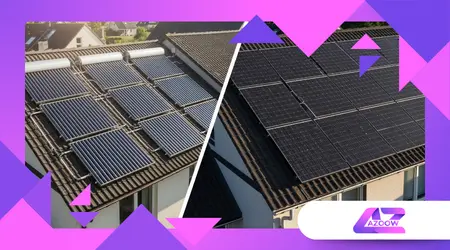
Solar thermal vs. photovoltaics This is the central question for every homeowner who wants to reduce their energy costs and actively contribute to climate protection in 2026.
While the sun tirelessly provides energy, choosing the right technology determines the long-term profitability of your investment on your own roof.
My analysis shows that many households are still hesitant because the differences between heat and electricity generation often remain unclear.
In my opinion, the modern energy transition requires a tailor-made solution that is precisely adapted to your individual consumption patterns and architectural conditions.
How do the technical concepts differ in everyday use?
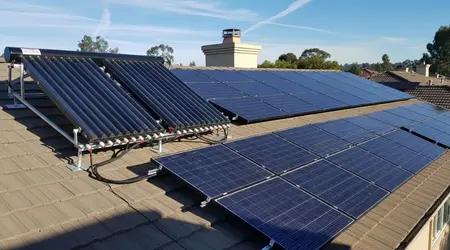
During the debate Solar thermal vs. photovoltaics The primary focus is on converting solar radiation into either thermal energy or usable electrical current.
Solar thermal energy uses collectors to directly heat water for heating and showering, which offers enormous efficiency, especially when hot water demand is high.
Photovoltaics, on the other hand, converts light particles directly into electricity, which you can use for household appliances, heat pumps or your electric car.
This versatility makes solar power the favorite for modern households seeking maximum independence from external electricity suppliers and rising grid fees.
Why is the efficiency higher in heat generation?
Solar thermal systems often achieve an efficiency of over 50 percent, as they transfer the sun's heat energy directly to a medium almost without detours.
In direct comparison Solar thermal vs. photovoltaics The heating variant requires significantly less roof area to generate the same amount of energy for hot water preparation.
This means that if your roof space is limited, a small thermal system can already cover a large part of your heating costs.
Photovoltaics, on the other hand, requires more space, but offers the flexibility to feed excess energy into the grid or to store it in batteries for use at night.
++ Standby power hogs: Which devices secretly consume energy
What role does integration into existing heating systems play?
A solar thermal system can be ideally combined with gas or wood heating systems to reduce fuel consumption in summer to almost zero.
The comparison Solar thermal vs. photovoltaics This shows that the thermal solution often represents a cost-effective and very effective addition, especially in the renovation of old buildings.
However, modern photovoltaic systems are increasingly being coupled with intelligent heat pumps to generate heat indirectly via electricity.
This method will gain importance in 2026, as it combines the advantages of both worlds and completely eliminates dependence on fossil fuels.
What advantages do these systems offer for your finances?
The decision Solar thermal vs. photovoltaics This significantly impacts your monthly liquidity and the amortization period of the entire investment over the next twenty years.
Photovoltaics allows you to avoid expensive electricity purchases through self-consumption, while solar thermal energy directly reduces your gas supplier's or district heating supplier's bill.
Current data from Fraunhofer Institute for Solar Energy Systems (2025) This demonstrates that the costs for PV modules have continued to fall, which massively improves profitability.
Nevertheless, solar thermal energy remains a financially very attractive option for base load supply in buildings with very high hot water consumption, such as multi-generational houses.
Why choose a technology that doesn't fit your lifestyle when the sun offers both options for free?
A comparison Solar thermal vs. photovoltaics is like choosing between a energy-efficient boiler and its own small power plant in the garden.
See more: Why your electricity consumption isn't decreasing despite using LED lamps
How secure is the feed-in tariff in 2026?
While the government compensation for fed-in electricity decreases, the value of self-consumed electricity increases continuously due to general price increases on the energy market.
In the consideration Solar thermal vs. photovoltaics Photovoltaics scores points with the possibility of increasing self-consumption to over 70 percent through load management.
Although solar thermal energy does not offer a feed-in tariff, it directly protects you from the CO2 prices levied on fossil fuels, which will reach new record highs in 2026.
The savings are immediately visible on your heating bill, without you having to worry about complex billing with the network operator.
See also: Heat pump instead of gas heating: How to make the switch
What are the maintenance costs over the years?
Photovoltaic systems are considered extremely low-maintenance, as they have no moving parts and only the inverter needs to be replaced after about 15 years.
In comparison Solar thermal vs. photovoltaics When using thermal systems, you must factor in the regular replacement of the solar fluid and the maintenance of the pumps.
However, these additional costs are often offset by the very long lifespan of the collectors, which can easily last 25 years or more.
A well-maintained thermal plant is a reliable workhorse that delivers consistent yields for decades without major technical surprises.
How do you find the ideal solution for your roof?
The orientation and pitch of your roof play a crucial role in determining whether Solar thermal vs. photovoltaics which is the better choice for you.
While photovoltaics deliver good yields even on east-west facing roofs thanks to modern optimizers, solar thermal energy usually requires a strict south-facing orientation for optimal results.
Shadows cast by trees or neighboring buildings affect photovoltaic modules more than thermal collectors, which is an important selection criterion for difficult locations.
I strongly recommend that you conduct a digital shadow analysis before committing to anything in order to avoid unpleasant surprises when you receive your annual statement.
Why is combining both techniques useful?
Many modern concepts in 2026 rely on hybrid collectors, so-called PVT modules, which simultaneously generate electricity and heat on the exact same area.
This approach ends the dispute Solar thermal vs. photovoltaics, by efficiently and space-savingly combining the advantages of both technologies in a limited space.
Furthermore, the cooling of the PV cells via thermal dissipation noticeably increases the electrical efficiency of the modules on hot summer days.
This is the top tier of solar energy use, but requires a higher initial investment and specialized planning by an experienced energy consultant or specialist company.
What should be considered when planning a heat pump installation?
If you are planning to install a heat pump, the balance shifts in comparison. Solar thermal vs. photovoltaics usually very clearly in the direction of electricity generation.
The photovoltaic system then supplies the necessary drive current to generate cost-effective heating energy for the entire building from the ambient heat.
While solar thermal energy can relieve the heat pump in summer, it often provides too little power in the depths of winter when heating demand is highest.
The combination of PV system and heat pump is therefore considered the gold standard today for the complete decarbonization of single and two-family houses.
Comparison of solar thermal energy vs. photovoltaics (as of 2026)
| feature | Solar thermal energy | Photovoltaics |
| Primary goal | Hot water & heating | Self-generated electrical power |
| efficiency | Very high (> 50%) | Medium (approx. 20-24%) |
| Space requirements | Small (approx. 5-10 m²) | High (approx. 30-50 m²) |
| maintenance | Regular (liquid) | Very low |
| storage | Water tank (inexpensive) | Battery storage (more expensive) |
In summary, it can be said that the duel Solar thermal vs. photovoltaics There is no single winner, but the decision must always be made in the context of your house.
Photovoltaics is the more versatile solution for modern households with e-mobility and heat pumps, while solar thermal energy scores points for its unbeatable efficiency in small areas when it comes to pure heat supply.
The decision to install a solar power system in 2026 is not only an ecological statement, but also an economic necessity to protect oneself against uncertain energy markets.
Use the free energy of the sun to permanently reduce your energy costs and sustainably increase the value of your property.
Ultimately, every installed solar system is an important building block for an independent and green future for your home.
Are you already planning your roof's energy use, or are you still unsure which area to dedicate to which technology? Share your experiences in the comments!
Frequently Asked Questions
Can I combine solar thermal and photovoltaic systems on one roof?
Yes, that is highly recommended; the thermal system takes care of the hot water preparation, while the PV system covers the rest of the household's electricity needs.
What happens to the facilities in the event of hail?
Both systems are very well protected by tempered solar glass; damage from extreme weather events is rare and usually covered by home insurance.
Is photovoltaics worthwhile even without battery storage?
Definitely, because intelligent device management allows you to increase self-consumption even during the day, which noticeably reduces your electricity bill even without a battery.
How long does it take to install a solar power system?
As a rule, specialist companies need two to three days for the installation on the roof and the electrical connection in the basement of a single-family house.
Will there still be subsidies for solar thermal energy in 2026?
Yes, many municipalities and the federal government continue to offer attractive subsidies, especially when an old oil or gas heating system is replaced by a solar-assisted solution.