
Fashion resale platforms: Sustainable or just new consumption?
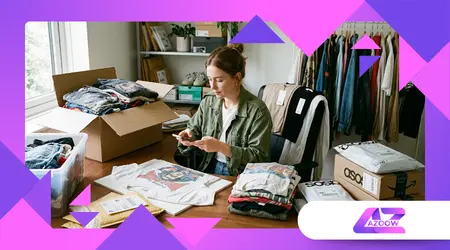
Advertisement
Resale platforms fashion In 2026, they will revolutionize the way we consume, evaluate, and ultimately return clothing to the cycle.
These digital marketplaces promise an ecological salvation by giving unused textiles a second life and drastically reducing the need for new production.
Nevertheless, the critical question arises whether this solves the actual problem of overproduction or merely legitimizes a new, faster form of consumption.
In this report, we examine the complex dynamics between genuine sustainability and the modern urge to constantly re-curate and restock one's wardrobe.
Key points of the analysis
- Circular economy: How reselling extends the life cycle of clothing.
- Rebound effect: The danger that sales will only create space for new fast-fashion purchases.
- Market development: Current trends and technological innovations in the second-hand sector in 2026.
- Consumer behavior: Why the hunt for bargains often overshadows ecological considerations.
What is the concept behind modern resale platforms?
The business model of Resale platforms fashion It is based on the idea that clothing is a currency whose value does not immediately disappear completely through use.
Previously, flea markets were locally limited, but today algorithms connect millions of wardrobes worldwide and optimize shipping routes through intelligent logistics solutions.
Artificial intelligence enables real-time authentication and price estimation, which has massively increased buyer confidence in pre-owned luxury goods.
Platforms no longer just act as intermediaries, but as curators of a global inventory that is constantly growing and adapting to global fashion trends.
How do these digital marketplaces work technically?
Users upload photos, while image recognition software automatically determines the brand, material, and current market value to simplify the sales process for laypeople.
Integrated payment systems hold the money in escrow until the buyer confirms receipt of the goods, which has reduced fraud to a historically low level.
++ Second-hand criticism 2026: When resale becomes problematic
What are the environmental benefits of reselling?
Every second-hand item sold saves thousands of liters of water compared to new production and prevents CO2 emissions from costly manufacturing processes.
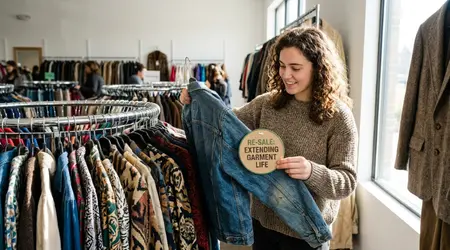
It reduces textile waste in landfills, as high-quality fabrics remain in circulation for longer instead of being disposed of as waste after just one season.
Why do fashion resale platforms sometimes encourage new consumption?
Critics complain that Resale platforms fashion often act as a psychological safety net, justifying the purchase of cheap clothing through the prospect of resale.
Knowing that we can easily resell an item significantly reduces the inhibition threshold for the initial impulse purchase from fast-fashion giants.
This cycle leads to an acceleration of fashion trends, as the platforms constantly need to be fed with new merchandise to remain attractive.
Instead of owning less, we own things for a shorter time, which increases transport emissions through the constant shipping of individual packages across Europe.
See also: What do GOTS, OEKO-TEX & Co. mean? Sustainability labels explained.
Does resale lead to a rebound effect?
Studies show that many users immediately reinvest the proceeds from sales into new clothes, instead of saving the money for other purposes.
The wardrobe thus becomes a continuous flow heater, where the ecological gains are partially negated by the high frequency of the logistics processes.
See more: Sustainable swimwear: Swimming in an environmentally friendly way
How do algorithms influence our purchasing behavior?
Personalized feeds constantly suggest items that perfectly match our style, creating artificial needs that we didn't have before.
It's like an endless catalog that suggests sustainability means constantly buying "new" used items instead of simply being content with what we already have.
Can a system truly be sustainable if it is based on the constant fluctuation of goods and the desire for novelty?
It requires a conscious decision by the user to use the platform as a tool for reduction and not as a playground for the next shopping spree.
What role does quality play in the second-hand market?
Only clothing with a certain basic quality survives multiple owners, which should refocus attention on durable materials and excellent workmanship.
Inferior polyester items often lose their shape after the first wash, making them unsuitable for resale and destined for the trash.
Resale platforms fashion They therefore have the power to reward brands that produce durable products, as these achieve more stable and higher prices on the second-hand market.
Consumers are increasingly learning to view clothing as an investment, which in the long term could herald a move away from the throwaway mentality in favor of timeless classics.
Why are luxury brands gaining ground in the resale sector?
Luxury goods retain their value for decades, making them ideal objects for the circular economy and relativizing the initial purchase price over time.
A high-quality handbag can pass through five hands and still remain functional and aesthetically pleasing, which is simply impossible with cheap goods.
2026 market data: second-hand vs. new goods
| criterion | Fast Fashion New | Resale Platform (Premium) |
| Lifespan (wear cycles) | 7 – 10 | 50+ |
| CO2 savings per part | 0% (Basic) | approx. 80% |
| Resale value after 1 year | < 5% | 40% – 70% |
| Logistics emissions | High (Central) | Medium (Decentralized) |
What does research say about the carbon footprint?
According to a study in the ThredUp Report 2025, buying a used garment saves an average of 17.4 kilograms of CO2 emissions compared to buying a new one.
Nevertheless, we need to optimize the "last mile" of delivery so that the ecological benefit is not lost through inefficient courier services and unnecessary returns.
What does the future of sustainable fashion platforms look like?
By 2026, more and more brands will integrate their own take-back programs directly into their websites to maintain control over the life cycle of their products.
The Resale platforms fashion They are evolving into comprehensive ecosystems that also offer repair services and upcycling instructions to maximize the lifespan of clothing.
We are seeing a shift away from sheer quantity towards curated collections based on longevity and the ethical responsibility of manufacturers.
Technologies such as the digital product passport allow buyers to trace the entire history of a part, from fiber production to the previous owner.
Example: The repair revolution
A leading platform is now offering vouchers for local tailors if a seller reports a damaged item instead of simply discarding it.
This promotes local craftsmanship and ensures that minor flaws do not have to mean the end of an otherwise perfect garment.
Example: Rental models in the resale market
Some vendors combine resale with rental options for special occasions, reducing the need to buy new dresses for just one wedding.
This reduces the pressure on the production of festive clothing, which statistically is worn the least and often gathers dust in the closet.
Conclusion: Responsibility lies with the digital consumer
In summary, resale is a powerful tool for environmental protection, provided it does not serve as a free pass for unlimited shopping.
We need to learn to appreciate clothing again as a valuable commodity that deserves care and not just as a short-term accessory for a social media photo.
Platforms provide the infrastructure, but our intention determines whether we relieve the burden on the planet or simply continue the consumption spiral in a greener guise.
Sustainability begins in the mind and ends in the conscious use of the resources that are already available to us in abundance.
True fashion revolutionaries of 2026 are characterized by choosing and maintaining quality and only buying when absolutely necessary.
Do you primarily use resale platforms for decluttering, or do you constantly discover new "must-haves" there? Share your strategy in the comments!
Frequently Asked Questions (FAQ)
Are resale platforms really better for the climate?
Yes, as long as the purchase of a used item replaces the purchase of a new one and is not made in addition to an already full wardrobe.
How can I recognize greenwashing on platforms?
Pay attention to whether the platform also heavily promotes fast-fashion brands or whether the focus is on durable, ethically produced labels.
What happens to clothes that can't be sold?
Many suppliers cooperate with textile recyclers who extract new fibers or insulation materials from fabrics that are no longer wearable, in order to avoid waste.
Why are shipping costs for second-hand goods often so high?
Since the goods are shipped by private individuals, the mass discounts of large corporations are often missing, which can, however, lead to a more conscious purchasing decision.