
Limits to nature tourism: How many visitors can a place handle?
Advertisement
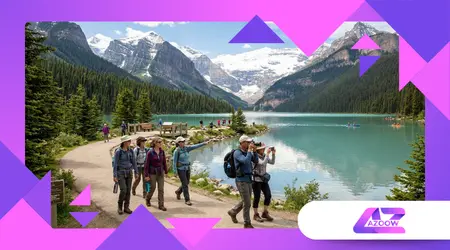
Nature tourism limits Defining this is no longer a purely academic exercise in 2026, but a vital necessity for the survival of our remaining wilderness areas worldwide.
Paradoxically, the longing for untouched nature grows precisely to the extent that these spaces shrink due to climate change and human overexploitation.
Experts warn that the sheer number of adventurers is gradually and often irreversibly destroying the fragile ecosystems they actually want to admire.
Today we must ask ourselves at what point a visit no longer enriches the soul, but merely exceeds the ecological limits of a place.
Analysis of the carrying capacity of natural areas
- Ecological capacity: The maximum number of guests before flora and fauna suffer measurable damage or species permanently flee their habitat.
- Psychological boundary: The moment when the perceived loneliness is lost due to too many other people and the experience of nature is massively devalued.
- Infrastructural limits: The resilience of roads, sanitary facilities and waste disposal systems in remote regions without urban access or modern sewage systems.
- Management strategies: Use of digital visitor systems and real-time tracking to dynamically manage visitor flows and proactively prevent congestion.
What determines the resilience of an ecosystem?
The Nature tourism limits depend primarily on the regenerative capacity of the local species, which are often more sensitive to noise and trampling damage than previously thought.
After a single instance of damage caused by hikers, an alpine lawn often needs decades to regain its original density and protective function.
In barren desert landscapes, off-road vehicles leave tracks that break up the ground, dramatically and dangerously accelerating the already sparse erosion caused by rare rainfall.
Every ecosystem has an individual threshold that functions like an invisible glass container: one drop too many causes the entire system to suddenly overflow.
How does noise affect wildlife?
Even quiet conversations or the humming of drones can trigger stress reactions in breeding birds, leading to the abandonment of the nest or flight.
Scientists now use acoustic sensors to determine how far animals retreat from migration routes once human presence exceeds a certain level.
++ Farmstay Tourism: Agriculture as a sustainable form of travel
What role does soil composition play?
Bogs and wetlands are particularly vulnerable, as even a few steps can disrupt the water balance and permanently displace rare orchid species from this area.
A place is like an antique canvas; every time we touch it, a tiny piece of the original color and texture is lost forever.
Why do we need stricter quotas today?
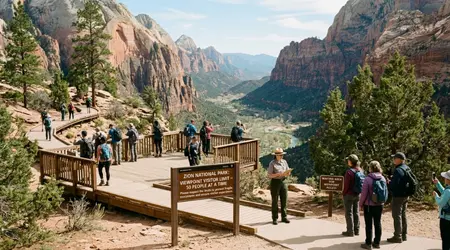
By using Nature tourism limits We ensure the quality of the experience for future generations, who also have a right to genuine wilderness.
Without clear rules, places of longing are transformed into backdrops for mass selfies, where respect for nature must give way to the digital urge for recognition.
National parks worldwide already rely on strict booking systems to limit the daily number of visitors to a level that rangers can effectively control.
This not only protects the environment, but paradoxically increases the value of the visit, as exclusivity and tranquility once again take center stage.
See more: 10 sustainable travel destinations off the beaten track
Are digital booking systems the solution?
Real-time apps now show hikers which trails are crowded and suggest alternatives that are less frequented and less ecologically sensitive.
This technology allows for a fair distribution of the load across different areas, instead of directing all people to the same three hotspots at the same time.
See also: Fair Trade on holiday: Buy souvenirs with a clear conscience
How is the travel industry reacting to these restrictions?
Responsible providers no longer sell "bucket lists", but curated experiences that take into account the seasonal rest periods of the local flora and fauna.
They understand that a destroyed place does not offer a long-term business model, and therefore actively focus on education rather than simply maximizing booking numbers.
What facts demonstrate the necessity of borders?
Studies by the World Tourism Organization (UNWTO) demonstrate that areas with clear capacity limits exhibit significantly higher biodiversity than freely accessible, unregulated comparison areas worldwide.
In regions without Nature tourism limits The number of large mammals observed decreased by up to 30 percent within a few years, underlining the ecological pressure.
This data clearly shows that uncontrolled access is destroying the very foundation on which tourism in these picturesque regions was built.
The following table illustrates the effects of different visitor densities on various landscape types, based on current long-term ecological studies and reports from 2026.
Impact of visitor frequency on ecosystems (2026)
| Landscape type | Critical number of visitors (per km²/day) | main threat | Rest time |
| High alpine terrain | 15 | Soil compaction & erosion | 20+ years |
| Coastal mangroves | 25 | Water pollution & noise | 5-10 years |
| Arctic tundra | 5 | Vegetation loss | 50+ years |
| Tropical rainforest | 40 | Disruption of breeding cycles | 2-4 years |
What can we learn from these numbers?
Particularly cold or dry regions are unforgiving of mistakes and require management approaches that go far beyond simply putting up a few signs.
One visitor to the tundra causes the same ecological damage as ten visitors to a robust mixed forest in the temperate latitudes of Central Europe.
It is not enough to simply count the number of heads; we need to understand how deeply each individual footprint impacts the specific local biology.
Wouldn't it be wiser to travel less frequently, but to significantly and noticeably increase the intensity and respect for the nature visited?
How does sustainable visitor management work in practice?
Successful projects rely on a combination of physical accessibility in non-critical areas and absolute exclusion zones in the most ecologically valuable core areas of the parks.
Hiking trails are designed to intuitively keep hikers on the paths and offer no incentive to enter the protected edges for a better photo.
An excellent example is the "slot system" in protected canyons, where each guest is given a fixed time slot, which prevents congestion and preserves the silence.
The introduction of Nature tourism limits This ensures that encountering the wilderness remains a privilege that requires mindfulness and preparation from every individual.
What role does the local population play?
Local guides often act as the best guardians of the borders, as they usually perceive the subtle changes in their homeland much faster than external authorities.
By guiding visitor groups, they ensure that knowledge is imparted and that the rules are understood not as harassment, but as necessary protection.
Can education replace coercion?
Local educational programs help tourists understand the value of restraint by explaining the complex relationships between their behavior and species conservation.
Those who understand that their deviation from the path could destroy the nest of a rare ground-nesting bird species usually act much more responsibly and cautiously on their own initiative.
Conclusion: Protection through abstinence as a model for the future
Compliance with Nature tourism limits is the only way to permanently and effectively preserve the beauty of our planet in an age of mass tourism.
We discussed that ecological capacities are finite and that digital governance and personal responsibility must go hand in hand to achieve success.
Nature does not need us to exist, but we need nature in its pristine form as a place of refuge and as a vital ecological lung.
Sometimes, a year without visiting a sensitive area can be the greatest act of kindness a traveler can do for the environment and the animals that live there.
Choose your destinations wisely, respect the capacities, and be an ambassador for a tourism that honors nature instead of just consuming it.
Have you ever avoided a place because it was overcrowded? Share your experiences and thoughts on visitor management in the comments!
Frequently Asked Questions (FAQ)
What exactly does "load-bearing capacity" mean?
It describes the level of use that an area can tolerate without the environmental quality declining or visitor satisfaction decreasing significantly due to overcrowding.
Will travel become more expensive due to quotas?
Prices often rise slightly due to higher administrative costs, but the quality of the experience and the protection of nature also increase significantly.
How can I find places that aren't overcrowded?
Use apps that provide real-time occupancy data and avoid well-known "Instagram hotspots" in favor of lesser-known, but equally beautiful and robust natural areas near you.
Am I no longer allowed in national parks at all?
Yes, but plan further in advance and accept that access may be strictly limited on some days for the benefit of the animals and plants.