
Permaculture in a balcony garden: Is that really possible?
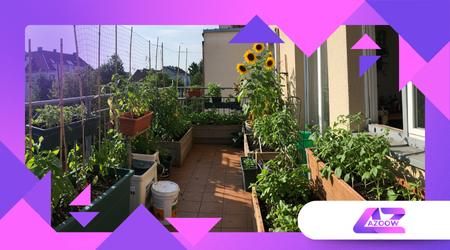
Advertisement
When you hear the word permaculture, you quickly think of large areas, wide beds, small forests, and plenty of space. But what if you only have a balcony? Can permaculture also work in just a few square meters?
The answer is surprisingly simple: Yes, it's possible – and better than many people think.
Because permaculture isn't a concept for landowners or self-sufficient gardeners. It's a way of thinking. And this way of thinking can be implemented just as well on a small balcony in the city as in a large garden in the countryside.
What exactly does permaculture mean?
Permaculture comes from the English term "permanent agriculture"—meaning sustainable agriculture. But the concept goes far beyond plant cultivation.
It's about understanding and mimicking natural cycles. It's about resource-efficient work, diversity, personal responsibility, and the interplay between people, plants, animals, and space.
In the classic garden, this is often reflected in mixed cropping, composting, rainwater use and the targeted promotion of insects and microorganisms.
But does this also work in a mini format?
Why balconies can do more than many people think
At first glance, a balcony seems limited. It's small, often shady or very sunny, has little soil, and no space for large structures. But that's precisely its strength.
Because those with limited space must become creative. And creativity is a core principle of permaculture.
Permaculture begins with what is already there – and that is exactly what a balcony offers in its purest form.
An example from Berlin: Permaculture on 4 m²
A young family in Berlin started a small experiment in 2020: they wanted to design their balcony using permaculture principles. They had four square meters, a south-facing side, and little experience.
Instead of buying pots, they used old crates, buckets, and even an old bookshelf as planting shelves. Tomatoes, herbs, lettuce, marigolds, and strawberries went into the soil – a colorful mix, planted close together.
Water was collected in a bowl. Kitchen scraps were fermented using a Bokashi bucket. There was even room for a small worm composter under the bench.
After two years, they not only had a lush green oasis – but also a new connection to the topics of nutrition, circulation and self-responsibility.
++ Implementing permaculture in your own garden.
Implementing the three basic ethical principles on a small scale
Permaculture is based on three ethical pillars:
1. Care for the Earth
Even on a balcony, you can build up soil, protect the ground, save water and promote life – through healthy soil, biodiversity and careful treatment of the plants.
2. Care for the people
Homegrown herbs, fresh salad, a place of peace and a place of connection – all this strengthens well-being and health, even in a small space.
3. Limit consumption and share surplus.
Excess herbs, cuttings, or compost can be exchanged or given away. The balcony becomes part of a community.
These principles are not tied to space – but to attitude.
Which elements of permaculture are suitable for a balcony?
Even if not everything can be implemented at the original scale, many ideas can be adapted:
- Mixed cropping instead of monoculture
- Vertical gardening instead of flat ground
- Composting with worms or Bokashi
- Rainwater harvesting using buckets or clay balls
- Observation of microclimate, light, wind and shadow
- Using existing materials instead of buying new ones
- Integration of wild plants, bee plants and beneficial insect habitats
A balcony is a microsystem. And as in any system, a lot can be achieved through clever planning.
Table: Balcony garden with permaculture vs. classic balcony cultivation
| aspect | Classic balcony extension | Permaculture in the balcony garden |
|---|---|---|
| Plant selection | individual varieties, decorative | Mixed cropping, edible and useful |
| floor care | commercially available potting soil | Reusing compost, worm castings, and soil |
| Pour | Tap water, daily | Rainwater, watering aids, mulch |
| Harvesting behavior | selective, decorative | ongoing, needs-based |
| Resource use | new pots, disposable products | Upcycling, reuse, DIY |
Is this really efficient? What can be harvested?
Of course, a balcony doesn't replace full self-sufficiency. But that's not the goal. Permaculture on the balcony doesn't mean "doing everything yourself" – but rather: "understanding and shaping as much as possible."
A balcony garden can regularly provide salad, herbs, berries, edible flowers, and small amounts of vegetables throughout the summer. Variety, staggered planting, and observing the microclimate are important.
Many report that they harvest not only food – but also peace, contentment, and a different sense of cycles. And that is often more valuable than any tomato.
A second example: female student with an east-facing balcony
A student from Cologne had only a small balcony that got sun in the morning but was in the shade from midday onwards. She thought that wasn't enough for growing vegetables.
But after research and planning, she started with shade-tolerant plants: Swiss chard, mint, arugula, lamb's lettuce, and lemon balm. She supplemented these with climbing plants like nasturtiums and created a second level using vertical shelves.
Today, her balcony is a green living room. She doesn't harvest much, but she does so regularly. And she uses the peace and quiet and the fragrance of the herbs for studying, reading, and reflecting.
Things to consider: Challenges and solutions
Not everything works out perfectly the first time. Slugs, drought, pest infestations, or insufficient space can be frustrating. But that's all part of permaculture: learning from experience.
Patience, observation, and small adjustments are key. Perhaps the tomato plant doesn't tolerate the location well; it might need more mulch or different watering; swapping plants with a neighbor could help.
Permaculture works in a balcony garden – differently, but genuinely.
Permaculture in the balcony garden It's not the same as a self-sufficient farm. But it's not a toy either. It's an invitation to experience natural cycles on a small scale.
You don't need a large space to take on responsibility. You need curiosity, time, and a love of observation. Then a balcony becomes a habitat – for plants, insects, people, and ideas.
The question is no longer: "Is that really possible?"
But: "Why not long ago?"
FAQ: Frequently asked questions about permaculture in balcony gardens
1. Do I have to build everything myself to do permaculture gardening?
No. Purchased products can also be sustainable. The important thing is to choose consciously and use existing resources wisely.
2. Does permaculture work on a north-facing balcony?
Yes, with limitations. Shade-tolerant plants such as herbs, chard, or lettuce are particularly suitable.
3. What do I do with kitchen waste if I don't have a compost heap?
A Bokashi bucket or a worm composter also works in a small space – odorless and efficient.
4. How can I best plan my balcony?
Observe light, wind, water, and temperature. Plan in planes (horizontal and vertical) and combine plants effectively.
5. Can I also do permaculture gardening if I have little time?
Yes. Many principles, such as mulching or companion planting, save time in the long run. Once established, much of it runs almost automatically.