
Avoid overtourism: Where to travel when everything is full?

Advertisement
Avoid overtourism By 2026, this is no longer just a recommendation, but a necessary strategy for ethically acting global citizens and conscious travelers.
While metropolises like Venice or Amsterdam charge drastic entrance fees, we are faced with the pressing question of genuine alternatives beyond mass tourism.
The search for peace and authenticity today often resembles an expedition, as social media commercializes even the most hidden corners of the earth within a few hours.
We need to redefine our desire to travel in order to preserve the soul of the places we love so much, while also meaningfully supporting local communities.
Overview of your travel strategy
- Strategies to relieve pressure on popular hotspots.
- The role of the digital product passport for sustainable travel.
- Innovative destinations that focus on sustainable tourism.
Why is a radical rethink of travel necessary?
If you stand in front of the Trevi Fountain today, you will often see more smartphones than architecture, which massively diminishes the actual value of the cultural experience.
A sustainable approach to Avoid overtourism It not only protects the sensitive infrastructure of historic cities, but also guarantees you a deeper connection to the host country.
Unrestricted tourism destroys what it seeks by driving up local rents and pushing authentic life out of the centers.
We are at a crossroads: Either we consume places like fast food, or we learn to truly inhabit them again as guests with respect and consideration.
What role does temporal flexibility play?
Traveling in the off-season reduces the environmental impact and offers you the chance to experience a city in its natural rhythm without the noise of the high season.
Those who plan counter-cyclically also save considerable costs and enjoy a level of service that would often be completely impossible during the stressful summer period.
Imagine strolling through the streets of Florence in November, when the fog lies over the Arno and the museums are empty.
These moments of silence are the true luxury of our time, which can only be achieved by consciously foregoing popular time slots.
++ Slow Travel Europe: Fewer places, deeper travel experiences
How do we find the "Second Cities" of tomorrow?
Instead of going to Paris, a visit to Lyon or Bordeaux is a good option to enjoy French charm without the overwhelming crowds.
These „second cities“ often have an equally rich culture, but are grateful for visitors and not overwhelmed by their sheer number.
Discovering lesser-known places feels like reading an unknown book whose pages no one has turned before you.
You will become the pioneer of your own experience and actively contribute to distributing tourism revenue more fairly across the country.
How does modern technology protect our tourist destinations?
By 2026, many countries will be using digital capacity management systems that measure visitor flows in real time and send recommendations for less visited areas directly to smartphones.
This intelligent control system helps with... Avoid overtourism to be successful by gently leading us to hidden treasures that we would otherwise have ignored.
Technology here acts as a digital compass, showing not only the fastest route, but also the most ecologically sound and socially acceptable path through foreign cultures.
Today, we use data to develop empathy for the capacity limits of a place, rather than simply blindly following every trend marker.
See more: Eco-tourism in the Alps: Experience the mountains without leaving a trace
What are the benefits of an ecological footprint tracker?
Modern booking portals now mandatorily integrate an analysis of the CO2 emissions and social impact of each booked accommodation directly into the payment process for transparency.
This allows travelers to see at a glance whether their money ends up with international chains or directly supports local agriculture and craftsmanship.
This knowledge makes us responsible actors who can cast a vote for a better, greener world of travel with every euro spent.
Transparency is the strongest tool against the greenwashing of large travel companies, which often promise sustainability but only focus on maximizing profits through mass tourism.
See also: Sustainable travel guides: Which ones really help
Why is organic certification of accommodations important?
A hotel that relies on regional cycles and has completely banned plastic from its operations deserves our preference over anonymous luxury resorts without a soul.
These businesses often act as seeds for sustainable development in their region, protecting biodiversity through smart resource management and fair working conditions.
When you stay in an eco-certified lodge, you are directly investing in the preservation of the nature that you are admiring and enjoying.
This creates a cycle of giving and taking that goes far beyond the mere exchange of money for accommodation.
Which new forms of travel will become established in 2026?
Slow travel is the answer to the hectic pace of "checklist tourism," where people try to tick off ten sights in just three days and return home completely exhausted.
Those who travel more slowly spend more time in one place, immerse themselves more deeply in the language, and make genuine human connections beyond the souvenir stalls.
By we Avoid overtourism, we create space for encounters that would be impossible in mass production, such as a conversation with a local winemaker or craftsman.
Travel thus becomes an educational journey again, broadening our horizons and sending us back to our everyday lives as more reflective individuals.
How does "regenerative travel" work?
Regenerative travel goes a crucial step further than traditional nature conservation by aiming to leave the visited place in a better condition.
This is achieved through active participation in reforestation projects or through targeted support of social enterprises that solve pressing problems of the local population.
It is no longer enough to simply "do no harm"; we must actively promote and advance the healing of ecosystems already damaged by mass tourism.
Each traveler thus becomes a small part of the solution, instead of just another part of the global resource problem that we want to solve.
What are the advantages of rail cruises?
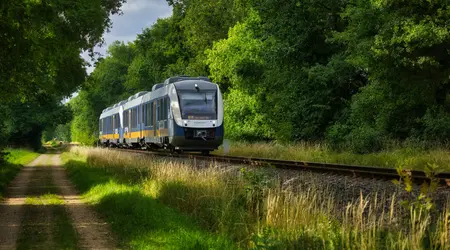
The renaissance of the night train allows us to cross Europe in the most romantic and climate-friendly way, gliding from one metropolis to the next while we sleep.
This deceleration begins as soon as you board the plane and makes the journey the actual destination, instead of viewing flying as a necessary evil to save time.
Trains consume up to 90 percent less CO2 than short-haul flights and also offer an unparalleled view of the landscapes that we otherwise only see from an altitude of 10,000 meters.
It is the return of an elegance in travel that we almost lost in the age of budget airlines and are now joyfully rediscovering.
Tourism impact in comparison (data 2025/2026)
According to the current Global Travel Resilience Index 2026 Regions that reduced their visitor numbers by 15 % while simultaneously increasing the length of stay achieved higher local added value.
This impressively demonstrates that quality far surpasses quantity in the modern travel economy.
| strategy | Environmental impact | Local benefit | Travel quality |
| Hotspot hopping | Very high | Low (leakage) | Stressful |
| Second City Travel | Medium | High (distribution) | Full of discovery |
| Slow Travel | Small amount | Very high (Direct) | Profound |
| Off-season travel | Very low | Stabilizing | Relaxed |
| Regenerative | Positive | Maximum | Transformative |
Avoid overtourism is the key to a future where travel remains a privilege that does not destroy our planet, but protects it.
We have come to understand that the world is not a museum to be consumed, but a living organism of which we become a part every time we cross a border.
Choosing the unknown requires courage, but rewards us with stories that haven't been copied a thousand times on Instagram, but belong entirely to us.
Ultimately, true sustainability in tourism is a matter of character and appreciation for the beauty of our diverse but fragile blue planet.
Have you ever ventured on a "second city" adventure, or are you already a proponent of slow travel on your holidays? Feel free to share your experiences and insider tips in the comments below this article!
Frequently Asked Questions
How can I tell if a destination is affected by overtourism?
Pay attention to indicators such as extreme price increases for accommodation during the season or official visitor limits for tourist attractions.
Apps like CrowdCheck 2026 They also issue real-time warnings for popular regions.
Aren't lesser-known destinations much more expensive to reach?
Often the opposite is true, as the cost of living is significantly lower locally than in tourist hotspots.
With a little planning when traveling by train or bus, the costs are quickly offset.
What can I do if I absolutely need to go to a hotspot?
Choose off-peak times of the day, book accommodation with locals instead of large chains, and avoid the classic tourist traps when it comes to food.
Respect local rules and help keep the place clean.
Are there any certifications that can be trusted for sustainable travel?
Yes, that Global Sustainable Tourism Council (GSTC) as well as the EU Ecolabel These are reliable standards for accommodations and tour operators. Look for these seals of approval the next time you book online.
Is it really possible to travel sustainably without being an expert?
Absolutely, simply choosing a restaurant that uses only seasonal products from local farmers is an active contribution to regeneration.
It's about many small, conscious decisions that, in their totality, have a great impact.