
High-tech textiles fashion: Testing new materials in everyday life

Advertisement
High-tech textiles fashion In 2026, it will revolutionize the global apparel industry by merging biological sustainability with groundbreaking technological materials science.
Consumers today demand clothing that uncompromisingly combines ecological responsibility with functional excellence in order to flexibly meet the challenges of modern everyday life.
The days of rigid, environmentally harmful synthetic fibers are finally over, as innovative start-ups transform living organisms and recycled resources into highly functional fabrics.
This current journalistic analysis examines the practical integration of forward-looking materials into our wardrobe and assesses their overall environmental impact on the market.
Key themes of textile evolution
- Biological innovations: The cultivation of textiles from fungal mycelium and algal structures as a recyclable alternative to synthetic materials.
- Smart functionality: The integration of microencapsulated phase change materials for active temperature regulation in everyday urban life.
- Circular economy put to the test: How mechanical and chemical recycling processes affect the longevity of modern functional textiles in everyday consumer use.
- Urban practicality: The real-world performance of self-cleaning and water-repellent surface structures under changing climatic conditions.
What is meant by intelligent material ecology?
The modern High-tech textiles fashion is no longer defined by woven-in electronics, but by the intrinsic intelligence of the natural fibers used.
Scientists are using the cellular structure of algae to develop substances that wick away moisture extremely quickly while simultaneously delivering vitamins to the skin.
This development is similar to a biological shield that dynamically adapts to the climatic conditions of the environment and the physical needs of the carrier.
Fungal mycelia grow in laboratory-controlled cultures precisely into the desired shape, completely eliminating offcuts and textile waste during production.
How is mycelium revolutionizing traditional leather production?
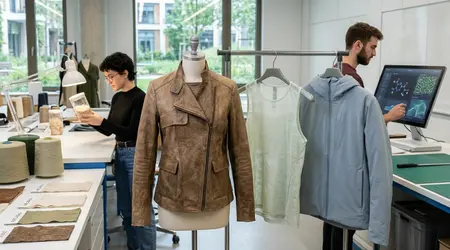
Biotech companies are cultivating mycelial structures within a few days to create robust leather alternatives that do not require the use of toxic tanning chemicals and are biodegradable.
This innovative material withstands everyday physical stresses exceptionally well and offers a luxurious feel for high-quality jackets, shoes and bags.
++ Second-hand criticism 2026: When resale becomes problematic
Why are algae-based fibers gaining market share?
During their rapid growth, algae bind enormous amounts of carbon dioxide, making raw material production extremely climate-positive compared to conventional cotton.
The resulting threads naturally possess antibacterial properties, which means these garments need to be washed less often, thus conserving resources in everyday life.
How do climate-regulating fabrics perform in everyday use?
Laboratories are integrating tiny, invisible microcapsules into the fiber structures, which efficiently store excess body heat during exertion and release it again in a targeted manner when cold.
This allows commuters to experience perfect comfort, as the jacket autonomously maintains the ideal temperature when switching between cold outside air and an overheated subway.
Data from the Federal Ministry for the Environment shows that smart textile technologies reduce the ecological footprint of functional clothing by 40 percent through extreme durability.
This innovative material architecture functions like the insulation of a modern passive house, intelligently and resource-efficiently regulating the energy exchange with the environment.
See also: What do GOTS, OEKO-TEX & Co. mean? Sustainability labels explained.
What role do plant waste products play in recycling?
Pineapple leaves and orange peels serve as the basis for silky-soft yarns that are gradually replacing conventional viscose due to their superior tear resistance and environmental footprint.
The industry processes these agricultural residues into highly functional collections that return to the biological cycle without leaving any residue after use.
See more: Sustainable swimwear: Swimming in an environmentally friendly way
How is the textile market reacting to these technological innovations?
Traditional fashion houses are investing heavily in partnerships with agile biotech labs to present exclusive, limited-edition capsule collections made from regenerative high-tech materials.
The following overview highlights the performance and ecological advantages of the leading sustainable functional textiles on the European market.
Sustainability matrix of innovative functional textiles (2026)
| Material type | Technological origin | CO2 savings | Primary function in everyday life |
| Mycelial structure | Mushroom cultures in the laboratory | 85% compared to cowhide | Extreme tear resistance for shoes |
| Algae polymer | Isolated marine biome | 70% versus polyester | Natural moisture management |
| Phase-change fiber | Microencapsulated vegetable oils | 50% versus Nylon | Active, autonomous thermoregulation |
| Agricultural cellulose | Fiber residues from juice production | 65% versus viscose | Biodegradable silk sheen |
Why do conventional textiles fail to meet the new environmental standards?
The worldwide establishment of High-tech textiles fashion This results primarily from the ecological dead end into which the fast fashion industry has maneuvered itself.
Inferior polyester clothing floods the world's landfills because the separation of blended fabrics by type has so far been technically difficult and economically feasible.
Consumers are increasingly refusing to buy clothing that releases harmful microplastics into global marine ecosystems with every wash.
Who would seriously want to wear clothing today that endangers their own health and demonstrably and sustainably destroys marine habitats?
How can monomaterials solve the global recycling problem?
Designers are increasingly developing garments that consist entirely of a single high-tech fiber, including all buttons, zippers, and elastic sewing threads.
This radical mono-material design enables uncomplicated, infinite mechanical recycling without loss of quality after the end of the textile life cycle.
What innovations are there in dyeing technology?
Modern laboratories use harmless, modified bacteria that produce pigments directly on the fiber, thereby reducing water consumption by 90 percent.
This biological dyeing method eliminates toxic heavy metals and sustainably protects local wastewater systems in the production countries of the global textile industry.
What does the future of our daily wardrobe look like?
The consistent use of the High-tech textiles fashion transforms our wardrobes from static storage spaces into dynamic, durable and multifunctional textile depots.
Consumers will own fewer items of clothing in the future, but these items will perfectly cover a wide variety of climate zones thanks to their extreme technological adaptability.
A single garment effortlessly accompanies the wearer from the morning business meeting in the office to the intense autumn outdoor sport in the evening.
This textile evolution reduces global consumerism and promotes a conscious, appreciative approach to the finite resources of our planet.
How do you properly care for these new types of materials?
The self-cleaning surface structures, which are modeled on the structure of a lotus leaf, make the classic washing cycle in the machine almost completely unnecessary.
Simply airing it out in the fresh air is enough to remove odors and light soiling without leaving any residue, thanks to the active fiber technology.
What barriers do developers still need to overcome?
Scaling up laboratory processes to industrial mass production quantities currently presents biotech companies with significant logistical and financial challenges.
Once production costs decrease through technological optimizations, these sustainable high-tech fabrics will fully penetrate the global mass market for clothing.
Conclusion: Actively shape the future of textiles
The fusion of biology and materials science paves the way for a fashion industry that protects the planet instead of ruthlessly exploiting it.
We have seen how mycelial leather, algae fibers and recyclable monomaterials are revolutionizing functional clothing from the ground up and making it future-proof.
Technological innovation and fashionable design no longer form a paradox this year, but rather a harmonious, forward-looking and economically successful symbiosis.
By investing in smart textiles, we are changing our consumption habits and actively supporting the global shift towards a true circular textile economy.
Choose your clothing consciously based on its technological sustainability and become part of this fascinating textile revolution.
Have you had any experience with self-cleaning or temperature-regulating fabrics? Share your experiences in the comments!
Frequently Asked Questions
Are biodegradable high-tech textiles prone to rapid wear and tear in everyday use?
No, the molecular structure is stabilized in the laboratory so that the biological degradation process only becomes active under specific composting conditions in the soil.
How does sensitive skin react to the new algae-based functional textiles?
The fiber has an extremely soothing effect, as the natural antioxidants of the algae are continuously released onto the skin while being worn.
Why are garments made from smart high-tech materials still noticeably more expensive?
The complex manufacturing processes in biotech laboratories require specialized personnel and high investments in scaling up modern production facilities.
Can phase-changing materials lose their regulating effect after frequent washing?
The protective microencapsulation permanently fixes the functional substances in the fiber, so that the thermal properties are fully retained for many years.