
Fair Trade in tourism: How to travel responsibly
Advertisement
Travel changes you. Those who discover new places not only get to know foreign cultures, but also themselves from a different perspective.
But in a world where mass tourism overwhelms regions, destroys local markets, and exacerbates social inequalities, the need to travel differently—more consciously, respectfully, and fairly—is growing. This is precisely where the concept of Fair Trade in tourism to.
What does it really mean to travel fairly? It's not just about sustainable hotels or regional products. It's about a system that brings travelers, service providers, and local communities into balance. Fair trade in tourism is an attitude, not a product.
It's about treating the people who make our experiences possible with dignity – and ensuring them fair compensation and long-term prospects.
How fairness becomes visible in tourism
In many tourist destinations, people work in the tourism industry under difficult conditions. Long working hours, low wages, and little social security are not uncommon – especially where tourism is one of the most important economic sectors.
According to the World Tourism Organization (UNWTO), roughly one in ten people worldwide depends directly or indirectly on tourism for their livelihood. However, only a fraction of the revenue reaches the local population.
Fair Trade in tourism aims to change exactly that. It focuses on transparency, fair working conditions, fair wages, and long-term partnerships between tour operators and local service providers.
Those who plan their trip with these aspects in mind not only support environmentally friendly offerings, but also the people who sustain tourism.
A small guesthouse in Sri Lanka that employs its staff year-round and invests part of its income in local educational projects acts in the spirit of fair tourism.
Similarly, a tour operator in Peru has organized itself into a cooperative to ensure fair prices and working conditions independent of international agencies.
Fair travel means taking responsibility
Many travelers want to "give something back." But true giving back doesn't begin with a donation, but with the way one travels.
Those who stay in local accommodations, eat regional food, and choose businesses run by local people automatically contribute to keeping the added value within the country. It's about not just consuming, but making conscious choices – with both head and heart.
Instead of booking a safari with a foreign provider, it makes a difference to choose a locally run company.
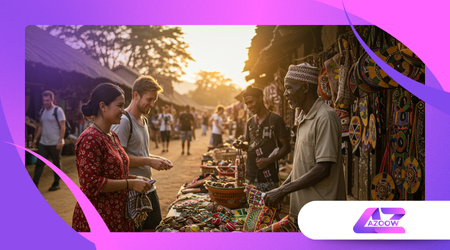
Instead of taking a souvenir from the duty-free shop, it supports the community to buy handmade products at a local market.
These decisions are small, but effective – and they send a clear signal: I see you. I value your work.
++ Apply minimalism in interior design.
Certifications and transparency create trust
But how can you tell if a travel offer is truly fair? The market is confusing, and terms like "sustainable", "responsible" or "gentle tourism" are used excessively.
That's precisely why credible certifications are important. Labels like "TourCert", "Travelife" or "Fair Trade Tourism" set clear standards – both ecological and social.
A travel provider that is certified as fair must be able to demonstrate where its products come from, how its local partners are treated, and whether the local population actually benefits.
This transparency is no guarantee of perfection, but it's a step in the right direction. And it builds trust – among travelers who don't want to be misled.
Relationships instead of sightseeing
Travel that truly changes you doesn't come from ticking off tourist attractions, but from encounters.
Those who take the time to listen learn more about a country than any guidebook could ever convey. Fair trade in tourism promotes precisely this kind of travel: mindful, respectful, and open.
In a small village in Morocco, a German family stayed overnight in a mud house run by a cooperative of local women. Instead of luxury, there was simplicity.
Instead of animation, there was genuine conversation. At the end of the trip, the highlight wasn't the desert – but rather breakfast with flatbread, date paste, and stories from the everyday life of a family who suddenly weren't strangers anymore.
Fair Trade in Tourism – Impact in Practice
| Area | Conventional tourism | Fair Trade in tourism |
|---|---|---|
| Accommodation | Large chains, centrally controlled | Local suppliers, fair wages, profit sharing |
| tour guide | External agencies, often underpaid | Local guides, self-organized and paid |
| Souvenirs | Imported goods, mass production | Locally sourced crafts, directly traded |
| Value creation | It often flows abroad | Stay local, strengthen communities |
| transparency | Hardly verifiable | Certified, openly communicated |
Travel with attitude
Those who travel today decide not only where the journey goes – but also how it affects them.
Fair Trade in tourism It's not a trend, but a step towards more justice, humanity, and authentic experiences. It doesn't require a perfect trip, but a conscious attitude.
Instead of drifting aimlessly, travelers can take responsibility. The question is not whether one changes the world with their journey – but whether one dares to leave it a little bit better than one found it.
It's not about deprivation, but about appreciation. Choosing a local guide, buying fair-trade souvenirs, or staying in family-run accommodation makes a statement – quietly, but meaningfully. Traveling with integrity means paying attention, listening, and acting consciously.
It changes not only the places you visit, but also your own perspective. And therein lies the potential: no longer just being a guest, but part of a respectful encounter on equal terms.
FAQ: Frequently asked questions about Fair Trade in tourism
1. Is Fair Trade tourism more expensive than conventional travel?
Not necessarily. Often, only intermediaries are eliminated. Fairly paid services do come at a price, but they are transparent and traceable.
2. How can I identify fair travel providers?
Look for credible certificates, clear information about origin, and specific details about local partners. Personal contact often helps to build more trust.
3. Can I also travel fairly on a package holiday?
Yes, if the provider adheres to fair structures. Those who use locally run accommodations, sustainable transportation, and regional service providers are acting fairly – even within a package deal.
4. Which countries particularly promote fair tourism?
South Africa, Costa Rica, and Nepal are considered pioneers. But projects that combine fairness and sustainability are also increasingly emerging in Europe.
5. What concrete steps can I take as an individual?
Do your research, ask questions, book consciously, and look honestly. Every euro is a decision – for or against fairness.
6. Are there platforms that arrange fair travel?
Yes, there are specialized travel portals like FairAway, Forum Anders Reisen, or FairTrade Tourism that work exclusively with local and certified partners. They prioritize fair conditions, transparent pricing, and environmentally friendly offerings.
7. How does fair tourism affect the local community?
It creates long-term jobs, promotes education, strengthens regional structures, and prevents economic dependence on large corporations. Furthermore, communities gain more control over their cultural and natural resources.
8. What distinguishes Fair Trade in tourism from classic sustainable travel?
Sustainable tourism usually focuses on ecological aspects. Fair trade goes further and puts the social conditions of the local people at the center – including labor rights, co-determination and fair wages.
9. Is it sensible to consciously choose to travel to developing regions?
Yes, if they are designed fairly. Travel to disadvantaged regions can bring economic stability – provided it respects cultural norms, avoids exploitation, and actively empowers the local population.